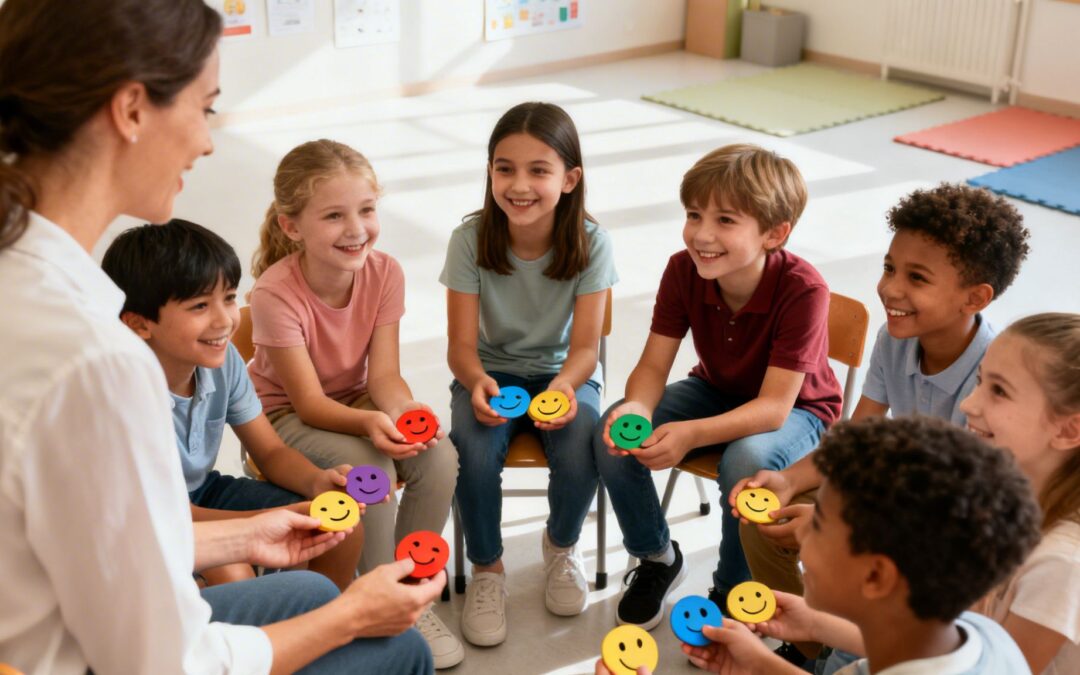
In an increasingly interconnected world, the ability to understand and empathize with others is not just a soft skill; it is a fundamental competency for academic and life success. Social awareness, a core component of Social-Emotional Learning (SEL), empowers students to recognize diverse perspectives, show empathy, and understand social norms. For educators and parents, fostering this skill is crucial for creating inclusive, safe, and collaborative learning environments where every child feels they belong.

This article moves beyond theory to provide a concrete collection of 10 effective, practical social awareness activities for students from kindergarten through middle school. Cultivating this awareness also builds other essential life competencies, including critical diplomacy skills for students that foster understanding and collaboration in group settings.

You will find a curated list designed for direct classroom or home implementation. We break down each activity into:

  • Actionable, step-by-step instructions.
  • Clear learning objectives and time estimates.
  • Practical tips for differentiation and assessment.
  • Remote-friendly variations to support all learning models.

These strategies, aligned with frameworks from organizations like CASEL, are designed to build a culture of connection. The goal is to turn classrooms into communities of emotionally intelligent, resilient, and compassionate individuals. Let's explore the activities that will help your students develop this essential superpower.

1. Empathy-Building Circle Discussions

Empathy-Building Circle Discussions are structured conversations where students sit in a circle to share experiences and listen to one another without judgment. This trauma-informed practice, rooted in restorative justice principles, creates a safe, equitable space where every student has an opportunity to speak and be heard. The format itself promotes connection and is a powerful tool for developing social awareness in students by exposing them to diverse viewpoints and personal stories from their peers.
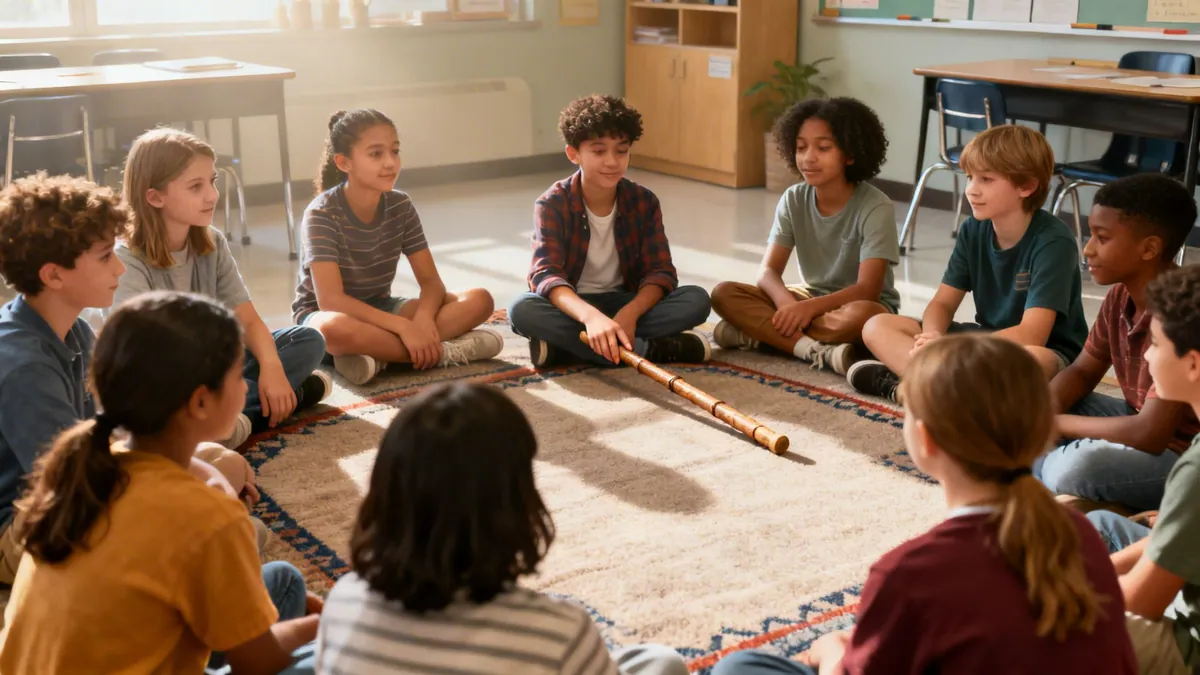
Diverse elementary students sit in a circle on a rug, participating in a classroom group activity.

These discussions are more than just informal chats; they follow a specific structure to build community and resolve conflict. Organizations like Soul Shoppe have refined this into an experiential method for emotional literacy, while districts like Oakland Unified have used restorative circles to improve school climate.

How to Implement Circle Discussions

  1. Establish Clear Agreements: Begin by co-creating guidelines with students. These often include rules like "Listen with respect," "Speak from the heart," "One person speaks at a time" (often using a talking piece), and "What's said in the circle stays in the circle." This step is critical for building trust.

    • Practical Example: A teacher might say, "Let's agree on our circle rules. One rule is 'Listen with your eyes, ears, and heart.' What does that look like?" Students might add, "Don't interrupt," or "Look at the person who is talking."
  2. Use a Talking Piece: Pass an object around the circle. Only the person holding the object may speak. This slows the conversation and encourages thoughtful responses rather than immediate reactions.

    • Practical Example: Use a special stone, a small stuffed animal, or a colorful ball as the talking piece. The teacher can introduce it by saying, "This is our talking piece. It helps us remember to listen when it's not our turn to speak."
  3. Start with a Prompt: Pose a focused question to the group.

    • For K-2: "Share a time someone was kind to you."
    • For 3-5: "Talk about a time you felt left out. What did that feel like?"
    • For 6-8: "Describe a time you saw something unfair happen. What made it feel unfair?"
  4. Practice Active Listening: Before tackling deep topics, run a mini-lesson on active listening. Ask students to practice restating what the person before them said before adding their own thoughts.

    • Practical Example: For younger students, the teacher can model this: "I heard Maria say she felt happy when her friend shared a crayon. That reminds me of a time…" For older students, you can make it a rule: "Before you share, start by saying, 'What I heard [student's name] say was…'"

Circles are effective because they flatten classroom hierarchies. The physical act of sitting at the same level, with no desks as barriers, communicates that every person's voice and experience are equally important.

This practice is one of the most direct and effective social awareness activities for students, fostering genuine human connection and reducing feelings of isolation. To see how schools are using this method for everything from community building to conflict resolution, you can learn more about restorative circles in schools.

2. Empathy-Building Circle Discussions

Empathy-Building Circle Discussions are structured conversations where students sit in a circle to share experiences and listen to one another without judgment. This trauma-informed practice, rooted in restorative justice principles, creates a safe, equitable space where every student has an opportunity to speak and be heard. The format itself promotes connection and is a powerful tool for developing social awareness in students by exposing them to diverse viewpoints and personal stories from their peers.
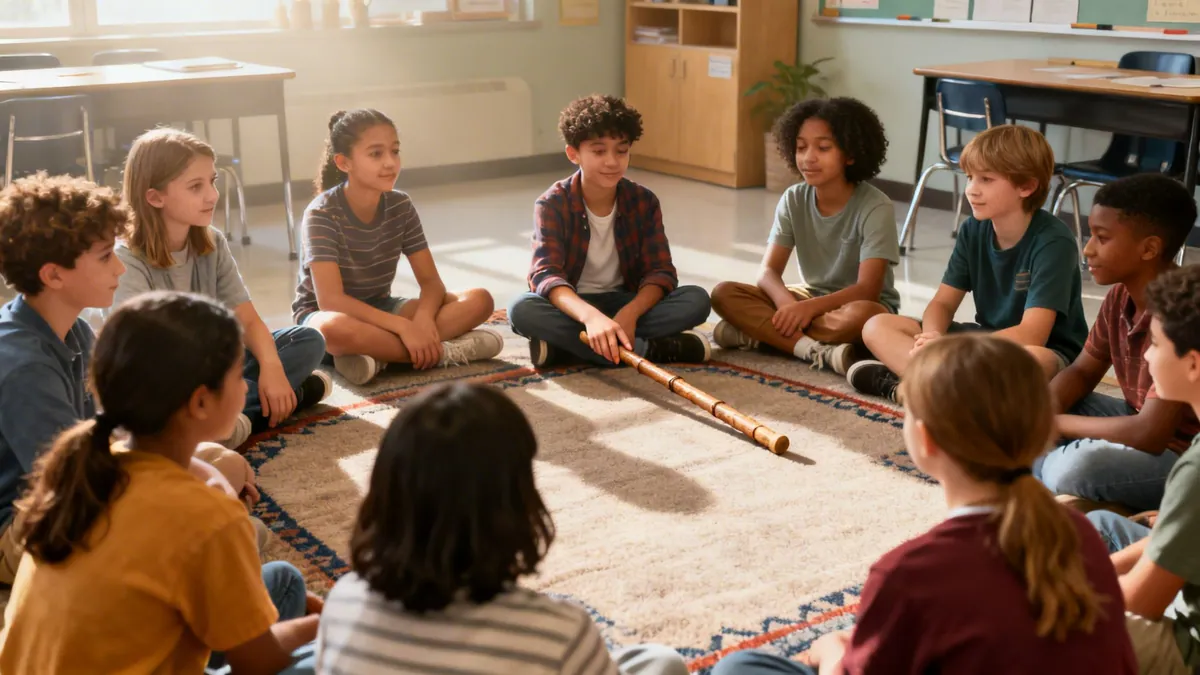
Diverse elementary students sit in a circle on a rug, participating in a classroom group activity.

These discussions are more than just informal chats; they follow a specific structure to build community and resolve conflict. Organizations like Soul Shoppe have refined this into an experiential method for emotional literacy, while districts like Oakland Unified have used restorative circles to improve school climate.

How to Implement Circle Discussions

  1. Establish Clear Agreements: Begin by co-creating guidelines with students. These often include rules like "Listen with respect," "Speak from the heart," "One person speaks at a time" (often using a talking piece), and "What's said in the circle stays in the circle." This step is critical for building trust.

    • Practical Example: A teacher might say, "Let's agree on our circle rules. One rule is 'Listen with your eyes, ears, and heart.' What does that look like?" Students might add, "Don't interrupt," or "Look at the person who is talking."
  2. Use a Talking Piece: Pass an object around the circle. Only the person holding the object may speak. This slows the conversation and encourages thoughtful responses rather than immediate reactions.

    • Practical Example: Use a special stone, a small stuffed animal, or a colorful ball as the talking piece. The teacher can introduce it by saying, "This is our talking piece. It helps us remember to listen when it's not our turn to speak."
  3. Start with a Prompt: Pose a focused question to the group.

    • For K-2: "Share a time someone was kind to you."
    • For 3-5: "Talk about a time you felt left out. What did that feel like?"
    • For 6-8: "Describe a time you saw something unfair happen. What made it feel unfair?"
  4. Practice Active Listening: Before tackling deep topics, run a mini-lesson on active listening. Ask students to practice restating what the person before them said before adding their own thoughts.

    • Practical Example: For younger students, the teacher can model this: "I heard Maria say she felt happy when her friend shared a crayon. That reminds me of a time…" For older students, you can make it a rule: "Before you share, start by saying, 'What I heard [student's name] say was…'"

Circles are effective because they flatten classroom hierarchies. The physical act of sitting at the same level, with no desks as barriers, communicates that every person's voice and experience are equally important.

This practice is one of the most direct and effective social awareness activities for students, fostering genuine human connection and reducing feelings of isolation. To see how schools are using this method for everything from community building to conflict resolution, you can learn more about restorative circles in schools.

3. Community Service and Volunteer Projects

Community Service and Volunteer Projects offer students structured opportunities to contribute to meaningful causes, directly connecting them to the world beyond their classroom walls. These hands-on experiences, from working at food banks to participating in environmental cleanups, help students develop social responsibility, empathy, and a sense of self-efficacy. By engaging in service, students see firsthand how their actions can create positive change, building their understanding of interconnectedness and civic duty.
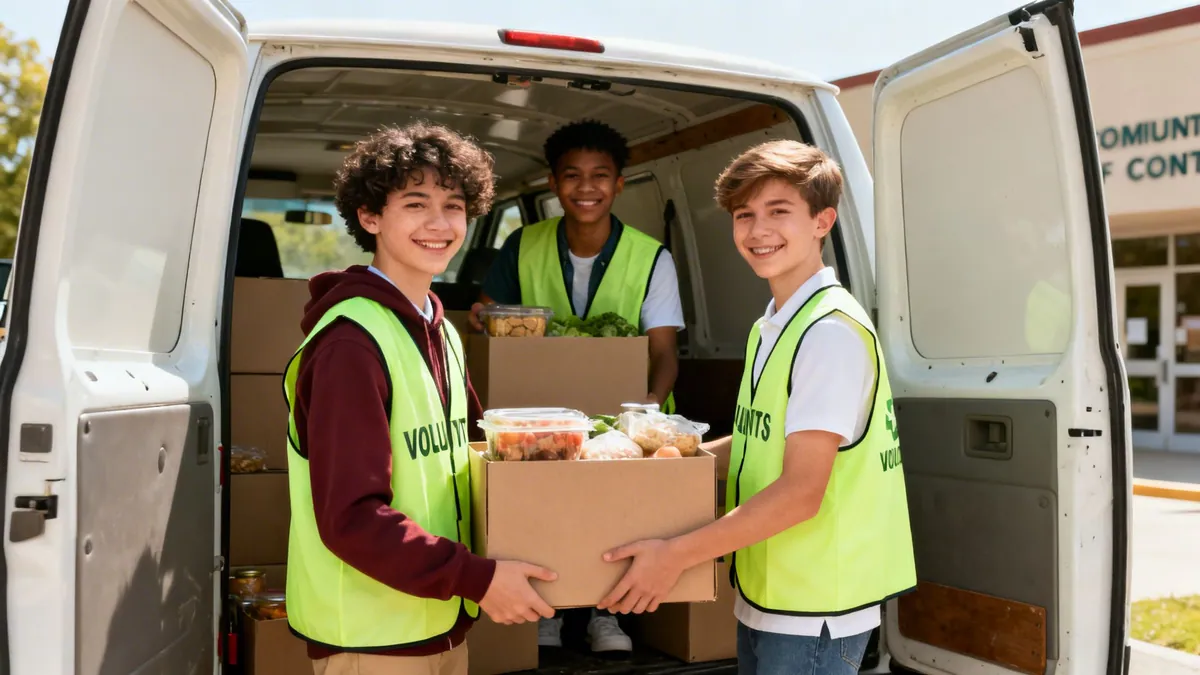
Three smiling young volunteers in vests unload food boxes from a van for a community donation.

These projects move social awareness from a theoretical concept to a lived experience. Initiatives like the National Service-Learning Partnership and platforms such as Ashoka's Changemakers champion this model, integrating service with academic learning and reflection. Through community service, students can explore practical ways the community can help homeless families, understanding immediate needs and contributing to solutions.

How to Implement Service Projects

  1. Connect to Curriculum: Align service projects with classroom learning.

    • Practical Example: After a science unit on ecosystems, a third-grade class could organize a "Campus Cleanup Day" to pick up litter and sort recyclables. Or, after learning about local government, a middle school class could write letters to city council about the need for a new crosswalk near the school.
  2. Offer Choice and Voice: Provide multiple volunteer options that cater to different interests and skills. Allow students to have a say in choosing or designing the project to foster a greater sense of ownership and motivation.

    • Practical Example: A teacher could propose three project ideas: 1) a canned food drive, 2) making blankets for an animal shelter, or 3) writing thank-you cards to community helpers. The class then votes on which project they are most passionate about pursuing.
  3. Start with a Guiding Question: Frame the project around an inquiry-based question to deepen its impact.

    • For K-2: "How can we make our school playground a friendlier place for everyone?"
    • For 3-5: "What does our local food bank need, and how can our class help fill that need?"
    • For 6-8: "How do environmental issues affect our community, and what is one step we can take to address them?"
  4. Incorporate Reflection: Schedule time for students to discuss their experiences after the service activity. Use journal prompts or circle discussions to guide them in thinking about what they did, why it mattered, and how it made them feel.

    • Practical Example: Use prompts like, "What part of the project made you feel proud?" or "What was one challenge we faced, and how did we solve it together?" for a post-project class discussion.

Service learning is powerful because it answers the "Why do I need to learn this?" question with a tangible, real-world purpose. When students see their efforts make a difference, their engagement with both academics and their community grows.

This approach is one of the most effective social awareness activities for students because it builds character, reinforces academic concepts, and demonstrates the direct impact of empathy in action. To get started, consider partnering with established local nonprofits to ensure a well-structured and meaningful experience.

4. Anti-Bullying and Bystander Intervention Training

Anti-Bullying and Bystander Intervention Training provides students with the explicit skills to recognize bullying behavior and act as upstanders rather than passive bystanders. This approach reframes bullying prevention as a community responsibility, empowering students with concrete, safe strategies to intervene. It directly builds social awareness by teaching students to identify social injustice in real-time and understand their role in shaping a positive school climate.

These programs move beyond simple "don't be a bully" messages by focusing on the 85% of students who witness bullying. Evidence-based curricula like the Olweus Bullying Prevention Program and Steps to Respect, along with community partnerships like the Junior Giants Strike Out Bullying, provide structured lessons to build these crucial skills.

How to Implement Bystander Intervention Training

  1. Define Roles Clearly: Teach students the difference between a bully, a target, a bystander (someone who sees it and does nothing), and an upstander (someone who sees it and does something to help). Use simple graphics and stories to illustrate these roles.

    • Practical Example: Use four corners of the classroom, each labeled with a role. Read a short scenario and have students walk to the corner that represents each character's role in the story. Discuss their choices.
  2. Role-Play Scenarios: Practice is essential for building confidence. Guide students through role-playing common situations. Give them specific, safe phrases to use.

    • For K-2: Scenario: A student grabs a toy from another. Upstander response: "Let's play together." (Inviting the targeted student away). "That's not a kind thing to say."
    • For 3-5: Scenario: A student is teased on the playground. Upstander response: "Hey, stop that." (Direct intervention). "Let's go tell a teacher." (Getting help).
    • For 6-8: Scenario: A mean comment is posted in a group chat. Upstander response: "I'm not going to be part of this group chat if you're making fun of people." "Are you okay? What I saw/read wasn't right." (Supporting the target afterward).
  3. Teach the "Four Ds" of Intervention: Give students a memorable framework for action: Direct (speak up), Distract (create a diversion), Delegate (get an adult), and Delay (check in with the person afterward).

    • Practical Example: For Distract, role-play a scenario where one student is being left out. Another student can walk up and say, "Hey, want to come help me with this puzzle?" or "Did you see that funny bird outside?" to change the subject and de-escalate the situation.
  4. Connect to School-Wide Norms: Regularly celebrate instances of upstander behavior in class meetings or school announcements. This reinforces that standing up for others is a valued part of the school's culture.

    • Practical Example: Create an "Upstander Shout-Out" board where students or teachers can write a brief note recognizing a student who helped someone else. Read them aloud each Friday.

Bystander intervention training shifts the focus from punishment to prevention. It equips the silent majority with the tools to actively create a culture of respect and safety, making it one of the most effective social awareness activities for students.

By empowering peers to support one another, these programs build a foundation of collective responsibility and empathy. To discover more about selecting the right approach, you can explore different bullying prevention programs for schools.

5. Student-Led Mindfulness and Self-Regulation Clubs

Student-Led Mindfulness and Self-Regulation Clubs are peer-organized groups where students teach and practice techniques like focused breathing and emotional regulation. This approach is powerful because it shifts the ownership of social-emotional learning directly to the students. When peers lead these practices, it normalizes conversations around mental health, reduces stigma, and boosts engagement in a way adult-led instruction sometimes cannot.

This model fosters social awareness by creating a safe, student-driven space for emotional exploration and practice. As student facilitators guide their peers, they develop leadership, empathy, and a deeper understanding of group dynamics. Organizations like Soul Shoppe have championed similar peer-led programs, and the Calm Schools initiative provides resources that can be adapted for student leadership.

How to Implement a Student-Led Mindfulness Club

  1. Provide Facilitator Training: Before launching, equip student leaders with the necessary skills. Train them in basic mindfulness principles, group facilitation techniques, and how to create a safe and inclusive environment.

    • Practical Example: The school counselor can run a 4-session training for student leaders, teaching them three different breathing exercises and one guided meditation script. They can practice leading each other before the club starts.
  2. Start Small and Be Consistent: Begin with short, manageable sessions. A 10-minute club meeting during lunch or before school is more sustainable than an hour-long commitment. Consistency is key to building a routine and seeing benefits.

    • Practical Example: A "Mindful Monday" club could meet for 10 minutes at the start of lunch recess. Student leaders can ring a chime, lead a 3-minute breathing exercise, and end with a positive affirmation for the week.
  3. Use Simple, Guided Prompts: Student leaders can start with basic exercises.

    • For K-2: "Let's practice 'balloon breathing.' We'll breathe in to fill our bellies like a balloon and breathe out slowly to let the air out."
    • For 3-5: "Today, we'll do a 'mindful minute.' Let's close our eyes and just listen. What is the farthest sound you can hear? What is the closest?"
    • For 6-8: "Let's try a 'body scan.' Starting with your toes, notice how each part of your body feels without trying to change anything."
  4. Offer Multiple Access Points: To ensure all students can join, consider offering the club at various times, such as during different lunch periods, before school, or as part of an after-school program. This makes participation more equitable.

    • Practical Example: Have the club meet on Tuesdays for 6th-grade lunch and on Thursdays for 7th-grade lunch. This allows more students to access the club without overcrowding the space.

When students teach self-regulation, they are not just sharing a skill; they are modeling vulnerability and courage. This peer-to-peer demonstration makes mindfulness feel authentic and accessible, not like another top-down requirement.

Placing students at the center of their own emotional learning makes these clubs one of the most effective social awareness activities for students, building a culture of well-being from the ground up.

6. Diversity and Inclusion Awareness Campaigns

Diversity and Inclusion Awareness Campaigns are student-led initiatives designed to celebrate differences, promote a sense of belonging, and directly address harmful stereotypes and biases within the school community. These campaigns move beyond passive learning, empowering students to use posters, assemblies, social media, and peer-led discussions to raise awareness about diverse cultures, identities, and perspectives. This approach is a powerful way to build social awareness by challenging assumptions and making space for authentic representation.

Three diverse, smiling students with backpacks stand together in a bright school hallway.

These campaigns give students ownership over the school's culture. For example, a middle school diversity club might organize a "Cultural Heritage Week" where students share food, music, and stories from their backgrounds. In another school, students could create a poster campaign with messages like "Kindness is our language" or "All are welcome here." Such projects are central to the work of organizations like Learning for Justice, which provides resources for creating inclusive school environments.

How to Implement Awareness Campaigns

  1. Form a Student Leadership Team: Invite students from a wide range of backgrounds to form a planning committee. Ensure their voices are central to every decision, from the campaign's theme to its execution. This authentic leadership is key.

    • Practical Example: A teacher sponsor can put out a call for volunteers for a new "Belonging Committee" and ensure the group includes students from different grades, social circles, and backgrounds.
  2. Choose a Focus and a Goal: Decide on a specific, achievable goal. Is the campaign meant to celebrate a heritage month, address a specific type of bias seen in the school, or promote inclusive language?

    • Practical Example: The committee notices that new students often feel lonely. Their campaign goal becomes: "Help every new student make at least one friend in their first month." The campaign could be called "The Friendship Project."
  3. Plan Actionable Steps: Brainstorm concrete activities.

    • For K-2: Create a "Friendship Quilt" where each square, decorated by a student, represents their unique family or identity.
    • For 3-5: Organize a "Living Library" where students or community volunteers act as "books" and share their personal stories about their culture or identity with small groups.
    • For 6-8: Develop a student-led assembly on microaggressions, using skits to show their impact and discuss respectful alternatives.
  4. Connect to the Curriculum: Integrate the campaign's themes into regular lessons.

    • Practical Example: If a student campaign focuses on celebrating different family structures, a first-grade teacher can read books like And Tango Makes Three and The Family Book during story time. A middle school health class could discuss the different ways families provide support.

The real power of student-led campaigns is that they shift the focus from adults telling students to be inclusive to students creating a culture of inclusion themselves. They learn social awareness by actively practicing it.

By giving students the tools to advocate for a more equitable school, these campaigns become some of the most meaningful social awareness activities for students. They build empathy, critical thinking, and leadership skills that last a lifetime. For more ideas on fostering these conversations, programs from Facing History and Ourselves offer excellent frameworks.

7. Peer Mentoring and Buddy Systems

Peer Mentoring and Buddy Systems are structured programs that pair older or more experienced students with younger or new students to provide guidance and support. These relationships focus on everything from academic help to navigating social situations, creating a strong sense of belonging for the mentee. This approach serves as one of the most practical social awareness activities for students, as it builds leadership, responsibility, and empathy in mentors while reducing isolation for mentees.

These programs formalize the positive influence that peers can have on one another. Organizations like Big Brothers Big Sisters have demonstrated the power of mentoring for decades, and schools can adapt this model to foster a supportive community. Whether it's a high schooler guiding a middle schooler through their first year or a fifth grader acting as a "reading buddy" to a first grader, these systems create a powerful network of peer support.

How to Implement a Peer Mentoring Program

  1. Define the Program's Goal: Be clear about the purpose. Is it to help new students acclimate, support academic skills, or ease the transition between grade levels? A clear goal helps with mentor matching and activity planning.

    • Practical Example: The goal for a "Reading Buddies" program is "to increase reading confidence and fluency in first-graders." The goal for a "Middle School Transition" program is "to reduce anxiety and answer questions for incoming 6th graders."
  2. Train Your Mentors: Mentoring is a skill. Provide mentors with training on active listening, giving constructive feedback, and maintaining confidentiality. You can even incorporate communication skills training from programs like Soul Shoppe.

    • Practical Example: During training, have mentors role-play scenarios like "What do you do if your buddy is sad?" or "How can you give a compliment about their reading even if they make mistakes?"
  3. Establish a Structure: Create a consistent schedule and designated space for meetings. Provide structured agendas or conversation starters to guide their time together.

    • For K-2 (Buddy System): Pair a second grader with a kindergartener to be "playground pals" or "reading buddies" who meet every Friday for 20 minutes.
    • For 3-5 (Academic Buddies): Match fifth graders with third graders for 20 minutes twice a week to practice math facts or edit writing assignments.
    • For 6-8 (Transition Mentors): Pair eighth graders with sixth graders to meet monthly. The eighth grader can answer questions about middle school, share organization tips, and serve as a friendly face in the hallway.
  4. Provide Adult Oversight: An adult facilitator should be available to check in with both mentors and mentees, offer guidance, and help troubleshoot any challenges that arise. Regular reflection sessions for mentors are crucial for their growth.

    • Practical Example: The adult coordinator can give mentors a short reflection sheet to fill out after each meeting with prompts like, "One thing that went well today was…" and "One thing I need help with is…"

A well-structured buddy system does more than just help the younger student. It gives older students a profound sense of purpose and responsibility, reinforcing the idea that their actions can positively impact someone else's life.

By creating these deliberate connections, schools empower students to support one another, building a culture of empathy and mutual respect. For more resources on setting up a program, the National Mentoring Resource Center offers valuable guides and research.

8. Social-Emotional Learning (SEL) Integration in Classroom Curriculum

Social-Emotional Learning (SEL) Integration is an approach where core emotional competencies are woven directly into the fabric of daily school life, rather than being taught as a separate, isolated subject. It infuses academic instruction, classroom routines, and school-wide culture with practices that build self-awareness, social awareness, and responsible decision-making. This method treats emotional intelligence as a critical component of academic success and overall student well-being.

Instead of a once-a-week lesson, SEL becomes part of the school's DNA. Prominent frameworks from organizations like CASEL (Collaborative for Academic, Social, and Emotional Learning) provide a foundation, while programs like Second Step and Responsive Classroom offer practical applications. Soul Shoppe has been a leader in this area for over two decades, using research-based, experiential methods to embed SEL into school culture, significantly improving school climate and belonging.

How to Implement SEL Integration

  1. Secure Teacher Buy-In and Training: Effective integration begins with professional development. When educators understand the 'why' behind SEL and feel equipped with the right tools, they become its biggest champions. Ongoing support, such as coaching from Soul Shoppe, helps teachers refine their practice.

    • Practical Example: A school could dedicate one professional development day to SEL, where teachers from the same grade level work together to map out where SEL concepts can fit into their existing lesson plans for the next month.
  2. Establish a Common Language: Create a shared vocabulary for emotions and social skills across all grade levels. When words like "empathy," "perspective-taking," and "self-regulation" are used consistently in every classroom, students develop a deeper and more fluent understanding of these concepts.

    • Practical Example: The school could choose a "Word of the Month," such as "respect." In every classroom, teachers would explicitly define the word, discuss examples, and recognize students who demonstrate it.
  3. Embed SEL into Daily Routines: Look for natural points of integration.

    • Morning Meetings: Start the day with a check-in question like, "What is one goal you have for yourself today?" or "How can you show kindness to someone this morning?"
    • Academic Subjects: During a literature lesson, ask, "How do you think the character felt in this situation? Why?" In history, discuss the different perspectives of groups involved in a historical event.
    • Practical Example (Math): When students are working on a challenging word problem in pairs, the teacher can say, "I see you're getting frustrated. Let's take three deep breaths together before we try a new strategy. It's okay to feel stuck; we can work through it."
  4. Model and Reinforce: Teachers and staff must consistently model the desired social and emotional behaviors. Acknowledge and praise students when they demonstrate empathy, cooperation, or responsible decision-making to reinforce these skills.

    • Practical Example: A teacher might say, "John, I noticed you invited the new student to join your group. That was a very empathetic and inclusive choice. Thank you for making our classroom a welcoming place."

Integrating SEL is not about adding more to a teacher's plate; it's about changing the plate itself. When SEL is part of how we teach math, how we manage transitions, and how we speak to one another, it becomes a powerful lever for both academic and personal growth.

This systemic approach makes social awareness a lived experience, not just a lesson. For more ideas on weaving these skills into your day, you can discover other social-emotional learning activities.

9. Student-Led Assembly and Performance Events

Student-Led Assembly and Performance Events are large-scale school gatherings where students take the lead in planning, organizing, and delivering performances centered on social-emotional themes. Topics often include kindness, empathy, belonging, and anti-bullying messages. This approach shifts the focus from adult-led lectures to authentic student voices, making the social awareness lessons more resonant and impactful for the entire student body.

These events transform traditional assemblies into powerful platforms for community building and peer-to-peer education. By taking ownership, students develop leadership and organizational skills while reinforcing key SEL concepts. Programs like Soul Shoppe's Peaceful Warriors Summit have shown how student-led events can normalize conversations about mental health and create a positive school climate.

How to Implement Student-Led Assemblies

  1. Form a Planning Committee: Create a diverse student committee early in the school year. This group will brainstorm themes, organize logistics, and recruit participants, ensuring the event reflects genuine student interests and concerns.

    • Practical Example: The committee can conduct a simple survey (e.g., via Google Forms) asking students, "What is one topic you'd like to see an assembly about?" This ensures the theme is relevant.
  2. Offer Diverse Participation Roles: Not every student wants to be on stage. Provide multiple ways to contribute, such as scriptwriting, creating scenery, managing sound and lighting, designing promotional posters, or serving as ushers. This makes the project inclusive.

    • Practical Example: A student who loves art but not public speaking can be in charge of creating a large banner with the assembly's theme to hang in the auditorium. A tech-savvy student can run the slideshow presentation.
  3. Choose a Central Theme: Select a relevant and focused topic for the assembly.

    • For K-2: A "Kindness Campaign" assembly where students perform short skits about helping a friend or sharing.
    • For 3-5: An "Anti-Bullying Awareness" event featuring student-written poems and songs about standing up for others.
    • For 6-8: A "Belonging" summit with student speeches or short films about celebrating diversity and reducing social isolation.
  4. Connect to Classroom Learning: Use the assembly as a catalyst for deeper conversations. Follow up with classroom activities or discussions that explore the themes presented, reinforcing the messages and making them part of the school's culture.

    • Practical Example: After an assembly on digital citizenship, advisory classes can spend 15 minutes discussing their own rules for positive online communication in their class group chat.

When students are the ones delivering the message, their peers listen differently. It’s not just an adult talking about a rule; it’s a friend sharing an experience. This peer-to-peer connection is the key to making social awareness stick.

This method is one of the most visible and community-oriented social awareness activities for students, celebrating student leadership and making SEL principles a shared school-wide value. Learn more about character education programs to see how student involvement drives success.

10. Student Mental Health Advocacy and Wellness Committees

Student Mental Health Advocacy and Wellness Committees are student-led groups that actively promote a culture of well-being and advocate for mental health resources within the school. These committees empower students to identify needs, design solutions, and lead initiatives that address psychological safety and reduce stigma. By taking ownership of their school's environment, students develop a profound sense of social awareness, learning to recognize systemic issues and advocate for the collective good.

This approach gives students a genuine voice in shaping their school climate. Organizations like the National Alliance on Mental Illness (NAMI) support youth-led mental health movements, recognizing that student input is critical for creating effective support systems. When students lead wellness fairs or peer support networks, they aren't just participating; they are building a responsive and caring community from the inside out.

How to Implement a Student Wellness Committee

  1. Establish a Clear Structure: Create a formal charter with defined roles (e.g., chairperson, secretary, outreach coordinator) and responsibilities. Work with students to outline the committee's mission, goals, and decision-making processes. This provides a framework for productive action.

    • Practical Example: The committee could create a mission statement together, such as: "The Wellness Committee's mission is to make sure every student at Northwood Middle School feels supported and knows where to go for help."
  2. Provide Foundational Training: Equip student leaders with knowledge. Partner with the school counselor or a community mental health organization to offer workshops on topics like active listening, recognizing signs of distress, leadership skills, and confidentiality.

    • Practical Example: A training session could focus on the difference between being a supportive friend (listening, showing empathy) and trying to be a therapist (giving advice, trying to solve the problem). This helps set safe boundaries.
  3. Start with Achievable Initiatives: Guide the committee to identify and execute tangible projects.

    • For 3-5: Organize a "Kindness Week" where students create posters promoting positive self-talk and empathy.
    • For 6-8: Develop a "Stress-Less" campaign before exams, creating and sharing resources like breathing exercise guides, study break tips, and links to calming music playlists.
    • Practical Example: The committee could create "Calm Down Kits" for classrooms, which are small boxes containing items like stress balls, fidget toys, and cards with breathing exercises.
  4. Create Multiple Participation Levels: Not every student wants a leadership role. Offer various ways to contribute, such as volunteering at a wellness fair, designing a social media post, or simply providing feedback through a survey. This makes involvement accessible to all.

    • Practical Example: Before planning an event, the committee could set up a "suggestion box" in the library where any student can anonymously submit ideas for improving school wellness.

Empowering students to lead mental health initiatives shifts the dynamic from adults solving student problems to a collaborative partnership. It shows students that their observations are valid and their voices can create meaningful change.

This model is one of the most impactful social awareness activities for students because it moves beyond individual feelings into community-level action. It teaches them to identify needs, organize, and advocate for others, building skills they will use throughout their lives. To learn more about youth advocacy, you can explore NAMI's resources for students and young adults.

Comparison of 10 Student Social Awareness Activities

Initiative Implementation complexity Resource requirements Expected outcomes Ideal use cases Key advantages
Peer Mediation and Conflict Resolution Programs Moderate — structured training and protocols Trainer time, student training, designated space, coordination with discipline systems Fewer referrals/suspensions, improved peer conflict skills, student leadership Peer conflicts, restorative justice efforts, reducing punitive discipline Cost-effective, empowers students, builds trust and problem-solving culture
Empathy-Building Circle Discussions Low–Moderate — requires skilled facilitation Facilitator training, regular meeting time, small-group space, clear agreements Increased belonging, active listening, reduced isolation Community-building, SEL lessons, trauma-informed classrooms Inclusive voice, deep connection, adaptable to grade levels
Community Service and Volunteer Projects Moderate — planning and partner coordination Community partnerships, transportation, supervision, reflection resources Greater civic engagement, empathy, sense of purpose, stronger school-community ties Service-learning, civic education, project-based SEL Real-world impact, builds resumes, strengthens community links
Anti-Bullying and Bystander Intervention Training Moderate–High — ongoing reinforcement needed Curriculum, role-play materials, adult support, monitoring/reporting systems Reduced bullying incidents, more upstander behavior, safer environments Bullying hotspots, cyberbullying prevention, school-wide culture change Evidence-based approaches, addresses multiple bullying forms
Student-Led Mindfulness and Self-Regulation Clubs Low — peer-run with adult oversight Minimal materials, facilitator training, regular meeting time Reduced stress/anxiety, improved self-regulation, leadership development Voluntary wellbeing support, peer-led mental health normalization Low cost, peer credibility, consistent practice opportunities
Diversity and Inclusion Awareness Campaigns Low–Moderate — planning and sustained commitment Student organizers, materials, event coordination, community input Increased awareness, representation, short-term sense of belonging Heritage months, awareness drives, boosting visibility of marginalized groups Amplifies student voice, visible celebration, engages families/community
Peer Mentoring and Buddy Systems Moderate — matching and supervision required Mentor training, scheduling, meeting spaces, adult check-ins Reduced isolation, smoother transitions, academic/social support New student onboarding, grade transitions, targeted support programs Scalable, cost-effective, builds sustained peer relationships
Social-Emotional Learning (SEL) Integration in Classroom Curriculum High — system-wide change and coaching Extensive teacher PD, coaching, curriculum time, assessment tools Improved academic outcomes, consistent SEL skill development, whole-child growth Whole-school improvement, long-term culture change, academic-SEL integration Research-backed, systemic impact, consistent language and practice
Student-Led Assembly and Performance Events Moderate–High — logistics and rehearsal Planning committees, rehearsal/time, AV and venue support, staff supervision Strong school cohesion, memorable SEL messaging, student leadership visibility School-wide campaigns, celebrations, message reinforcement moments High visibility, engages broad audience, amplifies student voice
Student Mental Health Advocacy and Wellness Committees Moderate — needs admin partnership Adult mentorship, meeting time, training, access to counseling/resources Amplified student voice, identified needs, reduced stigma, policy recommendations Resource gaps, wellness programming, student-administration collaboration Empowers students, surfaces real needs, can drive systemic change with support

Putting Social Awareness into Practice: Your Next Steps

The journey to cultivate a socially aware school community is built one intentional step at a time. The ten detailed social awareness activities for students outlined in this article are not just isolated exercises; they are foundational blocks for creating an environment where empathy, respect, and understanding are the norm. From the collaborative problem-solving of Peer Mediation to the quiet introspection of Student-Led Mindfulness Clubs, each strategy provides a unique pathway to help students look beyond themselves and connect with the world around them.

The power of these activities lies in their consistent and authentic application. Simply completing a single community service project or holding one anti-bullying assembly will not create lasting change. True social awareness is fostered when these concepts are woven into the very fabric of the school day, becoming a part of the shared language and culture of the entire community.

Key Takeaways for Immediate Action

To move from inspiration to implementation, consider these core principles drawn from the activities we've explored:

  • Student Agency is Paramount: Activities like Student-Led Wellness Committees and peer mentoring programs succeed because they empower students to take ownership. When young people lead, they are more invested in the outcomes, and their peers are more receptive to the message.
  • Empathy is a Teachable Skill: Empathy Circles and conflict resolution training provide structured, safe spaces for students to practice perspective-taking. These are not abstract concepts but practical skills that can be developed with guidance, repetition, and real-world application.
  • Integration Beats Isolation: The most impactful approach is embedding social-emotional learning directly into your core curriculum. Instead of treating SEL as a separate subject, find opportunities to discuss character motivations in literature, ethical considerations in science, and diverse perspectives in history.

Your First Steps: Making Social Awareness a Reality

Feeling overwhelmed by the options is natural. The key is to start small and build momentum. Choose one or two initiatives that align with your school's current needs and resources.

For a classroom teacher: You might begin with weekly Empathy-Building Circle Discussions. This requires minimal materials and can be adapted to fit a 20-minute slot in your schedule. A simple starting point could be a prompt like, "Share a time someone helped you when you were feeling down. How did it make you feel?"

For a school administrator: Consider launching a Peer Buddy System. This structured program can have an immediate, positive impact on school climate, especially for new students or those who feel isolated. Pairing older students with younger ones for reading sessions or recess activities creates a visible culture of support and kindness.

A Practical Insight: The goal is not perfection but progress. An imperfectly run student-led assembly that gets students talking about inclusion is more valuable than a perfectly planned initiative that never gets off the ground. Celebrate the effort and the small victories along the way.

Ultimately, these social awareness activities for students do more than just improve classroom dynamics or reduce bullying incidents. They equip young people with the essential life skills needed to become compassionate leaders, responsible citizens, and resilient individuals. By investing in social awareness, you are giving students the tools to build healthier relationships, navigate complex social situations, and contribute positively to their communities for years to come. The work you do today to plant these seeds of empathy and understanding will create a kinder, more connected world tomorrow.


Ready to bring a comprehensive, research-based social-emotional learning program to your entire school? Soul Shoppe provides the tools, training, and support to build a positive school climate from the ground up. Explore their programs and resources to see how they can help you implement powerful social awareness activities for students. Soul Shoppe