

10 Powerful Building Self Esteem Activities for Kids (K-8) in 2026
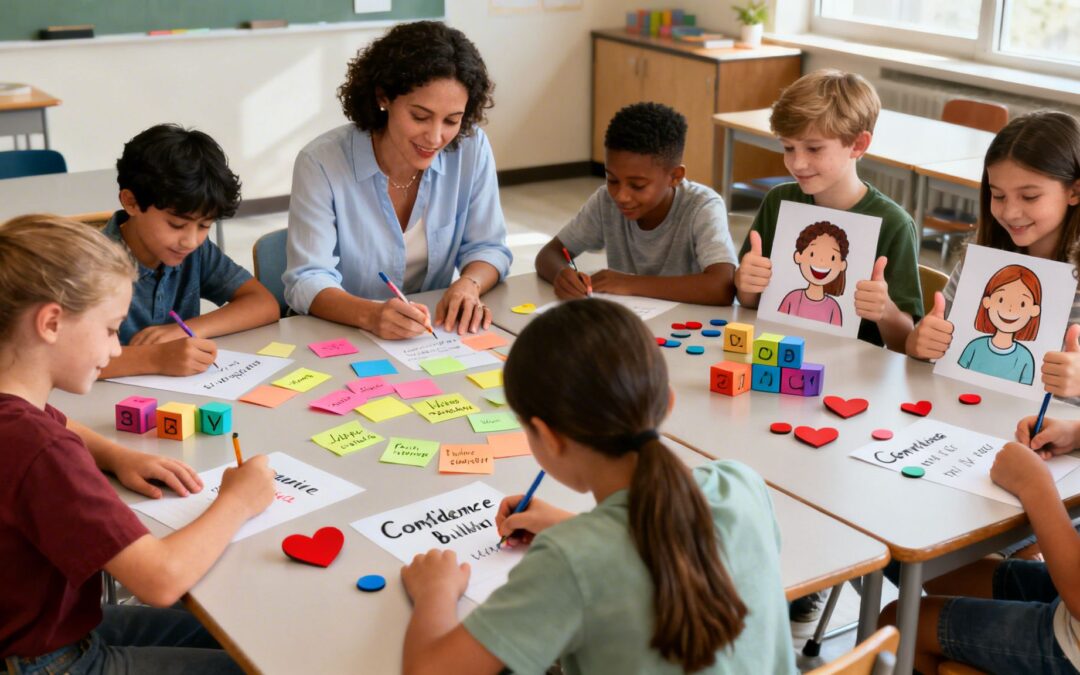
True self-esteem isn’t just about feeling good; it’s the foundation for resilience, academic risk-taking, and healthy peer relationships. In an increasingly complex world, students in kindergarten through eighth grade need more than just academic knowledge. They need a strong sense of self-worth to navigate challenges and thrive both in and out of the classroom. This article moves beyond generic praise to provide a comprehensive roundup of 10 practical, research-informed building self esteem activities that parents and teachers can implement immediately.
Drawing from key social-emotional learning (SEL) principles, we’ll explore structured exercises designed for school and home. Each item includes step-by-step instructions, materials lists, differentiation tips, and alignment to SEL competencies. This isn’t just a list; it’s a toolkit for creating environments where every child can build the confidence to succeed. For students embarking on new journeys, engaging in rewarding activities like choosing martial arts for beginners can significantly boost fitness, confidence, and self-defense skills, proving invaluable to their personal development.
From mindfulness practices and strengths identification to peer connection exercises and goal-setting frameworks, you will find actionable strategies tailored for K-8 students. Our goal is to equip educators and families with the tools to foster genuine confidence, one activity at a time. Let’s get started.
1. Mindfulness and Self-Regulation Practice
Structured mindfulness exercises offer a direct pathway to improved self-esteem by teaching students to observe their thoughts and emotions without judgment. This practice helps children and adolescents understand that feelings are temporary and do not define their worth. Through guided breathing, body scans, and focused attention, students learn to quiet external and internal noise, creating a sense of calm and control. This foundational ability to self-regulate is a critical component of building self esteem activities, as it gives students confidence in their capacity to handle stress and navigate challenges.

Implementation Examples
- School-Wide: A school assembly run by a group like Soul Shoppe can introduce core mindfulness concepts to the entire student body, creating a shared language and experience.
- Classroom Routine: A second-grade teacher can start each day with a 3-minute “breathing buddy” activity, where students place a small stuffed animal on their belly and watch it rise and fall with each breath. Before a test, a teacher can lead a 1-minute “squeeze and release” exercise, where students tense and relax their hands and feet to release anxiety.
- Small-Group Support: A school counselor can lead weekly sessions for students with anxiety, using body scan meditations to help them identify and release physical tension. For example, guiding them to notice the feeling of their feet on the floor, the chair supporting their back, and the air on their skin.
- Home Connection: A parent can create a “calm-down corner” with a comfy pillow and a jar of glitter. When a child feels overwhelmed, they can shake the glitter jar and watch the sparkles settle, mimicking how their busy thoughts can settle.
Actionable Tips for Success
To make mindfulness effective, consistency and a supportive environment are key. Start with very short sessions, especially for younger students (3-5 minutes is ideal), and gradually increase the duration. It is important for adults to model the practice themselves; teachers and parents who practice mindfulness can more authentically guide students. Create a designated calm space with minimal distractions and use consistent verbal cues.
For more detailed guidance, discover our complete guide to teaching mindfulness to children and its benefits. This practice directly supports the Self-Awareness and Self-Management competencies of Social-Emotional Learning (SEL).
2. Strengths-Based Learning and Identification
A strengths-based approach shifts the focus from fixing student deficits to recognizing and nurturing their inherent talents and positive qualities. This developmental method helps children articulate their natural skills and character traits, building a foundation of confidence and positive self-perception. By identifying and using their personal strengths, students gain motivation and a more complete view of their own competence beyond just academic scores, making it one of the most effective building self esteem activities.

Implementation Examples
- School-Wide: A character education program can feature a “Strength of the Week” (e.g., perseverance, creativity) in morning announcements, and teachers nominate students they see demonstrating that strength for public recognition.
- Classroom Routine: A fifth-grade teacher can facilitate a “strength circle” where students sit together and take turns identifying a positive quality they’ve observed in a peer. For example: “I noticed Maria’s strength is leadership because she helped our group get organized during the project.”
- Small-Group Support: During individual conferences, a counselor can work with a student to create a “strengths shield,” where the student draws symbols representing their talents (e.g., a book for “love of learning,” a smiley face for “humor”) in different quadrants.
- Home Connection: During dinner, a parent can ask, “What was a moment today where you felt proud of how you handled something?” and then help the child connect that action to a strength, like “That showed a lot of responsibility.”
Actionable Tips for Success
For this approach to succeed, staff must be trained to use strength-spotting language consistently. Teach students a shared vocabulary of strengths and character traits and create visible reminders like classroom posters or a class book celebrating everyone’s unique abilities. When providing feedback, connect a student’s strengths directly to their academic work or how they solved a problem. Regularly involving families helps reinforce these positive messages.
This method directly supports the Self-Awareness and Social Awareness competencies of Social-Emotional Learning (SEL).
3. Peer Connection and Belonging Activities
Structured social activities that foster genuine connections are powerful tools for building self esteem activities because they directly address a student’s fundamental need for belonging. When children and adolescents feel seen, valued, and accepted by their peers, they are less likely to experience isolation and more likely to develop a positive self-concept. These activities create a safe and supportive environment for authentic interaction, empathy-building, and mutual respect, which are foundational elements for healthy self-esteem. A strong sense of community provides a crucial buffer against feelings of inadequacy and self-doubt.
Implementation Examples
- School-Wide: A program like the Peaceful Warriors Summit from Soul Shoppe can bring diverse student leaders together to build community and practice prosocial skills. Another example is a school-wide partnership with organizations like Junior Giants to run “Strike Out Bullying” initiatives.
- Classroom Routine: A third-grade teacher can incorporate a daily morning meeting where students respond to a low-stakes prompt, like “If you could have any superpower, what would it be and why?” to find common interests.
- Small-Group Support: A middle school counselor could establish a “lunch bunch” for new students or shy students. The first session could involve a simple game like “Two Roses and a Thorn,” where each person shares two positive things about their week (roses) and one small challenge (thorn).
- Home Connection: Parents can encourage participation in extracurricular groups. Before a playdate, a parent can talk with their child about being a good host, suggesting they ask their friend what they’d like to play first to practice being considerate.
Actionable Tips for Success
To ensure these activities build confidence, it’s vital to create psychological safety. Start with low-risk sharing activities (e.g., “What is your favorite weekend activity?”) before moving toward more personal topics. Establish clear and consistent norms around respectful listening and confidentiality. Intentionally mix social groups during activities to broaden students’ connection circles and prevent cliques from solidifying. Making these practices a regular part of the school rhythm, rather than one-off events, is key to developing lasting peer bonds.
For more ideas, explore these classroom community-building activities that can be adapted for various settings. This approach directly strengthens the Social Awareness and Relationship Skills competencies of Social-Emotional Learning (SEL).
4. Goal-Setting and Progress Tracking
A structured process of setting and tracking goals provides students with tangible proof of their own competence. When children set meaningful goals, monitor their progress, and celebrate their achievements, they build self-efficacy and agency. This experience of accomplishment is a direct contributor to healthy self-esteem, grounding a student’s sense of worth in real-world effort and growth. This is one of the most powerful building self esteem activities because it makes personal development visible and concrete.
Implementation Examples
- Individual Conferences: A fourth-grade teacher helps a student set a goal of “reading for 20 minutes every night.” They create a simple chart with checkboxes for each day of the week. The student colors in a box each night, providing a visual representation of their progress.
- Classroom Data Walls: A kindergarten class creates a “Kindness Tree.” Their goal is to give 10 compliments a day. Each time a student gives a genuine compliment, they get to add a paper leaf to the bare tree, watching it “grow” as they meet their collective goal.
- Student-Led Meetings: During an IEP meeting, a middle schooler’s goal is to advocate for their needs. With support, they practice saying, “Could you please repeat the instructions? I need to hear them twice.” Successfully doing this in class is a celebrated achievement.
- Home Connection: A parent helps their child set a goal of learning to tie their shoes. They break it down into small steps: 1) making the “bunny ears,” 2) crossing them over, etc. They practice one step at a time and celebrate mastering each part before moving to the next.
Actionable Tips for Success
To make goal-setting effective, the process must be explicitly taught and consistently reinforced. Adults should model goal-setting and use visual trackers appropriate for the grade level. Build in regular review cycles, such as a quick weekly check-in for younger students, to maintain momentum. Critically, the focus should always be on effort and progress, not just on the final outcome of success or failure. Celebrating small wins and teaching students how to adjust their strategies after a setback are key to building resilience. Involve families by sending home goal sheets that connect to positive behaviors at home.
For a deeper look into this topic, explore our guide on goal-setting for kids and its benefits. This practice strongly supports the Self-Management and Responsible Decision-Making SEL competencies.
5. Resiliency Training and Growth Mindset Development
Explicit instruction in resilience helps students bounce back from setbacks, view challenges as learning moments, and maintain effort despite difficulty. This is a core component of building self esteem activities because it reframes failure as a temporary state, not a personal indictment. When paired with growth mindset training, which teaches that abilities can be developed through hard work and strategy, students gain profound confidence. They begin to see that their capacity to improve is within their control, fundamentally changing how they interpret obstacles and building a robust sense of self-worth based on effort and perseverance.
Implementation Examples
- School-Wide: A school principal shares a “Famous Failures” story during morning announcements, highlighting how someone like Michael Jordan was cut from his high school basketball team but persevered.
- Classroom Routine: A fifth-grade teacher introduces “The Power of Yet.” When a student says, “I can’t do fractions,” the teacher and class respond, “You can’t do fractions… yet!” This becomes a regular, positive refrain.
- Small-Group Support: A literature circle reads a book where the main character fails repeatedly before succeeding (e.g., The Most Magnificent Thing by Ashley Spires). The group charts the character’s feelings at each failure and what they did to keep going.
- Home Connection: A parent sees their child get frustrated building a complex LEGO set. Instead of fixing it for them, they say, “Wow, this is a tricky part. What’s another way we could try to connect these pieces? Let’s look at the instructions together.” This praises the problem-solving process.
Actionable Tips for Success
The key to fostering resilience is creating a culture where mistakes are expected, normalized, and even celebrated as part of the learning process. Adults should model this by openly discussing their own learning challenges and how they work through them. Use specific, sincere praise focused on effort and strategy, such as, “I noticed you tried three different approaches to solve that; that’s great problem-solving.” Teach students to use metacognitive language by asking, “What strategies haven’t you tried yet?” Finally, build in moments of “productive struggle” by assigning tasks that are slightly beyond a student’s current mastery level, reinforcing that challenge is normal and manageable.
For a deeper dive into this topic, explore our guide on building resilience in children. This approach directly supports the Self-Management and Responsible Decision-Making competencies of Social-Emotional Learning (SEL).
6. Creative Expression and Arts-Based Activities
Structured opportunities for students to express their thoughts, emotions, and identities through art, music, movement, or performance provide a powerful, non-verbal path to self-discovery. Creative expression gives children a safe outlet for processing complex feelings, builds a sense of competence through tangible creation, and encourages them to represent themselves authentically. This process helps students see that their unique perspective has value, which is a cornerstone of many effective building self esteem activities. When students share their work, they also learn to receive meaningful feedback and recognition from peers, strengthening their social confidence.

Implementation Examples
- School-Wide: A school can organize an “Express Yourself” art gallery where every student’s work is displayed, regardless of skill level. Each piece is accompanied by a short artist’s statement explaining what the piece means to them.
- Classroom Routine: Following a read-aloud about a character experiencing a strong emotion (e.g., sadness), a first-grade teacher asks students to “draw the feeling” using colors and shapes instead of words, then share what their drawing represents.
- Small-Group Support: An art therapist or counselor can work with a small group on creating “inside/outside masks.” Students decorate the outside of a plain mask to show how they think others see them and the inside to show who they really are or how they feel.
- Home Connection: A parent can create a “feelings playlist” with their child. They can find songs that sound happy, sad, angry, or calm, and talk or dance about how the music makes them feel, validating all emotions.
Actionable Tips for Success
To ensure creative activities boost self-esteem, it is crucial to emphasize process over product. The goal is expression, not artistic perfection. Provide students with choices in materials, formats, and topics to give them ownership over their work. Establish structured sharing protocols like, “What do you notice? What does this tell you about the artist?” to foster respectful feedback. Displaying all student work equally, not just the “best” pieces, sends a powerful message that every contribution is valued.
This approach directly supports the Self-Awareness and Social Awareness competencies of Social-Emotional Learning (SEL).
7. Empathy and Perspective-Taking Development
Intentionally teaching empathy helps students understand and validate the feelings and viewpoints of others. When children learn to see the world from another’s perspective, they build stronger social connections and recognize their own capacity for kindness. This ability to form meaningful relationships and have a positive impact on their peers is a powerful component of building self esteem activities. It shifts a child’s focus from internal self-criticism to external contribution, reinforcing their value within a community.
Implementation Examples
- School-Wide: A “Buddy Bench” is placed on the playground. Students are taught that if they see someone sitting there, it’s a signal they feel lonely, and they should invite them to play. This provides a concrete action for showing empathy.
- Classroom Routine: A fourth-grade teacher uses a picture book with no words and asks students to write down what they think each character is thinking or feeling on each page. They then share and discuss the different perspectives.
- Small-Group Support: A counselor facilitates a role-playing scenario where two students have a conflict over a shared toy. Each student acts out the scene from their own perspective, and then they switch roles to experience the other’s point of view.
- Home Connection: A parent and child are watching a movie. The parent pauses and asks, “How do you think that character felt when their friend said that? What makes you think so?” This encourages the child to think beyond the plot.
Actionable Tips for Success
Creating a psychologically safe environment where diverse experiences are respected is foundational. Adults should model empathetic language by naming and validating feelings, such as saying, “It sounds like you felt frustrated when your tower fell.” Use sentence stems like, “I can see why you would feel…” to guide student conversations. Distinguishing between sympathy (“I feel sorry for you”) and empathy (“I feel with you”) is an important lesson. Regularly celebrate acts of kindness and empathy you witness in the classroom or at home to reinforce these positive behaviors.
This approach directly supports the Social Awareness and Relationship Skills competencies of Social-Emotional Learning (SEL).
8. Positive Self-Talk and Internal Dialogue Coaching
Coaching students in positive self-talk is one of the most direct building self esteem activities, as it teaches them to become their own internal advocate. This practice involves explicit instruction in recognizing automatic negative thoughts and consciously replacing them with encouraging, realistic internal dialogue. By developing a supportive inner voice, students learn to frame challenges constructively and acknowledge their worth, which builds resilience and confidence in their abilities. Instead of succumbing to self-criticism, they develop the skill to be their own cheerleader.
Implementation Examples
- Classroom Environment: A teacher helps students identify their “inner critic” (the voice that says “I can’t”) and their “inner coach” (the voice that says “I can try”). They can draw what these two “characters” look like and write down things each one might say.
- Small-Group Coaching: A school counselor works with a group on the “T-F-A” model: Thought, Feeling, Action. They analyze a situation: The Thought “No one will play with me” leads to the Feeling of sadness, which leads to the Action of sitting alone. They then brainstorm a new thought, like “I can ask someone to play,” and trace how that changes the feeling and action.
- Individual Practice: A teacher gives a student a sticky note to put on their desk before a math test. It says, “I have practiced for this. I can take my time and try my best.” This serves as a tangible reminder to use positive self-talk.
- Home Connection: A child says, “I’m so stupid, I spilled my drink.” The parent reframes this by saying, “You’re not stupid, you had an accident. Let’s get a towel and clean it up. Accidents happen.” This models self-compassion.
Actionable Tips for Success
To effectively teach internal dialogue coaching, begin by raising awareness. Help students simply notice their internal chatter without judgment. When introducing affirmations, ensure they are realistic and specific (“I can ask the teacher for help”) rather than generic (“I am the best”). A powerful technique is to use “yet” language, such as changing “I can’t do this” to “I can’t do this yet.”
It’s important to practice this skill during low-stakes moments before expecting students to use it during high-stress situations like tests or social conflicts. Encourage students to use personal pronouns (“I can…”) for greater ownership. This approach pairs well with teaching self-compassion, which involves asking students to treat themselves with the same kindness they would offer a friend. This practice directly supports the Self-Awareness and Self-Management SEL competencies.
9. Leadership Development and Student Voice Programs
Structured opportunities for students to develop and exercise leadership skills are powerful building self esteem activities. When students make meaningful decisions about their school community and see their voices heard and acted upon, they build a strong sense of agency, competence, and positive impact. These programs move beyond token roles, giving children real responsibility and demonstrating that their perspectives matter. This direct experience of influencing their environment is a foundational element in developing genuine self-worth and confidence in their abilities.
Implementation Examples
- School-Wide: A student leadership council is given a budget and real authority to survey peers, select, and purchase new playground equipment, with an advisor guiding the process of gathering quotes and making a final decision.
- Classroom Routine: A fifth-grade teacher creates weekly “Classroom Jobs” with real responsibility, such as a “Tech Expert” who helps classmates with login issues or a “Greeter” who welcomes visitors and explains what the class is learning.
- Small-Group Support: A school counselor trains older students to be “Reading Buddies” for younger grades. They are taught how to ask engaging questions and give positive feedback, developing their leadership and nurturing skills.
- Home Connection: A parent can put their child “in charge” of a part of a family routine. For example, a 7-year-old can be the “Pet Manager,” responsible for remembering to feed the dog every evening, giving them a sense of contribution and responsibility.
Actionable Tips for Success
To ensure leadership programs are effective, focus on inclusivity and genuine authority. Be intentional about inviting and encouraging a wide range of students into leadership, not just the most outgoing ones. Create multiple pathways for leadership that appeal to different strengths, such as a tech committee, a kindness club, or a new-student welcoming team. It is critical to provide explicit skill training in communication, facilitation, and group decision-making. When student decisions are made, ensure they are implemented transparently; if a proposal cannot be adopted, explain why respectfully. This practice directly supports the Responsible Decision-Making and Relationship Skills competencies of Social-Emotional Learning (SEL).
10. Emotional Literacy and Family Engagement
This approach combines systematic instruction in recognizing and naming emotions with intentional partnerships with families. When students develop emotional literacy, they gain agency over their inner lives, which is a cornerstone of building self esteem activities. Extending this learning into the home by engaging families creates a consistent support system where SEL language and practices are reinforced, allowing self-esteem to flourish across all contexts of a child’s life. This synergy between school and home makes emotional skill development a sustained, community-wide effort.
Implementation Examples
- Classroom Routine: A first-grade class starts each day with a “feelings check-in.” Each student has a clothespin with their name on it and they clip it to a chart with faces showing “happy,” “sad,” “angry,” “excited,” or “tired.” This normalizes talking about feelings.
- School-Wide Culture: In the school cafeteria, posters show a “size of the problem” scale. A “small problem” (like spilling milk) has a suggested small reaction, while a “big problem” has a different one. This gives students a visual tool to regulate their emotional responses.
- Small-Group Support: A school counselor reads a story with middle schoolers and gives them “feelings flashcards.” When a character faces a challenge, students hold up the card that they think best represents the character’s emotion, sparking a discussion.
- Home Connection: A school sends home a “Feelings Wheel” magnet for the refrigerator. When a child is upset, a parent can say, “It looks like you’re feeling something big. Can you point to the word on the wheel that is closest to your feeling?”
Actionable Tips for Success
To successfully integrate emotional literacy and family engagement, start by teaching basic emotions and gradually expand the vocabulary. It is vital to validate all feelings while teaching students appropriate ways to express them. Connect emotions to physical sensations by asking, “Where do you feel that worry in your body?” For a deeper dive into the cognitive underpinnings of this work, exploring the field of psychology can provide valuable context.
When engaging families, keep strategies practical for busy households. Meet families where they are by offering support in multiple formats, languages, and at various times. Most importantly, create two-way communication channels to listen to family input and train staff to be culturally responsive, acknowledging that parenting is a difficult job. This approach directly supports the Self-Awareness and Relationship Skills competencies of Social-Emotional Learning (SEL).
10-Item Comparison: Self-Esteem Building Activities
| Item | Implementation complexity | Resource requirements | Expected outcomes | Ideal use cases | Key advantages |
|---|---|---|---|---|---|
| Mindfulness and Self-Regulation Practice | Low–Medium — simple routines but needs consistent facilitation | Low — minimal materials, brief training/time | Reduced anxiety, improved focus and self-regulation | Daily classroom routines, transitions, universal SEL | Evidence-based, low cost, broadly accessible |
| Strengths-Based Learning and Identification | Medium — requires training and assessment integration | Medium — assessment tools, staff time, follow-up | Increased motivation, authentic self-esteem, better engagement | Individual conferences, curriculum integration, counseling | Asset-based culture, boosts intrinsic motivation |
| Peer Connection and Belonging Activities | Medium–High — needs skilled facilitation and scheduling | Medium — regular time, facilitator training, space | Greater belonging, reduced isolation and bullying, improved climate | Community building, anti-bullying initiatives, mentoring | Builds authentic peer networks and psychological safety |
| Goal-Setting and Progress Tracking | Medium — ongoing support and monitoring required | Medium — tracking tools, adult time for reviews | Increased self-efficacy, measurable growth, metacognition | Individual plans, progress monitoring, IEP/504 goals | Concrete evidence of growth; promotes ownership |
| Resiliency Training and Growth Mindset Development | Medium–High — consistent messaging across adults needed | Medium — curriculum, adult modeling, sustained practice | Greater persistence, adaptive responses to failure, higher achievement | Academic challenge periods, culture change, curriculum units | Shifts relationship to failure; strong research base |
| Creative Expression and Arts-Based Activities | Medium — safe facilitation and emotional support needed | Medium–High — materials, space, time, facilitator skill | Emotional expression, creative agency, reduced anxiety | Identity projects, galleries, performance opportunities | Accessible to diverse learners; visible affirmation of identity |
| Empathy and Perspective-Taking Development | Medium — skill-building over time, careful facilitation | Medium — lessons, role-play materials, service opportunities | Reduced conflict, stronger relationships, inclusive climate | Bullying prevention, restorative practices, literature discussions | Fosters inclusion and social responsibility |
| Positive Self-Talk and Internal Dialogue Coaching | Low–Medium — brief instruction but needs practice | Low — lesson time, journaling prompts, counselor coaching | Reduced negative self-talk, improved resilience and coping | Individual coaching, pre‑performance routines, classroom lessons | Portable, CBT-supported tool that students can use anytime |
| Leadership Development and Student Voice Programs | High — structured roles, equity focus, adult mentorship | High — training, supervision, time, coordination | Increased agency, competence, school engagement, policy impact | Student councils, peer mediation, student-led projects | Real responsibility and tangible impact; develops leadership skills |
| Emotional Literacy and Family Engagement | High — sustained school-family coordination and outreach | High — workshops, translations, staff time, materials | Foundational SEL gains, improved home-school consistency, early identification | Whole-school SEL foundation, family workshops, morning check-ins | Reinforces skills across contexts; strong predictor of sustained outcomes |
Putting the Pieces Together: Creating a Culture of Confidence
Building authentic self-esteem is not about completing a single worksheet or holding a one-off assembly. It is the cumulative effect of countless small, intentional moments that signal to a child they are seen, valued, and capable. The ten categories of building self esteem activities explored in this article, from Mindfulness and Self-Regulation to Emotional Literacy and Family Engagement, represent the essential building blocks for this foundation. Their real power emerges not in isolation but when they are woven into the very fabric of a school’s culture and a family’s daily life.
Think of it like building a sturdy structure. A single brick is useful, but a wall constructed of many interlocking bricks, reinforced with mortar, creates something strong and lasting. Similarly, a Strengths-Based Learning activity is powerful on its own. But when that same student also practices positive self-talk, learns to set and track meaningful goals, and feels a deep sense of belonging among their peers, their self-esteem becomes resilient and self-sustaining. This integrated approach moves a child from simply knowing their strengths to believing in their inherent worth.
From Individual Activities to a Cohesive System
For school administrators and education leaders, the primary takeaway is the importance of systemic support. A collection of great ideas is not a plan. Creating a culture of confidence requires providing teachers with the necessary training, protected time for implementation, and high-quality resources. It means establishing a shared vocabulary around social-emotional learning so that a conversation started in a counselor’s office can be seamlessly continued in the classroom, on the playground, and at the dinner table.
Key Takeaway: The most effective building self esteem activities are not isolated events. They are interconnected practices that reinforce one another, creating a supportive ecosystem where students can safely explore their identity, practice resilience, and build confidence.
For classroom teachers, the next step is to look for small, consistent opportunities for integration. You don’t need to stop your math lesson for a 30-minute self-esteem block. Instead, you can:
- Integrate Positive Self-Talk: Before a challenging quiz, lead a 60-second “I can handle this” internal dialogue exercise.
- Connect to Goal-Setting: Frame a long-term research project as an opportunity for students to set mini-goals and track their own progress, fostering a sense of accomplishment.
- Emphasize Strengths: When forming groups for a science experiment, consciously pair students based on complementary strengths you’ve helped them identify, such as “detail-oriented observer” and “creative problem-solver.”
Reinforcing Confidence Beyond the School Bell
Parents and caregivers play a crucial role as the primary architects of a child’s emotional home. Your next step is to create a safe harbor where the skills learned at school can be practiced without judgment. This means modeling your own emotional literacy by saying, “I’m feeling frustrated right now, so I’m going to take a few deep breaths.” It involves celebrating effort over outcomes and reframing setbacks as learning opportunities, turning a failed bike ride into a lesson on persistence.
By connecting these efforts, we create a powerful feedback loop. A child who feels understood at home is more likely to engage in peer connection activities at school. A student who masters goal-setting in the classroom can apply that skill to their personal passions, like learning an instrument or a new sport. This synergy is what transforms individual building self esteem activities into a lasting sense of self-worth. The goal is not just to help a child feel good in a single moment but to equip them with the internal tools and external support system needed to navigate life’s complexities with a core belief in their own value.
To unify your school community with a consistent, research-backed framework, explore the programs offered by Soul Shoppe. Their comprehensive approach provides the tools, language, and on-site support needed to seamlessly integrate these critical confidence-building practices into every classroom. Discover how Soul Shoppe can help you create a culture where every child thrives by visiting their website: Soul Shoppe.