The ability for a child to manage their emotions, thoughts, and behaviors is a foundational skill for success. Self-regulation is not about suppressing feelings; it's about navigating them effectively to achieve goals, build healthy relationships, and thrive academically. For parents and educators supporting students from kindergarten through 8th grade, finding practical, evidence-based self regulation strategies can feel overwhelming. This guide cuts through the noise and delivers a toolkit of proven methods.

We will explore ten powerful, actionable strategies you can implement immediately in the classroom and at home. This is more than just a list of ideas. It's a direct roadmap designed for practical application.

Inside this guide, you will find:

  • Step-by-step instructions for each strategy, from deep breathing to cognitive reframing.
  • Real-world examples and sample scripts to show you what these techniques look like in action with K-8 students.
  • Age-appropriate adaptations to help you adjust each tool for a second grader versus a seventh grader.

These tools are designed to create environments where children develop resilience, focus, and emotional intelligence. Forget abstract theories; this article provides concrete steps to help you foster self-regulation skills that will last a lifetime. Let's get started.

1. Mindfulness and Deep Breathing

Mindfulness and deep breathing are foundational self-regulation strategies that empower students to connect with the present moment and manage their physiological stress response. Mindfulness is the practice of paying attention to the here and now without judgment, while deep breathing directly activates the body's parasympathetic nervous system, creating a sense of calm. Together, they provide a powerful, accessible tool for children and adults to recognize rising emotions before they become overwhelming.
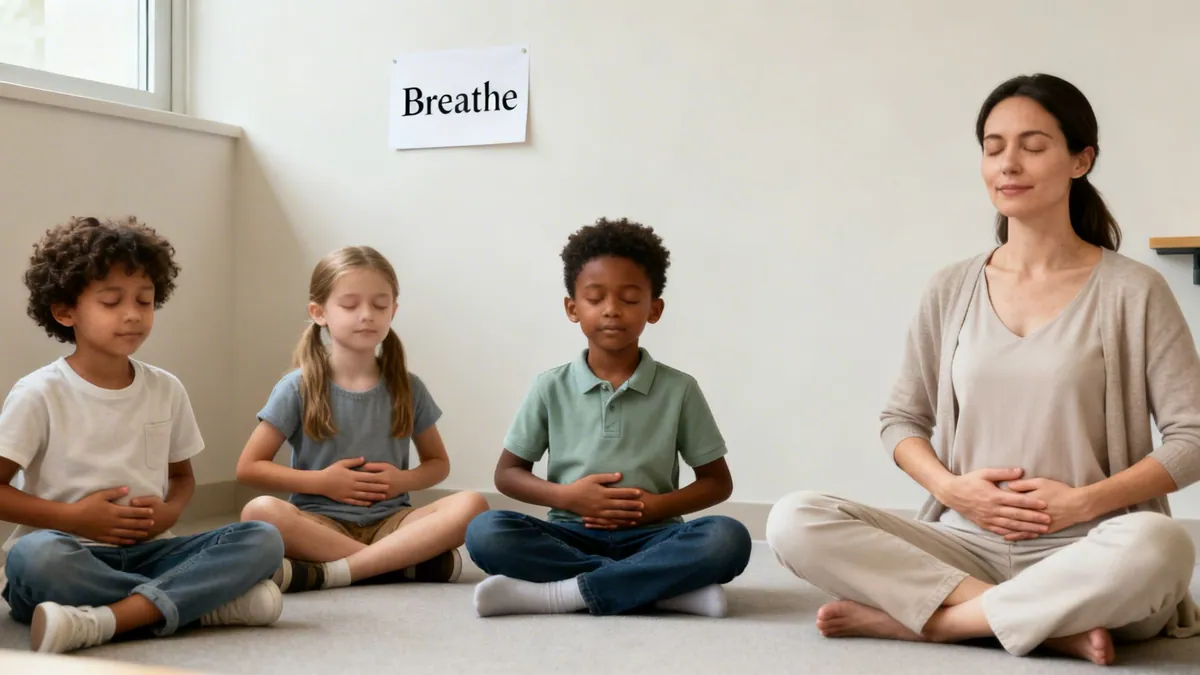
A diverse teacher and three children sit cross-legged, eyes closed, practicing mindfulness meditation with a 'Breathe' sign.

This approach works by interrupting the "fight, flight, or freeze" reaction. When a student feels anxious or angry, their breathing becomes shallow and their heart rate increases. Intentional deep breaths send a signal to the brain that the danger has passed, allowing the prefrontal cortex-the brain's center for rational thinking-to come back online. This shift is crucial for problem-solving and learning. For a deeper look at specific, immediate relief techniques, explore these science-backed methods to calm down fast.

How to Implement Breathing and Mindfulness

For Younger Students (K-3):

  • "Smell the Flowers, Blow Out the Candles": Guide children to inhale deeply through their nose as if smelling a flower, then exhale slowly through their mouth as if blowing out birthday candles. Example: Before a challenging activity, say, "Let's get our brains ready. Everyone pick a beautiful flower in your mind. Okay, let's smell it… [breathe in]… now gently blow out the birthday candles… [breathe out]."
  • "Belly Breathing": Have students lie down and place a small stuffed animal on their belly. They can watch it rise and fall with each deep breath, providing a visual anchor. Example: During a calm-down moment, you can say, "Let's give our 'breathing buddies' a ride. Lie on your back, put your buddy on your belly, and let's see if you can rock it to sleep with your slow, deep breaths."

For Older Students (4-8):

  • Box Breathing: Students inhale for four counts, hold for four, exhale for four, and hold for four. Tracing a square in the air or on their desk can help them follow the rhythm. Example: Before a test, guide them: "Let's calm our nerves with some box breathing. Silently, we'll breathe in for four, hold for four, out for four, hold for four. You can trace the box on your desk as we go."
  • 4-7-8 Breathing: Inhale through the nose for four seconds, hold the breath for seven seconds, and exhale completely through the mouth for eight seconds. This is particularly effective for managing anxiety. Example: If a student is visibly upset, you can quietly say, "Let's try that 4-7-8 breath we practiced. I'll do it with you. In through your nose for four… hold it… and a long, slow whoosh out for eight."

Pro Tip: Normalize taking a "breathing break." Frame it as a smart, strong choice anyone can make to reset their brain, not as a punishment or sign of weakness. Consistent practice builds this skill into an automatic response over time. You can find more calming activities for the classroom to build a supportive environment.

2. Emotional Labeling and Naming

Emotional labeling is the practice of identifying and putting words to feelings as they arise. Popularized by neuroscientist Daniel Siegel's concept to "name it to tame it," this strategy helps students build a rich emotional vocabulary and is a cornerstone of emotional intelligence. The act of naming an emotion reduces activity in the amygdala (the brain's alarm center) and engages the prefrontal cortex, allowing for more thoughtful responses instead of impulsive reactions. This foundational skill enables students to communicate their needs clearly and develop empathy for others.

This approach works by externalizing an internal state, creating a small but critical space between a feeling and a reaction. When a student can move from a general "I'm mad" to a more specific "I feel frustrated and left out," they gain control over the experience. They are no longer consumed by the emotion but are observing it. This cognitive shift is one of the most effective self-regulation strategies because it empowers students to understand their internal world and make conscious choices about their behavior. For a deeper guide on this, explore these practical tips for naming feelings and helping kids find the words they need.

How to Implement Emotional Labeling

For Younger Students (K-3):

  • Feelings Chart Check-in: Start the day by having students point to a picture on an emotion chart that shows how they are feeling and say the word aloud. Example: During morning circle, say, "Let's check in with our hearts. Look at our feelings chart. Today, I'm pointing to 'calm.' Maria, which picture is closest to your feeling right now?"
  • Storybook Emotions: While reading a story, pause and ask, "How do you think that character is feeling right now? What clues tell you that?" Example: While reading The Three Little Pigs, you might ask, "Look at the pig's face when the wolf is at the door. He looks scared. How can you tell he is scared?"

For Older Students (4-8):

  • Emotion Wheel: Use a more detailed emotion wheel to help students move from basic feelings (like "sad") to more nuanced ones (like "disappointed," "lonely," or "grieving"). Example: If a student says they're "mad" about a group project, you can pull out an emotion wheel and ask, "Let's look closer. Is it angry-mad, frustrated-mad, or maybe even feeling disrespected?"
  • "Feeling/Behavior" Sentence Frames: Teach students to separate feelings from actions with this script: "I feel [emotion] because [reason], and I am choosing to [calm-down strategy]." Example: "I feel annoyed because my pencil broke, and I am choosing to take three deep breaths before I ask for a new one."

Pro Tip: Model this in your own life. Verbally narrate your own feelings in a calm way, such as, "I'm feeling a little overwhelmed by the noise in here, so I'm going to take three deep breaths." This shows students that all emotions are normal and manageable.

3. The STOP Technique (Stop, Take a breath, Observe, Proceed)

The STOP technique is a simple yet effective four-step strategy designed to interrupt impulsive reactions and create space for a more thoughtful response. It serves as a mental "pause button," allowing students to break free from an automatic emotional spiral. By guiding them through the sequence of Stopping, Taking a breath, Observing their thoughts and feelings, and then Proceeding with a choice, this tool helps students move from a reactive state to a responsive one. It directly supports social-emotional learning by building self-awareness and responsible decision-making skills.

This method works by creating a critical gap between a triggering event and a student's reaction. When a student feels frustrated or angry, their immediate impulse might be to lash out. The STOP technique creates a moment for their prefrontal cortex to catch up with their emotional brain, the amygdala. This pause allows them to recognize their feelings, consider the consequences of their actions, and choose a more constructive path forward. The simplicity of the acronym makes it one of the most memorable and practical self-regulation strategies for in-the-moment support.

How to Implement the STOP Technique

For Younger Students (K-3):

  • Physical STOP Sign: Use a visual cue, like holding up a hand like a stop sign, to initiate the first step. Guide them verbally: "Let's STOP. Now let's take a big dragon breath." Example: When two students start arguing over a toy, you can say, "Freeze! Let's both use our STOP power. First, we stop our bodies and our voices."
  • "Notice and Name": During the "Observe" step, help them name their feeling. Ask, "What are you noticing in your body? Does your tummy feel tight? You might be feeling frustrated." Example: "Okay, we've taken our breath. Now let's observe. I see you've made fists with your hands. That's a clue that you might be feeling angry. Is that right?"

For Older Students (4-8):

  • Internal Monologue: Encourage them to run through the steps silently in their head. The goal is for the technique to become an internal, automatic process. Example: If you see a student getting frustrated with a math problem, you can quietly walk over and whisper, "Looks like a good time to use STOP in your head. Just pause and take that one good breath."
  • Scenario Role-Playing: Practice using STOP in hypothetical situations during a morning meeting, like what to do if someone cuts in line or takes their pencil without asking. Example: "Today's scenario: someone posts an unkind comment online. What's the first thing we do? Right, STOP. We don't type back right away. What's next? Take a breath. Good. Now, what are we observing…?"

Pro Tip: Model using STOP yourself. When you feel overwhelmed, say aloud, "Okay, I'm feeling a little flustered. I'm going to STOP, take a breath, observe what's happening, and then decide how to proceed." This authentic modeling shows students that self-regulation is a skill for everyone.

4. Movement and Physical Activity

Intentional movement and physical activity are powerful self regulation strategies that help students manage their emotions by releasing endorphins and providing essential sensory feedback. Whether through structured sports, stretching, or spontaneous dance, physical activity works as both a proactive tool to maintain an emotional baseline and a reactive one to shift out of a dysregulated state. It is particularly effective for kinesthetic learners who process information and emotions through their bodies.
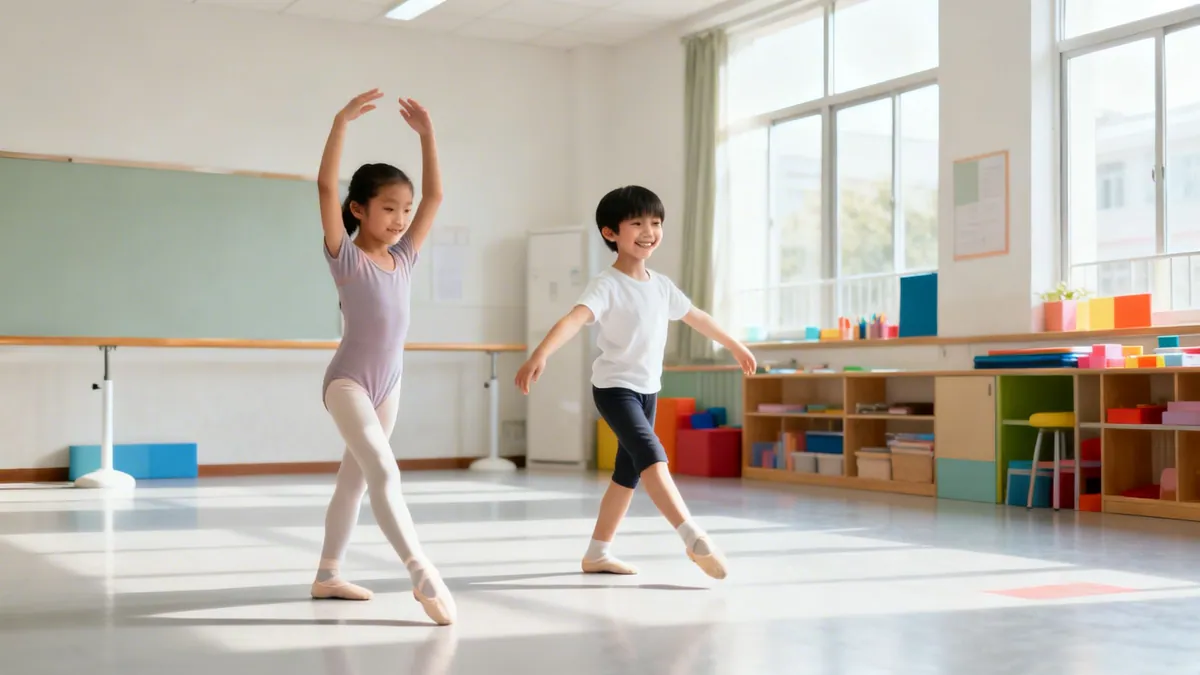
Two smiling children practice ballet in a bright studio, the girl in a leotard and boy in a t-shirt.

This approach helps complete the stress response cycle, allowing the body to physically discharge built-up tension and frustration. When a student feels agitated or unfocused, their body holds that energy. Movement provides a healthy outlet, improving blood flow to the brain and resetting the nervous system. This physical reset makes it easier for students to re-engage with learning and social situations constructively, a core principle found in programs like Soul Shoppe's movement-based curriculum.

How to Implement Movement and Physical Activity

For Younger Students (K-3):

  • Animal Walks: Have students move across the room like different animals, such as a bear (on hands and feet), a frog (jumping), or a crab (crawling backward). This provides great sensory input. Example: "I see a lot of wiggly energy! Let's take a one-minute animal break. Everybody, crawl like a bear to the bookshelf and back to your spot."
  • Dance Breaks: Put on a short, energetic song and lead a quick "freeze dance" session. When the music stops, everyone freezes in place until it starts again. Example: Use this as a transition. "Okay, writers, pens down! Time for a 90-second dance party before we start math!"

For Older Students (4-8):

  • Classroom Yoga: Lead a 5-minute yoga flow with simple poses like Mountain, Warrior II, and Downward-Facing Dog. Focus on connecting breath with movement. Example: In the middle of a long class block, say, "Alright everyone, let's stand up and do a 3-minute stretch. Reach for the sky in Mountain Pose, and let's flow through two rounds of Warrior poses to reset our bodies."
  • Cross-Body Exercises: Guide students through activities that cross the body's midline, like touching their right hand to their left knee and vice versa. These movements help integrate the brain's hemispheres. Example: If focus is waning, announce, "Time for a brain wake-up! Stand up. We're going to do 20 cross-crawls. Right elbow to left knee, left elbow to right knee. Let's go!"

Pro Tip: Create a "movement menu" with pictures or short descriptions of 5-6 quick activities students can choose from when they feel antsy. Offering choices empowers them to recognize their needs and take ownership of their self-regulation.

5. Social Problem-Solving and Perspective-Taking

Social problem-solving is a structured approach that moves students beyond reactive, emotional responses to conflict. It teaches them to analyze challenges systematically by identifying the problem, brainstorming solutions, considering consequences, and making a thoughtful choice. This skill is paired with perspective-taking, the ability to understand a situation from another person’s point of view, which is fundamental to building empathy and connection within a school community.

This strategy works by externalizing the conflict and turning it into a manageable puzzle rather than a personal attack. When students feel wronged or frustrated, their first impulse might be to blame or retaliate. By introducing a clear, step-by-step process, educators help them engage their rational brain, slow down their emotional reactions, and see the situation more clearly. This is one of the most practical self-regulation strategies because it gives students a concrete plan for navigating the complex social world, reducing anxiety and impulsive behavior.

How to Implement Social Problem-Solving

For Younger Students (K-3):

  • "Problem-Solving Wheel": Create a visual wheel with simple solutions like "Ask for a turn," "Say please," "Walk away," or "Get a teacher." When a conflict arises over a toy, guide students to the wheel to choose a strategy. Example: "I see two friends who both want the blue truck. Let's go to the problem-solving wheel. Which idea could you try first? Ah, 'Ask for a turn.' Let's try that."
  • "How Would They Feel?": During read-alouds, pause and ask questions about the characters' feelings. For example, "How do you think the wolf felt when the little pig wouldn't let him in? Why?" Example: After reading about a character who shares, ask, "How did it make the other character feel when she shared her snack? How did it make her feel to be kind?"

For Older Students (4-8):

  • Structured Protocol: Teach and post a formal problem-solving process: 1. Define the problem (without blame). 2. Brainstorm at least three solutions. 3. Evaluate the pros and cons of each. 4. Choose one and try it. 5. Reflect on the outcome. Example: Two students are arguing about their group project. You say, "Okay, let's use the protocol. Step 1: What's the problem, stated without blame? 'We disagree on the topic for our presentation.' Good. Step 2: Let's brainstorm three possible solutions right now."
  • Role-Playing Scenarios: Use common classroom conflicts (e.g., being left out at recess, disagreeing on a group project) as practice scenarios for role-playing the protocol. Explore more ideas with these perspective-taking activities.

Pro Tip: Frame problem-solving as a skill everyone is learning, including adults. When you make a mistake, model the process out loud: "I was frustrated and spoke too quickly. I should have taken a moment to think about a better solution." This normalizes the learning process and encourages students to try without fear of failure.

6. Positive Self-Talk and Cognitive Reframing

Positive self-talk and cognitive reframing are powerful self-regulation strategies that teach students to become aware of their internal dialogue and intentionally shift unhelpful thoughts. This approach helps children move from rigid, negative thinking to more flexible and encouraging perspectives. Instead of automatically assuming the worst, students learn to speak to themselves with the same kindness they would offer a friend, building resilience by changing the narrative around challenges and mistakes.

This strategy works by intercepting and challenging automatic negative thoughts before they escalate into overwhelming emotions. When a student thinks, "I'm terrible at math," it can lead to feelings of frustration and avoidance. Cognitive reframing encourages them to pause and replace that thought with a more constructive one, such as, "This math problem is tricky, but I can try a different strategy." This shift empowers students to view setbacks as temporary and solvable, which is a core component of developing a growth mindset. To learn more about fostering this mindset, explore these ways to build resilience and perseverance in students.

How to Implement Self-Talk and Reframing

For Younger Students (K-3):

  • "Thought Swapping": Create a T-chart with "Helpful Thoughts" on one side and "Unhelpful Thoughts" on the other. When a student says, "No one will play with me," guide them to find a "helpful thought" swap, like, "I can ask someone to play." Example: "I hear you saying, 'This is too hard.' That sounds like an unhelpful thought. Let's look at our chart. What's a helpful thought we could swap it with? How about, 'I can try my best'?"
  • "Turn-Around Phrases": Introduce simple, powerful phrases like adding the word "yet" to statements. "I can't read this" becomes "I can't read this yet." Example: A student says, "I don't know how to tie my shoes." You can gently respond, "You don't know how to tie them yet. Let's practice together."

For Older Students (4-8):

  • "Catch It, Check It, Change It": Teach students a three-step process: First, catch the negative thought. Second, check if it's 100% true and helpful. Third, change it to a more realistic or supportive statement. Example: A student mutters, "I'm going to fail this test." You can guide them: "Okay, catch that thought. Now, let's check it. Is it 100% true that you will fail? You studied. So, let's change it. What's more accurate? Maybe, 'I'm nervous about the test, but I'm prepared'."
  • "What Would You Tell a Friend?": When a student is self-critical, ask them what they would say to a friend in the same situation. This helps them access a more compassionate inner voice. Example: "You just called yourself 'stupid' for making that mistake. If your best friend made the same mistake, would you call them stupid? No? What would you say to them? Okay, now try saying that to yourself."

Pro Tip: Model your own cognitive reframing out loud. Saying something like, "Oops, I forgot to bring the papers. It's frustrating, but I can solve this by emailing them later," shows students that everyone makes mistakes and that the response is what matters most.

7. Sensory Tools and Regulation Stations

Sensory tools and regulation stations offer tangible, physical support for students learning to manage their internal states. Tools like fidgets, weighted lap pads, and noise-canceling headphones provide direct sensory input that can calm an overstimulated nervous system or provide the necessary stimulation for a student to focus. A regulation station, often called a "calm corner" or "peace corner," is a designated space where students can access a curated collection of these tools to independently practice self-regulation.

A cozy calm corner featuring a bean bag, weighted blanket, headphones, and a sensory ball.

This approach honors neurodiversity by acknowledging that different brains process sensory information differently. For some students, the hum of fluorescent lights can be overwhelming, while for others, sitting still is a significant challenge. Sensory-based self-regulation strategies work by giving the nervous system the input it needs to find a "just right" state of arousal for learning and engagement. To understand the foundational science behind these tools, delving into this guide on what is sensory integration can provide invaluable insight into how children process and respond to sensory input.

How to Implement Sensory Tools and Stations

For Younger Students (K-3):

  • "Calm-Down Corner": Create a cozy corner with soft pillows, a weighted blanket, and a small box of sensory items like squishy balls, textured fabrics, and scented playdough. Example: When a student is starting to get upset, you can say, "It looks like your body needs a break. Would you like to spend five minutes in the calm-down corner with the blue squishy ball to help your body feel better?"
  • Individual Sensory Bags: For students who need consistent support, a small pouch with two or three approved fidgets can be kept at their desk for quiet use during lessons. Example: "David, remember if your hands start feeling busy during story time, you can quietly use the stretchy noodle from your sensory bag to help you listen."

For Older Students (4-8):

  • Regulation Station: Design a space that is less about "calm" and more about "reset." Include options like resistance bands for stretching, noise-canceling headphones, and more discreet fidgets like spinner rings or putty. Example: You notice a student tapping their pen loudly and shaking their leg. You can say, "Hey Alex, it looks like you have a lot of energy right now. Feel free to use a resistance band at the regulation station for a few minutes to get that energy out."
  • Sensory Choice Board: Offer a menu of options students can choose from when feeling dysregulated, such as: "Listen to music for 5 minutes," "Use the weighted lap pad," or "Squeeze the stress ball 10 times." Example: "Sarah, I see you're feeling overwhelmed. Please point to one choice on the sensory board that you think would help your brain reset right now."

Pro Tip: Explicitly teach the purpose and procedures for using sensory tools and regulation stations. Frame them as "brain tools," not toys. Emphasize that these are available to everyone to help their brains get ready to learn, which destigmatizes their use and promotes a supportive classroom culture.

8. Journaling and Reflective Writing

Journaling and reflective writing offer a quiet, personal space for students to process their emotions, clarify their thoughts, and track their personal growth. This strategy involves putting feelings and experiences onto paper, which engages the brain differently than verbalizing them. Whether through unstructured free-writing or guided prompts, journaling supports emotional release, cognitive integration, and is one of the most effective self regulation strategies for building introspection.

The act of writing down thoughts and feelings externalizes them, making them feel more manageable. Research by psychologists like James Pennebaker shows that this form of expressive writing can decrease stress and improve well-being. By giving abstract emotions a concrete form, students can examine their experiences from a distance, identify patterns, and develop a stronger sense of self-awareness and control. It serves as a personal record of their resilience and progress.

How to Implement Journaling and Reflective Writing

For Younger Students (K-3):

  • Draw and Write Journals: Students can draw a picture of a feeling or event and then write (or dictate) a single sentence about it. For example, "I felt happy when I played on the swings." Example: "Today in your journal, I want you to draw a picture of something that happened at recess. Then you can write one sentence about how it made you feel."
  • "Rose and Thorn": Each day, students share or draw one positive thing (a rose) and one small challenge (a thorn). This simple structure builds a habit of reflection. Example: At the end of the day, say, "Let's think about our day. What was your rose—something that made you smile? What was your thorn—something that was a little tricky? Draw them in your journal."

For Older Students (4-8):

  • Guided Prompts: Offer weekly prompts aligned with social-emotional learning goals. Examples include: "Describe a time you felt proud and what you did," or "What was a challenge this week and how did you approach it?" Example: "This week's journal prompt is on the board: 'Write about a time you disagreed with a friend. What happened, and what did you learn from it?'"
  • Gratitude Journaling: Start or end the day by having students write down three specific things they are grateful for. This practice is proven to shift focus toward positive experiences. Example: As a bell-ringer activity, instruct students, "Open your journals and for the next three minutes, list three things, big or small, that you're thankful for today. It could be your breakfast, a sunny day, or a friend."

Pro Tip: Clearly establish that journals are private spaces. State that you will never read them unless a student explicitly asks you to. This trust is essential for honest self-expression and makes journaling a safe tool for emotional exploration.

9. Social Support and Strategic Breaks (Connection-Building + Time-Out)

Social support and strategic breaks are two intertwined self-regulation strategies that center on safety and connection. When students feel a strong sense of belonging and know they have trusted adults and peers to turn to, their capacity for managing emotions increases. This foundation of social safety makes strategic breaks, or non-punitive time-outs, far more effective. These breaks are not punishments but restorative opportunities for students to step away, decompress, and practice regulating themselves in a calm space.

This combination works by addressing a core human need for connection, as highlighted by researchers like Brené Brown. A regulated, caring adult can help a child co-regulate, modeling calmness and providing the security needed for the child's nervous system to settle. Strategic breaks give students the time and space to apply other self-regulation strategies without the pressure of an audience. This builds autonomy and internal skills, showing students they are capable of managing big feelings. For a deeper dive into creating this environment, explore Soul Shoppe's relationship-centered SEL programming.

How to Implement Connection and Breaks

For Younger Students (K-3):

  • Morning Meetings: Start each day with a brief, structured check-in circle where every child has a chance to share. This builds community and a sense of being seen. Example: "Good morning, everyone! Our greeting today is a high-five. After you greet your neighbor, please share one thing you're looking forward to today."
  • "Cool-Down Corner": Create a designated, cozy space with soft pillows, sensory tools (like squishy balls or textured fabrics), and picture books about feelings. Students can choose to go there when they feel overwhelmed. Example: "Jason, it looks like you're feeling frustrated. You can choose to take a 5-minute break in our cool-down corner to help your body calm down."

For Older Students (4-8):

  • Peer Buddy Systems: Pair students to support each other academically and socially. Train them in active listening and how to offer help respectfully. Example: "Remember, if you're feeling stuck on the assignment, you can use the 'Ask 3 Before Me' rule, and your peer buddy is one of those people you can check in with first."
  • Restorative Circles: Use circles to discuss classroom issues or repair harm after a conflict. This process gives everyone a voice and focuses on mending relationships rather than assigning blame. Example: After a disagreement at lunch, you might say, "Let's have a restorative circle to talk about what happened. We'll use the talking piece, and everyone who wants to will get a chance to share how they were impacted."

Pro Tip: Frame breaks as a tool for everyone. Say, "This space helps your brain get back on track so you can learn and solve problems." Practice using the break area when everyone is calm, so students understand its purpose before they are in a moment of crisis. Always follow up with a brief, quiet conversation to reflect and welcome the student back.

10. Goal-Setting, Progress Monitoring, and Growth Celebration

Engaging students in setting meaningful goals, tracking their own progress, and celebrating growth is a powerful self-regulation strategy that builds agency and motivation. This approach shifts the focus from external control to internal drive, teaching students how to identify a desired outcome, create a plan, and persist through challenges. By framing effort and setbacks as part of a journey, it reinforces a growth mindset and develops crucial executive functioning skills.

This process works by making abstract concepts like "being respectful" or "staying calm" concrete and measurable. When a student helps create a goal, they take ownership of it. Regularly monitoring progress provides tangible evidence of their effort, which builds self-efficacy and the belief that they can influence their own outcomes. This metacognitive practice is a cornerstone of developing mature self-regulation.

How to Implement Goal-Setting and Celebration

For Younger Students (K-3):

  • Behavioral Goals: Frame goals in simple, positive language. For instance, "I will use my walking feet in the hallway" or "I will raise my hand before speaking." Example: You might create a goal with a child: "Your goal for this week is to use kind words when you feel frustrated. Let's practice what that sounds like."
  • Visual Progress Trackers: Use a sticker chart, a coloring path, or a jar to fill with pom-poms. The visual feedback is immediate and motivating for this age group. A student might add a sticker to their chart each time they remember to use kind words with a friend. Example: "Wow, Michael! I saw you ask for a turn instead of grabbing. That was you using kind words! Go put a pom-pom in our class goal jar!"

For Older Students (4-8):

  • SMART Goals: Introduce the concept of SMART (Specific, Measurable, Achievable, Relevant, Time-bound) goals. A goal could be: "For the next two weeks (Time-bound), I will use my 4-7-8 breathing strategy (Specific) at least once a day when I feel frustrated (Measurable, Achievable) so I can stay focused in class (Relevant)." Example: A student wants to be more organized. You help them set a goal: "My goal is to write down all my homework in my planner (Specific) every day for the rest of the month (Time-bound)."
  • Student Portfolios & Check-ins: Have students keep a simple journal or portfolio to document their progress. Conduct weekly check-ins where they reflect on what worked, what was hard, and if the goal needs to be adjusted. Example: During a check-in, you could ask, "Let's look at your goal of starting your homework before 7 PM. How did it go this week? What made it easy? What made it hard?"

Pro Tip: Celebrate the effort and the process, not just the final achievement. Acknowledge persistence when a student tries a calming strategy, even if they still get upset. This reinforces that the act of trying is what builds the skill, making them more likely to stick with these self-regulation strategies long-term.

10-Strategy Self-Regulation Comparison

Strategy Implementation complexity Resource requirements Expected outcomes Ideal use cases Key advantages
Mindfulness and Deep Breathing Low — simple to teach but needs regular practice Minimal — none required; visual cues helpful Immediate physiological calming, improved attention and emotional awareness Transitions, anxiety spikes, classroom routines, universal prevention Portable, research-backed, quick skill for all ages
Emotional Labeling and Naming Low–Moderate — requires modeling and repeated use Low — emotion charts, word banks, time for practice Greater emotional vocabulary, reduced reactivity, improved empathy Morning check-ins, conflict de-escalation, SEL lessons Builds communication; foundational for other strategies
STOP Technique (Stop, Take a breath, Observe, Proceed) Low — easy mnemonic; needs rehearsal to automate Minimal — posters/reminders, practice scenarios Interrupts impulsive reactions; increases intentional responding Moments of conflict, impulsivity, test anxiety Fast, memorable, empowers student choice
Movement and Physical Activity Moderate — requires scheduling and planning Variable — space, time, optional equipment Improved mood, reduced anxiety/ADHD symptoms, energy regulation Brain breaks, PE, kinesthetic learners, recess redesign Multiple health benefits; highly effective for active students
Social Problem-Solving & Perspective-Taking Moderate–High — explicit instruction and practice needed Moderate — curriculum, role-plays, facilitator time Better conflict resolution, empathy, executive functioning Peer mediation, restorative circles, collaborative projects Addresses root causes; builds lifelong social skills
Positive Self-Talk & Cognitive Reframing Moderate — needs metacognitive training and reinforcement Low — prompts, anchor charts, teacher modeling Reduced negative thinking, increased resilience and persistence Test setbacks, performance anxiety, growth-mindset work Promotes long-term resilience and self-efficacy
Sensory Tools & Regulation Stations Low–Moderate — set-up and clear routines required Low — fidgets, headphones, cushions; dedicated space ideal Immediate sensory regulation; improved focus for neurodiverse students Calm corners, sensory breaks, individualized support plans Individualized, low-cost, honors neurodiversity
Journaling and Reflective Writing Low–Moderate — requires prompts and privacy norms Low — notebooks, prompts, quiet time Enhanced self-awareness, emotional processing, written expression Morning journals, post-incident reflection, counseling Private outlet, documents growth, supports nonverbal learners
Social Support & Strategic Breaks (Connection + Time-Out) Moderate–High — sustained relationship-building and procedures Moderate — trained staff, dedicated spaces, time for follow-up Co-regulation, reduced escalation, greater belonging and safety Trauma-informed classrooms, re-entry after incidents, mentoring Sustainable, restorative, reduces shame compared to punitive approaches
Goal-Setting, Progress Monitoring & Growth Celebration Moderate — planning, consistent monitoring and feedback Moderate — tracking tools, check-ins, family engagement Increased motivation, self-efficacy, sustained behavior change Individual goals, IEPs, long-term habit-building Makes progress visible, reinforces persistence and agency

Putting It All Together: Building a Culture of Self-Regulation

We've explored ten powerful self regulation strategies, from the immediate calm of deep breathing to the long-term resilience built through cognitive reframing. Each tool offers a unique pathway for children to understand and manage their internal worlds. Yet, the true power of these strategies emerges not from isolated lessons, but from their consistent integration into the rhythm of daily life. The ultimate goal isn't just to teach a child what to do when they feel overwhelmed; it's to cultivate an environment where emotional awareness and thoughtful response become second nature.

This journey is about building a culture, not just checking off a list. It’s the difference between a teacher occasionally saying, "Use your words," and a classroom where emotional labeling is a daily practice, supported by visual charts and celebrated during morning meetings. It's the shift from a punitive time-out to a restorative "strategic break" in a designated regulation station, where a child learns to connect their physical sensations with a need for sensory input or quiet reflection.

From Individual Skills to a Shared Language

The most profound impact comes when these self regulation strategies become a shared language between adults and children, and among peers. When an entire school community adopts the STOP technique, a student in crisis knows that any adult they approach will understand their need for a moment to pause and breathe. Similarly, when a family embraces positive self-talk, a child struggling with homework can be guided with a gentle reminder: "I hear that 'I can't do this' thought. What's a stronger, kinder thought we can try instead?"

This shared understanding turns abstract concepts into concrete, collaborative actions. It creates a predictable and supportive safety net, reassuring children that their big feelings are valid and that they are equipped with the tools, and the support system, to navigate them constructively.

Key Takeaway: Self-regulation is not a solitary skill learned in a vacuum. It flourishes in an ecosystem of co-regulation, where trusted adults model, guide, and reinforce these strategies with patience and consistency.

Actionable Next Steps for Educators and Parents

Building this culture can feel like a monumental task, but it begins with small, intentional steps. Here is a practical roadmap to get you started:

  1. Start Small and Model Consistently: Don't try to implement all ten strategies at once. Choose one or two that feel most accessible for your students or children. Perhaps you begin by introducing "Belly Breathing" during transitions or morning meetings. As the adult, you must model it authentically. When you feel your own frustration rising, say out loud, "I'm feeling a little overwhelmed, so I'm going to take three deep breaths to calm my body." This modeling is more powerful than any worksheet.
  2. Make it Visual and Accessible: Create tangible reminders. Post visuals of the STOP technique in the classroom. Designate a "Peace Corner" or "Regulation Station" with a few sensory tools. For older students, co-create posters with positive self-talk affirmations. These physical cues serve as environmental prompts, reminding students to use their skills before emotions escalate.
  3. Integrate, Don't Isolate: Weave these strategies into your existing routines. During literature discussions, ask questions like, "How do you think that character was feeling? What problem-solving strategy could they have used?" When a conflict arises on the playground, guide students through perspective-taking. Connect goal-setting to academic projects and personal conduct, celebrating the effort and progress along the way.
  4. Embrace Progress Over Perfection: There will be setbacks. A child who has successfully used their breathing techniques for weeks might have a difficult day and forget. This is normal. The goal is not to eliminate emotional outbursts but to shorten their duration, reduce their intensity, and build the child’s capacity to recover more quickly. Respond to these moments with empathy, not judgment, and treat them as opportunities for reteaching.

By patiently and persistently weaving these self regulation strategies into the fabric of your classroom or home, you are giving children a gift that extends far beyond academic success. You are equipping them with the emotional intelligence, resilience, and confidence to build healthy relationships, overcome obstacles, and navigate the complexities of life with grace and strength. You are not just managing behavior; you are nurturing a foundation for lifelong well-being.


Ready to build a comprehensive, campus-wide culture of safety and connection? Soul Shoppe provides expert training and programs that empower both students and educators with a shared language and practical tools for thriving together. Learn more about bringing these powerful strategies to your entire school community at Soul Shoppe.