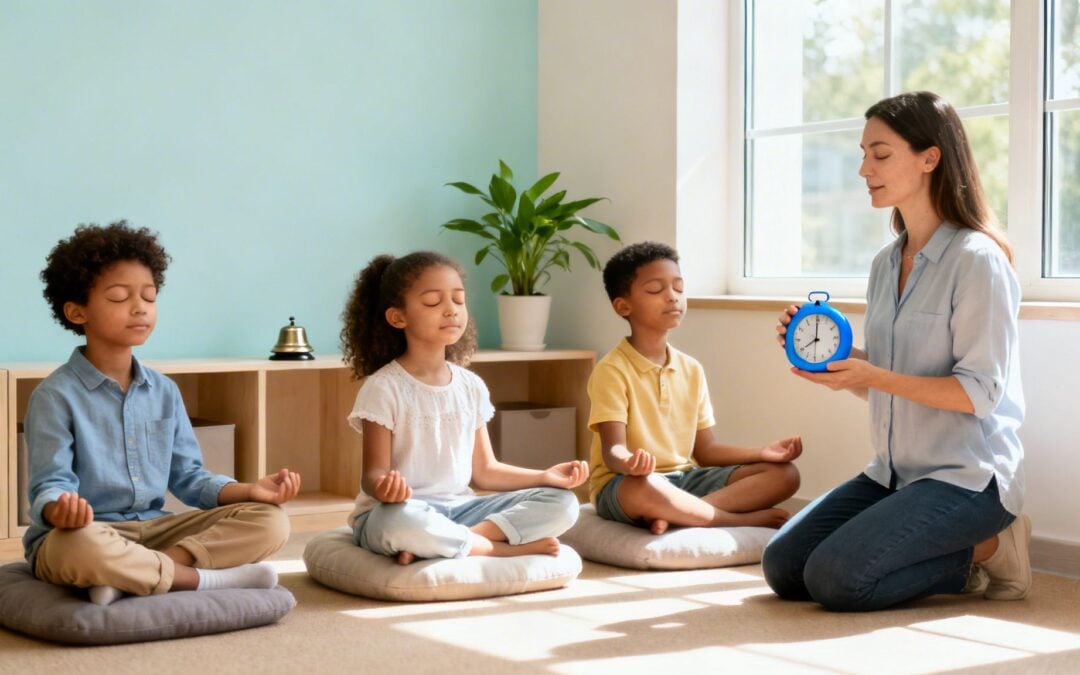
In today's fast-paced world, children navigate a landscape of constant stimulation and high expectations. The ability to pause, breathe, and connect with the present moment isn't just a nice-to-have; it's a foundational skill for emotional regulation, focus, and resilience. This article moves beyond theory, offering a practical, evidence-informed toolkit of 10 mindfulness exercises for kids.

Designed for parents, teachers, and caregivers, each activity is broken down into simple, actionable steps, complete with age-appropriate adaptations and real-world examples. From calming anxious minds before a test to building empathy in the classroom, these exercises are more than just activities. They are building blocks for social-emotional learning (SEL) that equip children to thrive both academically and personally.

This comprehensive guide provides everything you need to introduce these powerful practices into your home or classroom. You will find step-by-step instructions, time guidance, and specific tips for adapting each exercise for different age groups and settings. For those looking to deepen their understanding and supplement these activities, exploring curated lists of books about social emotional learning can provide valuable narratives and frameworks to reinforce these concepts.

We will explore a variety of techniques, including:

  • Belly Breathing to manage stress.
  • Mindful Listening to improve focus.
  • Gratitude Practices to foster a positive outlook.
  • Body Scan Meditations to build self-awareness.

Each section is structured for quick reference and immediate implementation, helping you cultivate a more peaceful and attentive environment for the children in your care. By integrating these mindfulness exercises, you are giving kids a superpower: the ability to understand and manage their inner world with confidence.

1. Belly Breathing (Diaphragmatic Breathing)

Belly breathing, also known as diaphragmatic breathing, is a cornerstone of mindfulness exercises for kids. This foundational practice teaches children to take slow, deep breaths that originate from the diaphragm, causing the belly to rise and fall. This simple action directly engages the parasympathetic nervous system, our body's natural relaxation response, helping to lower heart rate and reduce feelings of anxiety or stress.

A young Asian girl sits peacefully on a yoga mat with closed eyes, practicing mindfulness.

Unlike shallow chest breathing, which is common during stressful moments, belly breathing provides an immediate and tangible tool for self-regulation. It is one of the most accessible self-regulation strategies for students and can be used anywhere, anytime.

How to Guide Belly Breathing

To introduce this technique, have children lie down comfortably or sit with a straight spine. Instruct them to place one hand on their chest and the other on their belly. Cue them to breathe in slowly through their nose, feeling the hand on their belly rise like a balloon filling with air, while the hand on their chest stays relatively still. Then, they should exhale slowly through their mouth, feeling their belly deflate.

Key Cue: "Imagine you have a small balloon in your belly. When you breathe in, you are slowly filling it up with air. When you breathe out, the balloon gently deflates."

Practical Implementation and Tips

  • Make it Visual: Place a small stuffed animal or a "breathing buddy" on the child's belly while they lie down. Their goal is to make the buddy gently rise and fall with each breath. For example, a child upset about a scraped knee can lie down with their favorite teddy bear on their tummy and focus on giving it a slow ride up and down.
  • Use Counting: Guide children through a simple counting pattern, such as breathing in for four counts, holding for four counts, and exhaling for four counts. This adds a focal point for their attention.
  • Integrate into Routines: A teacher might lead a two-minute belly breathing session after recess to help the class transition calmly to the next lesson. A parent can use it as part of a bedtime routine to promote restful sleep.
  • Normalize the Practice: Introduce belly breathing when children are calm and regulated. For example, practice for one minute during a morning meeting at school. This ensures they build muscle memory for the skill, making it easier to access during moments of frustration, anger, or nervousness before a big game.

2. Body Scan Meditation

The Body Scan Meditation is a guided exercise that encourages children to bring gentle, nonjudgmental attention to different parts of their body, one at a time. This practice helps kids develop a stronger mind-body connection, teaching them to notice physical sensations like warmth, tingling, or tension without feeling the need to react to them. It is a powerful tool for building body awareness and helping children recognize how emotions can manifest physically.

Pioneered in modern mindfulness by Jon Kabat-Zinn, this technique is not about changing or fixing sensations, but simply noticing them. For children, this fosters an ability to sit with discomfort and understand the transient nature of physical feelings, which is a key component of emotional resilience. It's one of the most effective mindfulness exercises for kids to connect with their inner world.

How to Guide a Body Scan Meditation

Have children lie down comfortably on their backs with their eyes closed or with a soft, downward gaze. In a calm voice, guide their attention sequentially through the body, starting from the toes and moving slowly up to the head. Invite them to notice any sensations in each part without judgment.

Key Cue: "Bring your attention to your toes. You don't have to move them, just notice how they feel. Are they warm or cool? Tingly or still? Whatever you feel is perfectly okay."

Practical Implementation and Tips

  • Keep it Brief and Playful: For younger children, start with a 3-5 minute scan. You can call it a "Tingle Tour" or "Flashlight Focus," imagining a gentle beam of light scanning their body. For example, a kindergarten teacher could say, "Let's shine our magic flashlight onto our feet. What do you notice?"
  • Allow for Movement: It's natural for kids to fidget. Offer "wiggle breaks" between body parts. You might say, "Now let your feet have a little wiggle before we move our attention to our legs."
  • Use Inclusive Language: Frame invitations gently. For instance, "Notice your left hand… or if you prefer, just think about that space." This is especially important for children with diverse physical abilities or sensitivities.
  • Integrate into Daily Transitions: A guidance counselor might use a short body scan with an anxious student to help them ground themselves before returning to class. A parent can lead a calming scan as part of a bedtime routine to release the day's tension and promote sleep. For example, a parent could say, "Let's notice if our legs feel tired from all that running today. Now let's see how our tummy feels."

3. Mindful Movement & Brain Breaks (Yoga, Short Movement Breaks)

Mindful movement combines gentle physical activity with present-moment awareness, making it one of the most engaging mindfulness exercises for kids. Practices like children's yoga or short, structured "brain breaks" bridge the mind-body connection, helping children release physical tension, improve focus, and regulate their energy levels. This approach is especially effective for kinesthetic learners who thrive when they can move their bodies.
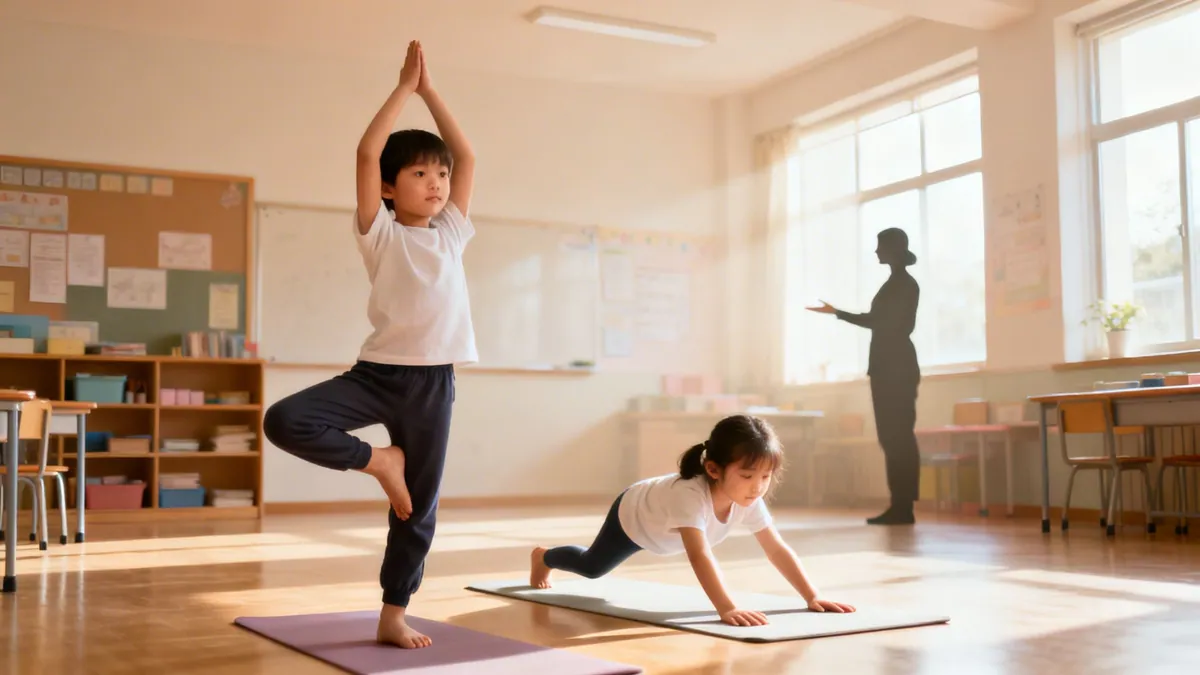
Two children practice mindful yoga exercises on mats in a bright classroom with a teacher.

Unlike traditional exercise, the goal is not performance but awareness. Children learn to notice how their bodies feel during movement, connecting with their breath and physical sensations. These embodiment practices for kids empower them with tools to reset their attention and manage restlessness, both in the classroom and at home.

How to Guide Mindful Movement

Begin by creating a safe, non-competitive space. For yoga, use storytelling to guide poses, like becoming a tall, strong tree or a stretching cat. For a brain break, simply ask children to stand up and "shake out the wiggles" or "stretch toward the sky." The key is guiding them to pay attention to the physical sensations as they move.

Key Cue: "As you stretch your arms up high, notice how your sides feel. Can you feel your muscles waking up? Now, as you shake your hands out, imagine you are shaking off any wiggly or tired feelings."

Practical Implementation and Tips

  • Use Storytelling: Frame movements within a narrative. For example, a librarian leading a yoga session could guide children through an imaginary journey to the jungle, having them become a hissing snake (Cobra Pose) or a roaring lion (Lion's Breath).
  • Schedule Brain Breaks: Integrate short (2-5 minute) movement breaks between academic subjects. A teacher might use a GoNoodle video or lead a quick "animal walks" session—like crab walking or frog hopping—to transition from math to reading.
  • Focus on Feeling, Not Form: Emphasize that every child's pose will look different. The goal is to notice what their own body feels like, not to achieve a perfect posture.
  • Pair with Breathing: Connect breath to movement. For example, in a "Balloon Breath" break, a teacher can instruct students to breathe in while raising their arms overhead (filling the balloon) and breathe out while lowering them (letting the air out).

4. Mindful Listening Circles

Mindful Listening Circles are a structured and powerful practice that teaches children the art of deep, non-judgmental listening. In this exercise, participants sit in a circle, and one person speaks at a time without interruption. This simple format creates a safe container for sharing, fostering empathy, strengthening communication skills, and building a profound sense of community and psychological safety.

This practice transforms listening from a passive activity into an active, mindful engagement. By focusing entirely on the speaker, children learn to quiet their own inner chatter and offer their full, respectful attention. This is one of the most effective mindfulness exercises for kids because it directly builds social awareness and relationship skills, which are core components of social-emotional learning.

How to Guide a Mindful Listening Circle

To begin, gather the children in a circle where everyone can see each other. The facilitator establishes clear expectations and introduces a "talking piece," which can be any object like a special stone, a small stuffed animal, or a decorated stick. Only the person holding the talking piece is allowed to speak.

The facilitator poses a prompt, and the talking piece is passed around the circle. Each child has the option to share their thoughts related to the prompt or to simply pass the piece to the next person without speaking. The core rule is that everyone else listens silently and respectfully until the speaker is finished and passes the piece.

Key Cue: "When you are not holding the talking piece, your only job is to listen with your ears, your eyes, and your heart. Listen to understand, not to reply."

Practical Implementation and Tips

  • Establish Clear Ground Rules: Before starting, co-create and review essential rules: One person speaks at a time (the one with the talking piece), listen respectfully, what is shared in the circle stays in the circle, and it is always okay to pass.
  • Use a Talking Piece: A physical object makes the speaker role tangible and clear. It prevents interruptions and helps children visually track whose turn it is to speak. For example, a "listening shell" could be used, where students imagine it holds the speaker's voice.
  • Start with Low-Risk Prompts: Build trust by beginning with light, fun prompts like, "Share one thing that made you smile this week," or "If you could have any superpower, what would it be?" Gradually move to deeper topics as the group's comfort level grows.
  • Model Mindful Listening: The facilitator's role is crucial. They must model attentive, non-judgmental listening, validate children's contributions with a nod or a simple "thank you," and hold the emotional space for the group. For more ideas, explore other powerful listening skills activities.
  • Integrate into Routines: A teacher can use a circle for a morning meeting to check in on how students are feeling. For example, using a prompt like, "Share one word that describes your mood today." This can become a cherished ritual for building classroom community.

5. Gratitude Practice and Journaling

Gratitude practice is a powerful mindfulness exercise that trains children to actively notice and appreciate the positive aspects of their lives. This intentional focus on thankfulness helps shift a child's perspective away from challenges or what is lacking, building emotional resilience and fostering a more optimistic outlook. By regularly acknowledging people, experiences, and even small objects they are grateful for, children develop a deeper awareness of the good that surrounds them daily.

This practice is not about ignoring difficulties but about balancing one's worldview. It has been popularized by positive psychology researchers who have demonstrated its strong link to increased happiness and well-being. By making gratitude a conscious habit, we equip children with a tool to counteract negative thought patterns and cultivate a sense of connection and contentment.

How to Guide a Gratitude Practice

Introduce gratitude in a simple, accessible way. Start by asking children to think of one thing that made them smile that day. The goal is to make it a low-pressure, reflective moment rather than a task. You can guide them with prompts that encourage specificity, helping them move from general statements to meaningful reflections.

Key Cue: "Let's think of three specific things we are thankful for right now. It could be a person who was kind, a food you enjoyed, or the feeling of the sun on your skin during recess."

Practical Implementation and Tips

  • Create a Gratitude Jar: In a classroom or at home, decorate a jar. Have children write or draw one thing they are grateful for on a small slip of paper each day and add it to the jar. For example, a child might write, "I'm grateful for when my friend shared their crayons with me." Read the slips together at the end of the week.
  • Start a Journal: For older children, a dedicated gratitude journal can be a personal space for reflection. For younger kids or those who benefit from written reflection, exploring mental health journaling prompts can be a wonderful way to cultivate self-awareness and gratitude. Even drawing pictures of things they are thankful for is effective.
  • Integrate into Routines: Incorporate a gratitude share into daily routines. For example, a family can make it a dinnertime ritual where each person shares one "rose" (a positive thing) from their day. Discover more impactful gratitude activities for kids to keep the practice fresh.
  • Model Authenticity: Adults should participate and model genuine gratitude. For example, a teacher could say, "I'm grateful for how hard everyone worked on their math problems today." This shows that gratitude is a valuable practice for everyone.

6. Mindful Eating

Mindful eating is a powerful practice that transforms meal or snack time into a rich sensory experience. It teaches children to slow down and use all five senses to explore their food: noticing colors, textures, smells, sounds, and, finally, flavors. This intentional engagement anchors them in the present moment, fostering a healthier relationship with food and a greater awareness of their body's hunger and fullness cues.

This exercise is particularly valuable as it counters the rushed, distracted eating habits that are common today. By turning a routine activity into an opportunity for mindfulness, it helps children develop appreciation, self-regulation, and body awareness without needing extra time in their schedule. It is a foundational practice for building lifelong healthy habits.

How to Guide Mindful Eating

Choose a simple food item like a raisin, a slice of apple, or a cracker to start. Guide children through a sensory exploration before they even take a bite. Prompt them to observe the food as if they have never seen it before, noticing its shape, weight, and texture in their hands. Encourage them to smell it, listen to it, and finally, to take one small, slow bite, chewing deliberately to discover all its flavors.

Key Cue: "Let's become food detectives! Before you eat, let's use our senses. What does the cracker look like? Can you hear a sound when you break it? What does it smell like? Now, take a tiny bite and see how many flavors you can discover."

Practical Implementation and Tips

  • Start Small: Begin with a "mindful minute" during snack time, focusing on just the first bite of a food item. For example, a teacher can guide the class to mindfully eat one Goldfish cracker, noticing its salty taste and crunchy sound.
  • Five Senses Exploration: Explicitly guide children through their senses. Ask questions like, "What colors do you see on your orange slice?" or "What does the yogurt feel like on your tongue?"
  • Slow Down the Chew: Encourage children to chew their food more than usual, perhaps counting to ten before swallowing. This aids digestion and helps them recognize when they are full.
  • Eliminate Distractions: At home, try having one screen-free meal a day. In the classroom, ensure snack time is a calm period without other competing activities.
  • Connect to Gratitude: Talk about where the food came from. For example, while eating strawberries, a parent could say, "Let's thank the sun and the rain for helping these berries grow." This builds a sense of connection and appreciation.

7. Guided Imagery and Visualization

Guided imagery, also known as visualization, is a powerful mindfulness practice that taps into a child's natural gift for imagination. This exercise involves a guide leading children through a detailed, imaginary journey to a peaceful and safe place, using rich sensory language to make the scene feel real. This process activates the brain's relaxation response, helping to reduce anxiety, manage stress, and build a portable mental sanctuary they can access anytime.

Visualization works by shifting a child's focus from external stressors or internal worries to a calming, internally-generated experience. By engaging their senses in this imagined world, children can effectively quiet the mind and regulate their emotional state. It is a highly effective and engaging mindfulness exercise for kids who thrive on creativity and storytelling.

How to Guide Visualization

To begin, have children find a comfortable position, either sitting up or lying down, and gently close their eyes. Use a calm, slow voice to describe a peaceful setting, focusing on what they might see, hear, smell, feel, and even taste. Encourage them to immerse themselves fully in the scene you are creating.

Key Cue: "Picture yourself walking on a soft, sandy beach. Feel the warm sun on your skin and listen to the gentle sound of the waves. What colors do you see in the sky? Can you smell the salty air?"

Practical Implementation and Tips

  • Offer Choices: Empower children by allowing them to choose their own "calm place," whether it's a magical forest, a cozy fort, or a favorite real-life spot. This increases their sense of ownership and safety.
  • Use Rich Sensory Language: Incorporate details that appeal to all senses. For example, instead of "imagine a forest," say "imagine you can smell the damp earth and pine needles, and feel the bumpy bark of a tall tree."
  • Integrate into Transitions: A teacher can lead a five-minute guided imagery session before a test to ease anxiety. For example, "Imagine a calm, blue light filling your mind, helping you remember everything you've learned."
  • Create Recordings: Record your own guided imagery scripts or use resources from apps like Calm or Headspace Kids. Having recordings available allows children to use this tool independently when they need it, such as at bedtime to help with sleep.
  • Debrief the Experience: After the visualization, gently guide children back to the present moment. Ask questions like, "How does your body feel now compared to before we started?" This helps them connect the practice to its calming physical effects.

8. Mindful Sensory Activities (5 Senses Grounding)

Mindful sensory activities, often called the "5 Senses Grounding" technique, are a powerful way to anchor children in the present moment. This exercise guides a child to deliberately engage each of their five senses to notice their immediate surroundings, pulling their attention away from overwhelming thoughts, anxieties, or big emotions. By focusing on tangible, neutral information, this practice helps interrupt worry spirals and activates a state of calm awareness.

This technique is a cornerstone of trauma-informed care and is highly effective for managing anxiety. It provides children with an immediate, concrete strategy to use when their thoughts feel chaotic, grounding them in the safety of the here and now. The structure of the exercise is simple, making it one of the most practical mindfulness exercises for kids to learn and use independently.

How to Guide the 5 Senses Grounding Technique

To begin, invite the child to take a slow, deep breath. Guide them through a sequential process of noticing their environment using the popular 5-4-3-2-1 format. Encourage them to name each item aloud or silently to themselves. The goal is not to judge what they sense, but simply to notice it.

Key Cue: "Let's use our super senses to get to know this moment. We are going to find things around us right now. First, can you find 5 things you can see?"

Practical Implementation and Tips

  • Teach the 5-4-3-2-1 Method: Explicitly guide children through the sequence: notice 5 things you can see, 4 things you can feel or touch, 3 things you can hear, 2 things you can smell, and 1 thing you can taste.
  • Create Sensory Kits: A school counselor can create a "grounding kit" with items of different textures (a smooth stone, soft fabric), distinct scents (a lavender sachet), and quiet sounds (a small rain stick) to make the practice more engaging.
  • Integrate Before Transitions: A teacher could lead the class through a quick 5 Senses scan before a test or after a noisy lunch period to help students settle their minds and focus.
  • Practice When Calm: Introduce this technique when children are regulated. For example, a parent can play the "5 Senses Game" with their child in the car, asking "What are 5 things you can see right now?" This helps them build proficiency so they can access it more easily during moments of distress.

9. Loving-Kindness Meditation (Metta)

Loving-kindness meditation, often called Metta, is a powerful mindfulness practice designed to cultivate compassion, connection, and empathy. This exercise guides children to mentally send wishes of well-being, safety, and happiness to themselves and others. The practice follows an expanding circle of care, starting with the self, moving to loved ones, then to neutral people, and eventually even to those with whom they have difficulty.

This exercise directly builds social-emotional learning (SEL) skills by training the heart and mind to be kinder. It helps reduce negative self-talk, diminishes feelings of anger or resentment toward others, and fosters a more inclusive and caring classroom environment. By regularly practicing, children learn that kindness is a skill they can strengthen, just like a muscle.

How to Guide Loving-Kindness Meditation

Begin by having children sit in a comfortable, quiet posture with their eyes gently closed or looking softly at the floor. Guide them to place a hand over their heart to connect with the feeling of warmth. Then, lead them through a series of simple, repeatable phrases directed toward different people.

Key Cue: "Silently in your mind, repeat after me. First, let's send these kind wishes to ourselves: May I be happy. May I be safe. May I be healthy and strong."

Practical Implementation and Tips

  • Start with Self-Love: Always begin the practice by directing kindness inward. Many children find it difficult to be kind to themselves, so this is a crucial first step. Progress to people they love easily, like family or pets, before moving to others.
  • Keep Phrases Simple: Use short, memorable phrases that are easy for children to repeat in their minds. You can adapt them to feel more authentic, such as, "I wish myself happiness," or "I hope I have a good day."
  • Use for Conflict Resolution: A school counselor can use this meditation in a restorative circle after a conflict between students. For example, guiding both children to send kind wishes to themselves and then silently to each other can help repair the relationship and build empathy.
  • Gradual Expansion: Introduce the concept of sending kindness to a "neutral" person (like a mail carrier) and, when ready, to a "difficult" person. Frame this not as forgiving bad behavior but as freeing oneself from holding onto anger. For example, explain that sending kind wishes is like sending a balloon into the sky—it makes you feel lighter, no matter who it's for.

10. Nature-Based Mindfulness (Forest Bathing/Outdoor Awareness)

Nature-based mindfulness, often inspired by the Japanese practice of Shinrin-yoku or "forest bathing," is an immersive exercise that encourages children to connect with the natural world through their senses. This practice involves intentionally slowing down in an outdoor setting to observe, listen, touch, and smell the environment. By focusing their attention on the sights, sounds, and textures of nature, children can anchor themselves in the present moment, which significantly reduces stress and promotes a sense of calm and belonging.

A young Asian boy sits on a rock, observing a vibrant autumn leaf in a sunny park.

This powerful mindfulness exercise for kids leverages our innate connection to nature, known as biophilia, to soothe the nervous system and enhance well-being. It moves mindfulness from an abstract concept into a tangible, sensory-rich experience that is highly engaging for young learners.

How to Guide Nature-Based Mindfulness

Take children to an outdoor space like a park, schoolyard, or even a single tree. Encourage them to walk slowly and quietly, without a specific destination in mind. Guide their awareness to each of their senses, one by one. Ask them to notice the different shades of green, the feeling of the breeze on their skin, the sounds of birds or rustling leaves, and the smell of the soil or flowers. The goal is simply to notice without judgment.

Key Cue: "Let's use our 'owl eyes' and 'deer ears.' What can you see without moving your head? What is the quietest sound you can hear if you listen very carefully?"

Practical Implementation and Tips

  • Sensory Scavenger Hunt: Instead of a list of items to find, create a list of sensory experiences: "Find something smooth," "Listen for a bird's song," or "Find something that smells like pine."
  • Pair with Journaling: After a mindful walk, have children draw or write about one thing they noticed. For example, a teacher can ask, "Draw the most interesting leaf you saw today and describe how it felt in your hand."
  • Integrate into Academics: A teacher can take a science lesson outdoors, asking students to mindfully observe an insect or a plant for five minutes before discussing its life cycle. This enhances both focus and learning.
  • Start Small: This practice doesn't require a forest. For example, a parent and child can mindfully observe a spider spinning a web outside their window or listen to the sound of rain on the roof. The key is intentional, focused awareness.

10 Mindfulness Exercises for Kids — Quick Comparison

Practice Implementation complexity Resource requirements Expected outcomes Ideal use cases Key advantages
Belly Breathing (Diaphragmatic Breathing) Low — quick to teach, brief instruction needed None — tactile cues or props (stuffed animal) optional Rapid calming, parasympathetic activation, improved self-regulation Transitions, tests, brief de-escalation, classroom routines (K-8) Immediate effects, highly accessible, foundation for other practices
Body Scan Meditation Moderate — requires guided instruction and attention span Quiet space or recording; 5–15 minutes Increased body awareness, tension recognition, better emotional insight Morning practice, counseling, bedtime, sensory-awareness lessons Helps identify early stress signs; supports sensory needs
Mindful Movement & Brain Breaks (Yoga, Short Movement Breaks) Moderate — needs facilitator skill and safety considerations Minimal space, brief time (2–30 min), optional videos or mats Improved attention, energy regulation, physical coordination Brain breaks, PE, transitions, high-energy classrooms, ADHD supports Kinesthetic engagement, fun, boosts focus and physical health
Mindful Listening Circles High — requires strong classroom management and facilitation Time (15–30 min), circle format, optional talking piece Greater empathy, belonging, communication and conflict-resolution skills Morning meetings, restorative circles, post-conflict work, SEL groups Builds psychological safety, peer connection, active listening
Gratitude Practice and Journaling Low — simple routine but needs consistency Journals or verbal format; 2–5 minutes daily Improved mood, resilience, positive outlook over time Morning/evening routines, classroom wrap-ups, family dinners Evidence-based mood benefits, low cost, adaptable formats
Mindful Eating Low–Moderate — needs planning and buy-in from staff/families Meal/snack time, quieting distractions, 5–15 minutes Greater body-awareness, slower eating, improved digestion and gratitude School lunch/snack times, family meals, food-education activities Practical daily integration; supports healthy eating habits
Guided Imagery and Visualization Moderate — benefits from skilled guidance or recordings Quiet environment, 5–15 minutes, optional recordings Deep relaxation, anxiety reduction, improved focus and confidence Test prep, bedtime, anxiety management, performance prep Highly customizable, appeals to imaginative children, portable tool
Mindful Sensory Activities (5-4-3-2-1 Grounding) Low — easy to teach and recall None required; sensory kits optional; 2–5 minutes Immediate grounding, reduced overwhelm, present-moment focus During panic or worry, pre-tests, quick classroom resets Highly portable, fast-acting, simple to teach
Loving-Kindness Meditation (Metta) Moderate — requires practice and careful facilitation Quiet space, 10–20 minutes, simple phrases or recordings Increased compassion, self-kindness, reduced negative rumination Empathy-building lessons, restorative practices, anti-bullying work Cultivates empathy and relational repair; strengthens self-compassion
Nature-Based Mindfulness (Forest Bathing/Outdoor Awareness) Moderate — planning, supervision, weather considerations Outdoor space (garden, yard, park), variable time (10+ minutes) Reduced stress, attention restoration, connection to nature and belonging Outdoor classes, school gardens, walking meditations, nature journaling Strong evidence for stress reduction; combines physical activity and mindfulness

Bringing It All Together: Weaving Mindfulness into Daily Life

Throughout this guide, we have explored a diverse collection of ten powerful mindfulness exercises for kids, from the calming rhythm of Belly Breathing to the expansive awareness of Nature-Based Mindfulness. Each activity serves as a unique tool, designed to help children navigate the complexities of their inner and outer worlds with greater calm, clarity, and compassion. The goal is not to perfect every exercise, but to build a rich and accessible toolkit that children can turn to whenever they need it.

The journey of integrating mindfulness is one of patience, consistency, and adaptation. By introducing these practices, you are planting seeds of emotional intelligence that will flourish for a lifetime. Children learn to recognize their feelings without being overwhelmed by them, develop a stronger sense of empathy for others, and build the resilience needed to face challenges with a centered mind.

Key Takeaways and Actionable Next Steps

To make mindfulness a sustainable part of your home or classroom, focus on integration rather than addition. The most effective approach is to weave these practices into the natural flow of the day, transforming routine moments into opportunities for mindful awareness.

Here are some practical next steps to get started:

  • Start Small and Be Consistent: Don't try to implement all ten exercises at once. Choose one or two that feel most accessible. For example, you might commit to a two-minute Body Scan before bedtime or start each morning meeting with a round of Mindful Listening. Consistency is more impactful than intensity.
  • Model the Behavior: Children are incredibly perceptive. When they see you taking a few deep breaths when you feel stressed or expressing gratitude for a small joy, they learn that mindfulness is a valuable, real-world skill. Your practice gives them permission and a clear example to follow.
  • Connect to Daily Routines: Link mindfulness exercises to existing schedules. A Mindful Eating moment can be part of the first five minutes of lunch. A brief Gratitude Practice can become a beloved dinnertime ritual. A quick Mindful Movement break can be used to transition between academic subjects, helping to reset focus and energy.
  • Create a "Peace Corner" or "Calm-Down Kit": Designate a physical space where a child can go to practice these skills. Stock it with items that engage the senses, like a soft blanket, a glitter jar, or headphones with guided visualizations. This empowers children to self-regulate when they feel big emotions.

The Lasting Impact of Mindful Kids

The value of teaching mindfulness exercises for kids extends far beyond immediate stress reduction. When children learn to tune into their bodies, listen with intention, and cultivate kindness, they are developing the core competencies of social-emotional learning (SEL). They become better problem-solvers, more empathetic friends, and more engaged, self-aware learners.

Imagine a classroom where students can use Belly Breathing to manage test anxiety or a home where siblings use Loving-Kindness Meditation to resolve conflicts. These are not abstract ideals; they are tangible outcomes of a consistent mindfulness practice. By equipping children with these internal resources, we are not just helping them get through a tough day. We are empowering them to build a foundation for a mentally and emotionally healthy life, enabling them to show up in the world with confidence, connection, and a deep understanding of themselves and others. Your commitment to this practice is a profound gift that will continue to grow with them.


Ready to bring a structured, school-wide approach to social-emotional learning to your campus? Soul Shoppe provides dynamic, evidence-based programs that teach students the skills of empathy, respect, and emotional regulation through experiential assemblies and curriculum. Discover how you can build a more positive and connected school climate by visiting Soul Shoppe today.