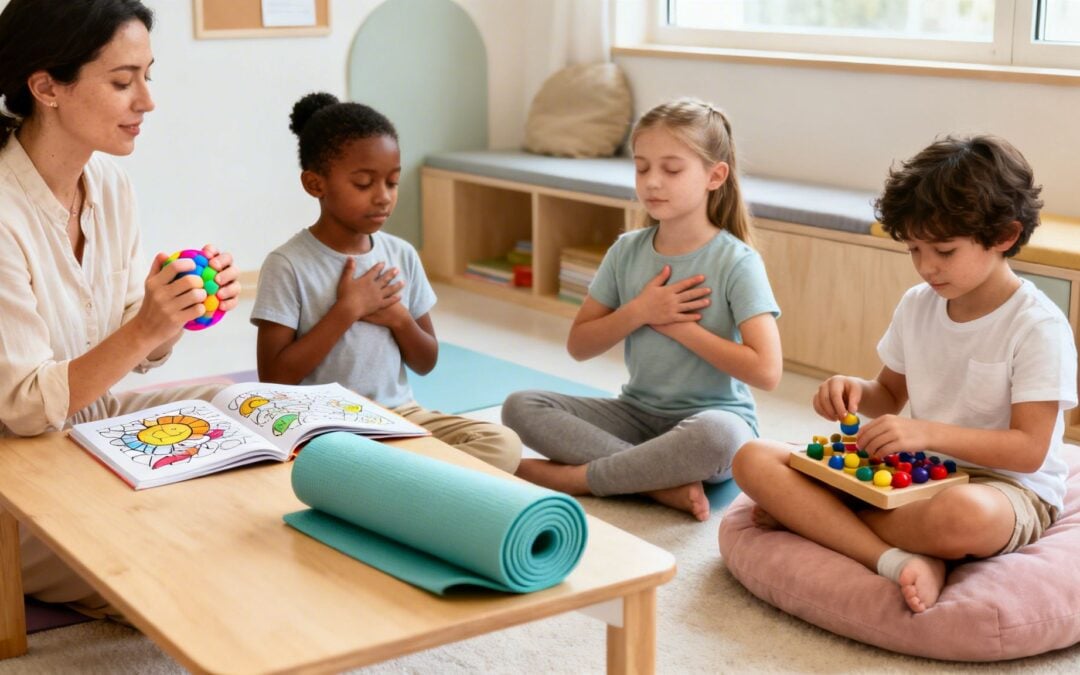
Anxiety in children can feel like an overwhelming storm of emotions, making it difficult for them to learn, connect with others, and feel secure in their environment. For parents, caregivers, and educators, finding effective ways to help can be a significant challenge. The goal is not to eliminate worry entirely, but to equip children with a practical toolkit to navigate these feelings successfully. This article moves beyond generic advice to provide a curated collection of eight evidence-based, actionable activities for kids with anxiety.

Each strategy is designed for easy implementation in both classroom and home settings, supported by specific examples and trauma-informed tips. We will explore a range of approaches that address the whole child, from grounding mindfulness and breathing exercises to expressive creative arts and purposeful movement. You will find concrete methods that help children externalize their feelings through journaling, connect with nature, and build social skills through structured games.

This resource provides a comprehensive guide for building resilience and emotional regulation skills. It focuses on empowering children by teaching them how to recognize their emotional triggers and respond with confidence. We are not just aiming to calm the immediate storm; we are teaching children how to become their own anchors in any weather, fostering a sense of agency over their emotional well-being. Let's begin building a versatile toolkit filled with practical and effective strategies.

1. Mindfulness and Breathing Exercises

Mindfulness and breathing exercises are foundational activities for kids with anxiety, teaching them to anchor themselves in the present moment and consciously calm their nervous system. These structured practices interrupt the body's automatic stress response, or "fight-or-flight" mode, by activating the parasympathetic nervous system, which promotes rest and relaxation. By focusing on the physical sensation of their breath, children gain a powerful, portable tool they can use anywhere to manage overwhelming feelings.
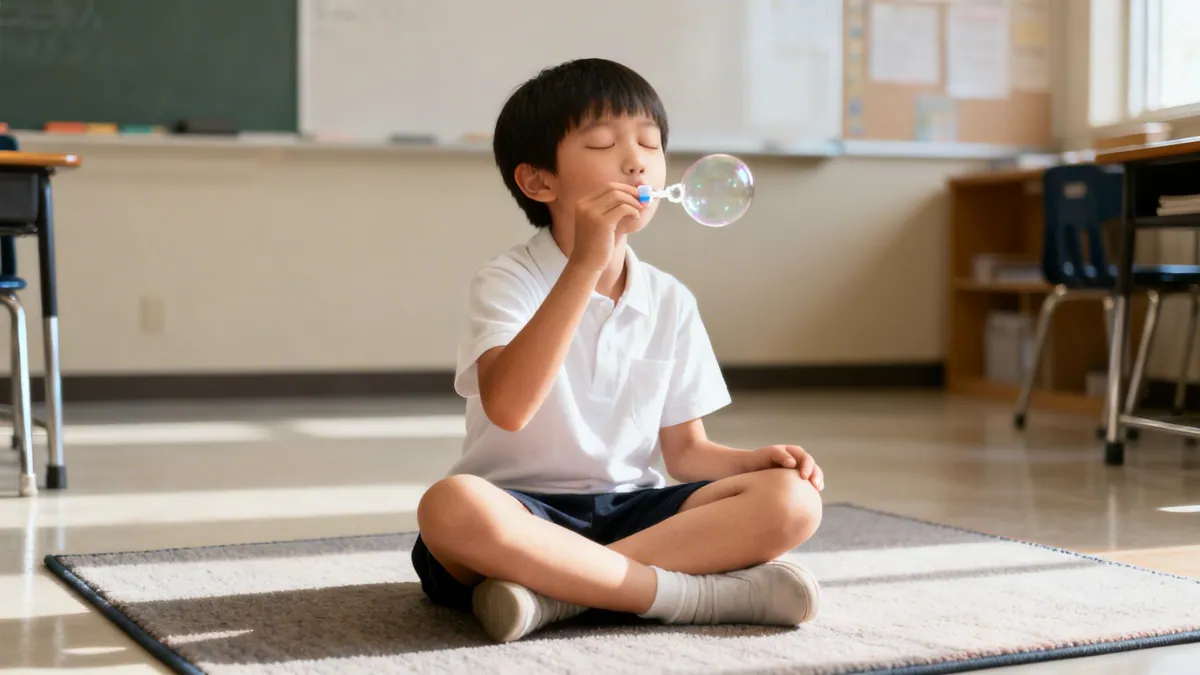
A young boy sits calmly in a sunlit classroom, blowing bubbles with his eyes closed.

This approach empowers children with a sense of control over their internal state, turning an abstract feeling like anxiety into a manageable physical process. The work of pioneers like Jon Kabat-Zinn and Thich Nhat Hanh has shown that consistent practice can reshape neural pathways, making self-regulation a more accessible skill over time.

Why It Works for Anxiety

Anxiety often pulls a child’s focus toward future worries ("What if I fail the test?") or past events ("Why did I say that?"). Breathing exercises immediately redirect their attention to the present. The slow, deep breaths signal safety to the brain, lowering heart rate and blood pressure, and providing immediate physiological relief.

Practical Examples and Implementation

  • Belly Breathing (or "Balloon Breathing"): Ask the child to place a hand or a small stuffed animal on their belly. Instruct them: "Breathe in slowly through your nose for four counts and watch the stuffed animal rise as you fill your belly like a big balloon. Then, breathe out slowly through your mouth for four counts and watch it go back down."
  • Box Breathing: Use a visual aid or have them trace a square on their desk or leg with their finger. Guide them: "Breathe in for four seconds as you trace the top side, hold your breath for four seconds as you trace down, breathe out for four seconds as you trace the bottom, and hold for four seconds as you trace back up."
  • Snake Breath: This makes exhaling fun. Have the child take a deep breath in and then hiss it out slowly and steadily like a snake, trying to make the "ssssss" sound last as long as possible.
  • Classroom "Calm Corner": Schools like those using Soul Shoppe's peer mediation programs often designate a quiet space with visual breathing guides (like a poster of box breathing), glitter jars, and soft seating. A child feeling overwhelmed can use the corner for a 3-minute reset.

Actionable Tips for Adults

  • Practice Proactively: Introduce these techniques during calm moments, such as circle time in the morning or before bedtime at home. Say, "Let's practice our Balloon Breaths to help our bodies feel calm and ready for the day."
  • Use Visuals: For younger children, use a pinwheel or bubbles to provide a concrete visual for their exhale. This makes the concept of a long, slow breath less abstract. Challenge them to see how slowly they can make the pinwheel spin.
  • Model It Yourself: When you feel stressed, say aloud, "I'm feeling a little overwhelmed, so I'm going to take three deep belly breaths." This normalizes the practice and shows its real-world application.
  • Keep It Short: Start with just 30-60 seconds of focused breathing for younger kids and gradually increase the duration as they become more comfortable.

To explore a wider range of exercises, you can find more mindfulness activities for kids that build on these foundational breathing techniques.

2. Creative Arts and Expression (Drawing, Painting, Sculpting)

Creative arts provide a powerful non-verbal outlet for children to process complex emotions like anxiety. Activities such as drawing, painting, or sculpting bypass the analytical parts of the brain that can get stuck in worry loops, allowing children to access and express their feelings directly. The tactile and sensory nature of art-making itself is inherently grounding, making it one of the most effective activities for kids with anxiety.
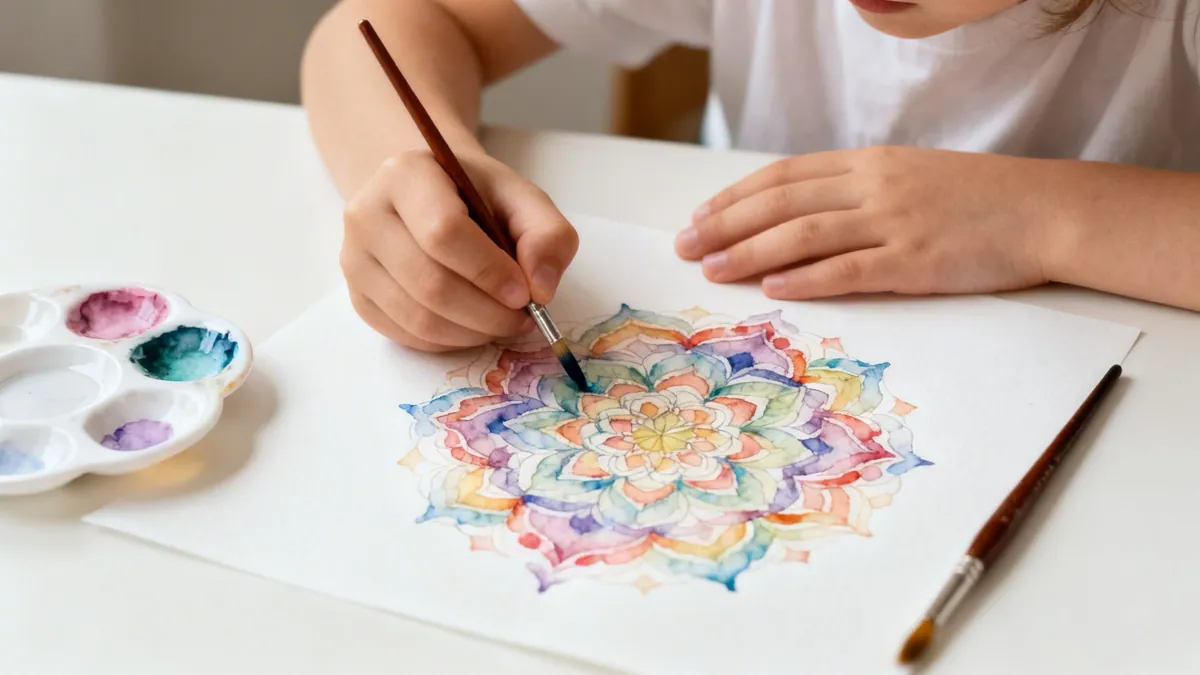
Close-up of a child's hands painting a vibrant watercolor mandala on white paper with a brush and palette.

This approach is championed by art therapists and trauma-informed educational practices, which recognize that giving form to a feeling makes it less overwhelming and more manageable. The focus is not on artistic skill but on the act of creation, which provides a sense of agency and a safe container for difficult emotions.

Why It Works for Anxiety

Anxiety can be hard for children to put into words. Art offers a different language, one of symbols, colors, and shapes. This externalization process allows a child to see their anxiety as separate from themselves, reducing its power. The repetitive, rhythmic motions involved in drawing or sculpting can also be meditative, helping to calm a racing mind and an activated nervous system.

Practical Examples and Implementation

  • Worry Monsters: Provide paper, markers, and modeling clay. Instruct the child: "Draw or build what your worry looks like. Does it have big teeth? Spiky hair? Give it a name." Afterward, they can draw a cage around it, give it a silly hat, or physically lock a clay version in a box to symbolize taking control.
  • Mandala Coloring: Provide printed mandala templates for children to color. The structured, symmetrical patterns are known to promote focus and calm, making them a perfect tool for a classroom "calm-down corner." Suggest they start from the center and work their way out.
  • "Feelings" Painting: Set out paints and paper with the simple prompt to "paint what your worry feels like" or "paint what calm looks like." For example, a child might paint anxiety as a chaotic scribble of black and red, while calm might be a smooth wash of blue and green.
  • Clay Squishing and Sculpting: The sensory act of kneading, rolling, and squishing clay is very grounding. Prompt them: "Squeeze the clay as hard as you can when you think of a worry, then smooth it out to make it feel calm."

Actionable Tips for Adults

  • Focus on Process, Not Product: Emphasize that there is no "right" way to create. Use phrases like, "Tell me about the colors you chose," instead of asking, "What is it?"
  • Offer a Variety of Materials: Provide options like clay, paint, markers, and collage materials. Different textures and mediums will appeal to different children and sensory needs.
  • Use Specific Prompts: Guide their expression with gentle prompts like, "Draw a picture of a place where you feel totally safe," or "If your anger had a color, what would it be today?"
  • Validate Their Expression: Display their artwork (with their permission) to show that their feelings and creative expressions are valued and seen.

Expanding on creative outlets, it's worth exploring the developmental benefits of beginner guitar lessons for kids, which can contribute to a child's emotional well-being through structured musical expression.

3. Movement and Somatic Activities (Yoga, Dance, Stretching)

Physical activities that integrate mind-body awareness help anxious children release stored tension and reconnect with their bodies in a safe, non-judgmental way. Movement practices like yoga, dance, and stretching activate the parasympathetic nervous system, reducing the physiological symptoms of anxiety while building body awareness and confidence. These are powerful activities for kids with anxiety because they offer a non-verbal outlet for expressing complex emotions.

This approach is grounded in somatic psychology, which recognizes that emotional stress is stored physically in the body. As Bessel van der Kolk’s work highlights, intentional movement can help process and release this tension. By guiding a child to move their body, you give them a direct tool to change how they feel from the inside out.

Why It Works for Anxiety

Anxiety often creates a feeling of disconnection from one's own body, leading to physical symptoms like a racing heart, tense muscles, or shallow breathing. Somatic activities counter this by drawing a child’s attention back to their physical sensations in a positive context. This process helps them feel more grounded and in control, proving that they can influence their physical state through movement.

Practical Examples and Implementation

  • Cosmic Kids Yoga: Programs like Cosmic Kids Yoga, popular in elementary classrooms, weave storytelling into yoga poses. For instance, children don't just do "Cat-Cow Pose"; they pretend to be cats arching their backs in a spooky cave and then cows mooing at the moon. This makes the practice engaging and less intimidating.
  • "Brain Break" Dance Videos: Many teachers use short, energetic dance videos (like GoNoodle) as a transition tool between academic subjects. This provides a quick, structured release of pent-up anxious energy. A three-minute "freeze dance" can reset the entire classroom's energy.
  • Progressive Muscle Relaxation (PMR): A school counselor can guide a child to systematically tense and then release different muscle groups. For instance, "Pretend you're squeezing lemons in your hands as tight as you can for five seconds… now let them go and feel the softness. Now, scrunch up your toes like you're trying to pick up a pencil with your feet… and relax."
  • Stomping and Shaking: For a child with a lot of jittery energy, say, "Let's pretend we're big elephants and stomp our feet ten times. Now, let's shake out our arms like wet noodles for a count of ten."

Actionable Tips for Adults

  • Offer Choices: Let the child lead. Ask, "Would you rather stretch like a tall giraffe or shake out your wiggles like a puppy?" This empowers them and respects what their body needs.
  • Start with Gentle Movements: For a highly anxious child, begin with slow, simple stretches or swaying to calm music rather than high-energy activities.
  • Combine with Breathing: Encourage a child to exhale audibly during a big stretch ("Let out a big sigh as you reach for your toes") or to breathe in time with the music. This deepens the calming effect of the movement.
  • Focus on Feeling, Not Performance: Use prompts like, "Notice how your feet feel planted on the floor like tree roots," or "What does that stretch feel like in your arms?" This shifts the focus from "doing it right" to internal awareness.

To discover more ways to connect movement and emotion, explore these embodiment practices for kids suitable for school and home.

4. Journaling and Expressive Writing

Journaling and expressive writing provide children with a private, reflective space to explore anxious thoughts and feelings without judgment or pressure. This activity helps externalize worries by moving them from the mind onto paper, making them feel more tangible and manageable. It fosters metacognitive awareness, allowing kids to observe their thought patterns and identify specific anxiety triggers over time.

This approach empowers children to process their emotions independently, turning abstract fears into concrete words they can examine and understand. The pioneering research of psychologist James Pennebaker demonstrated that expressive writing about emotions can lead to significant improvements in both mental and physical health, including reduced anxiety.

Why It Works for Anxiety

Anxious thoughts often swirl internally in a repetitive, overwhelming loop. The act of writing forces a child to structure these thoughts, which can slow down the mental spiral and reduce its intensity. By giving worries a name and a description, journaling makes them less powerful and provides a healthy outlet for feelings that might otherwise remain bottled up.

Practical Examples and Implementation

  • Prompted Anxiety Journals: Use a dedicated notebook with simple prompts like, "Today my worry feels like a __ out of 10," "One thing I am worried about is…," or "A time I felt brave was when…" This guided structure is less intimidating than a blank page.
  • Worry Notebooks: Many school counselors provide "worry notebooks" or a "worry box" where students can write down a concern on a slip of paper and "post" it in the box. This symbolic act helps them set the worry aside and focus on their day.
  • Gratitude Journaling: Instead of focusing on worry, prompt the child to write or draw three things they are thankful for each day. This shifts their focus toward positive experiences. For example: "1. The sun was warm at recess. 2. My friend shared their snack. 3. I liked the book we read."
  • Creative and Art Journals: Combine writing with drawing or collage. Books like "Wreck This Journal" encourage messy, imperfect expression. A child can draw their anxiety monster, scribble out a frustrating feeling with a black crayon, or write down a brave thought in their favorite color.

Actionable Tips for Adults

  • Start with Prompts: A blank page can be overwhelming. Offer simple sentence starters like, "I feel nervous when…" or "I feel calm when…" to get them started.
  • Keep It Private: Reassure the child that their journal is their private space. They should only share entries if they choose to. This builds trust and encourages honesty.
  • Model the Behavior: Let your child see you writing in your own journal. You can share, "I'm writing down something that's on my mind so I can understand it better."
  • Focus on Effort, Not Perfection: Emphasize that spelling, grammar, and handwriting don't matter. The goal is expression, not a perfect essay. Praise their willingness to explore their feelings.

For children who struggle to find the right words, you can learn more about how to express your feelings in words to provide better support and guidance.

5. Nature-Based Activities and Outdoor Time

Engaging with the natural world offers a powerful, restorative antidote to the internal-facing nature of anxiety. Nature-based activities shift a child's focus outward, providing gentle sensory input that grounds them in the present moment and reduces stress. This approach leverages the environment as a co-regulator, lowering cortisol levels, improving mood, and restoring the capacity for attention without the pressure of structured performance.

A young Asian boy holding a potted plant, standing barefoot on green grass in a sunny park.

This method taps into the concept of "biophilia," our innate tendency to connect with nature. Influential figures like Richard Louv, author of Last Child in the Woods, and the global Forest School movement have highlighted how outdoor time is essential for healthy child development, directly counteracting the overstimulation and worry that feed anxiety. Time spent outdoors provides a non-judgmental space for exploration and being.

Why It Works for Anxiety

Anxiety often traps children in a loop of worrisome thoughts. Nature interrupts this cycle by engaging all the senses: the feeling of grass underfoot, the sound of birds, the smell of rain, the sight of a leaf's intricate patterns. This multisensory engagement is a form of natural mindfulness that requires no special training, effectively lowering heart rate and promoting a sense of calm and connection.

Practical Examples and Implementation

  • 5-4-3-2-1 Grounding: This is a classic outdoor mindfulness exercise. Ask the child to name: 5 things they can see (a bird, a green leaf, a crack in the sidewalk), 4 things they can feel (the wind on their skin, a rough tree bark), 3 things they can hear (a car, a dog barking), 2 things they can smell (freshly cut grass), and 1 thing they can taste.
  • School or Home Garden: The simple, repetitive tasks of watering plants, pulling weeds, and observing a seedling grow are rhythmic and grounding. Caring for another living thing can also build confidence and a sense of purpose.
  • "Sit Spot" Practice: Designate a specific spot in a park, backyard, or schoolyard where the child can sit quietly for 5-10 minutes. Encourage them to simply observe what happens around them, noticing the insects, the clouds, and the movement of leaves without any goal or expectation.
  • Nature Scavenger Hunt: Create a list of things to find, not just by sight but by other senses. For example: "Find something smooth," "Find something that makes a crunching sound," or "Find something that smells like pine."

Actionable Tips for Adults

  • Start Small: If a child is hesitant, begin with short, 10-minute exposures, like eating a snack on the porch or looking at the clouds from a window.
  • Allow Unstructured Play: Resist the urge to direct every activity. Let the child lead the exploration, whether it's digging in the dirt, collecting interesting rocks, or simply lying in the grass.
  • Create a "Nature Box": Keep a small box for collecting natural treasures like pinecones, feathers, or unique stones. This gives a purpose to walks and creates a tangible connection to the experience.
  • Model Curiosity: Express your own wonder about the natural world. Say things like, "Wow, look at the intricate pattern on that leaf!" or "I wonder what kind of bird is making that sound." Your enthusiasm is contagious.

6. Social-Emotional Learning Games and Role-Playing

Social-emotional learning (SEL) games and role-playing activities offer an engaging, non-threatening way for children to build crucial anxiety management skills. By embedding learning within a playful context, these activities reduce the pressure of practicing difficult social and emotional concepts. This approach transforms abstract skills like empathy, problem-solving, and emotional regulation into tangible, interactive experiences.

Role-playing, in particular, allows children to safely rehearse their responses to anxiety-provoking scenarios, building confidence and a sense of preparedness. Through experiential programs like those developed by Soul Shoppe, which use interactive workshops and games, children learn by doing. This active participation helps internalize coping strategies far more effectively than passive instruction.

Why It Works for Anxiety

Anxiety often stems from a fear of the unknown or a feeling of being unprepared for social situations. SEL games and role-playing directly address this by creating a safe "practice ground." Children can try out different responses, make mistakes without real-world consequences, and learn scripts for navigating challenges like peer conflict or asking for help, making these some of the most effective activities for kids with anxiety.

Practical Examples and Implementation

  • Emotion Charades: Write different emotions (e.g., worried, excited, frustrated, proud) on slips of paper. A child draws one and acts it out using only their face and body while others guess. This builds emotional vocabulary and the ability to recognize nonverbal cues.
  • Problem-Solving Scenarios with Puppets: Use puppets to act out a common dilemma, such as "One puppet wants to join a game but is too scared to ask." The children can give the puppet advice and then act out a positive outcome, lowering the personal stakes of the role-play.
  • SEL Board Games: Use commercially available games like "The Emotion Game" or "Calm Down Time" to structure conversations about feelings. The game format provides clear rules and turn-taking, which can be comforting for an anxious child. A teacher might use these in a small group setting.
  • "What If?" Brainstorm: Pose a common worry: "What if no one plays with you at recess?" Have the group brainstorm as many possible solutions as they can, from asking a specific person to play, to joining a game already in progress, to telling a teacher they feel lonely. This builds a mental library of options.

Actionable Tips for Adults

  • Focus on Process, Not Perfection: Celebrate a child’s courage to participate rather than the "correctness" of their answer or performance. The goal is practice and effort, not winning.
  • Debrief After Play: After a game or role-play, ask open-ended questions like, "How did that feel to ask for help?" or "When could you use that strategy at school?" This helps connect the playful activity to real-life application.
  • Allow Observation First: For a hesitant or shy child, allow them to watch their peers play first. You can give them a job, like "timekeeper" or "idea writer," to keep them involved before they feel ready to actively participate.
  • Start with Low-Stakes Scenarios: Begin role-playing with simple, positive situations (e.g., how to give a friend a compliment) before moving on to more challenging scenarios like managing disagreements.

To build on these ideas, you can find a variety of other kids' social skills activities that incorporate similar playful learning principles.

7. Pet Therapy and Animal-Assisted Interventions

Interacting with a calm, trained animal offers immediate, non-verbal comfort that can be profoundly grounding for a child experiencing anxiety. Animal-assisted interventions leverage the human-animal bond to reduce physiological stress responses, providing a safe and non-judgmental presence that anxious children often crave. The simple act of petting an animal can lower cortisol levels and blood pressure, creating a tangible calming effect.

This approach creates a bridge for connection and communication, as children often find it easier to express their feelings to an animal or about an animal. Organizations like Pet Partners have established standards and training programs that underscore the therapeutic benefits of these interactions, making them a trusted and evidence-based practice in many schools and clinical settings.

Why It Works for Anxiety

Anxiety can make a child feel isolated and misunderstood. An animal's presence is simple, accepting, and unconditional. It doesn't ask questions or place demands, which can disarm a child’s defensiveness and create an environment of pure comfort. This allows the child to shift their focus from internal worries to the external, sensory experience of touching, watching, or caring for the animal.

Practical Examples and Implementation

  • Reading Programs: Many schools and libraries have "Reading to Dogs" programs where children practice reading aloud to a therapy dog. This lowers performance anxiety because the dog is a non-judgmental listener, helping the child build fluency and confidence.
  • Counselor's Office Companion: A trained therapy dog that resides in the school counselor's office can help children feel more comfortable opening up. A counselor might start a session by saying, "Why don't you tell Buddy about your morning while you give him a nice pet?"
  • Equine-Assisted Therapy: In these programs, a child might be tasked with grooming a horse. The repetitive, rhythmic motion of brushing is calming, and successfully leading a large animal builds immense confidence and teaches non-verbal communication skills.
  • Classroom Pet Responsibility: Caring for a small class pet like a guinea pig or hamster teaches routine and empathy. A specific, predictable task like feeding the pet each morning can be a grounding start to the day for an anxious child.

Actionable Tips for Adults

  • Prioritize Safety and Certification: Only work with certified therapy animals and handlers from reputable organizations. Ensure you screen for student allergies or phobias beforehand.
  • Teach Respectful Interaction: Model and explicitly teach children how to approach and touch an animal gently. Say, "We need to use soft hands and let him sniff us first to say hello. This helps him feel safe with us."
  • Let the Child Lead: Allow the child to approach the animal at their own pace. Never force an interaction. The goal is to build a sense of safety and control, not to create another source of pressure.
  • Integrate Mindful Petting: Frame the interaction as a sensory activity. Guide them: "Notice how soft his fur feels under your fingers. Let's try to match our breathing to his while we pet him slowly and quietly." This combines the benefits of animal interaction with mindfulness.

8. Cognitive-Behavioral and Coping Strategy Tools

Cognitive-behavioral and coping strategy tools are structured activities that help children understand and change the relationship between their thoughts, feelings, and actions. These techniques, drawn from evidence-based Cognitive Behavioral Therapy (CBT), give kids a practical framework to identify anxious thoughts, question their validity, and replace them with more balanced and helpful ones. This empowers them with agency over their internal world, transforming abstract worries into manageable challenges.

This approach operationalizes anxiety management, making it a learnable skill rather than a mysterious force. The work of CBT pioneers like Aaron Beck and Albert Ellis established the core principle that our interpretations of events, not the events themselves, cause our emotional responses. By teaching children to become "thought detectives," we equip them to reframe their experiences and build resilience.

Why It Works for Anxiety

Anxiety thrives on unexamined, catastrophic thoughts that often spiral out of control. CBT-based tools interrupt this cycle by introducing a critical pause. They teach children to externalize their worries by writing or drawing them, which creates psychological distance and makes the thoughts less powerful. By systematically evaluating and challenging these thoughts, kids learn that feelings aren't always facts and that they can choose more effective ways to respond.

Practical Examples and Implementation

  • Thought Detective Work (Thought Record): Create a simple worksheet with three columns: "Worry Thought" (e.g., "The teacher is going to be mad I forgot my homework"), "Clues Against It" (e.g., "She was understanding last time," "I can tell her I'll bring it tomorrow"), and "Helpful Thought" (e.g., "I made a mistake, and I can fix it. It's not a disaster").
  • Coping Cards: On small index cards, help the child write or draw 3-5 simple, actionable strategies they can use when feeling anxious. Examples include "Take 5 balloon breaths," "Think of my safe place (my bed with my cat)," or "Squeeze my stress ball 10 times." They can keep these in a pocket or on their desk for quick reminders.
  • Worry Time: Designate a specific 10-15 minute period each day as "Worry Time." If a worry pops up outside this time, the child writes it down in a "Worry Journal" to be addressed during the designated period. This teaches them they can control when they engage with worries.
  • Ladder of Bravery: For a specific fear (e.g., speaking in class), help the child break it down into small, manageable steps. Step 1 might be just thinking about raising their hand. Step 2 could be raising their hand without speaking. Step 3 could be answering a one-word question. They tackle one step at a time, building confidence as they climb the "ladder."

Actionable Tips for Adults

  • Introduce One Tool at a Time: Start with a single strategy, like identifying "worry thoughts," and practice it consistently before adding another layer like "helpful thoughts."
  • Use Their Language: Frame concepts using relatable metaphors. Anxious thoughts can be "worry bugs" that need to be shooed away, "gremlins" telling lies, or "false alarms" from their brain.
  • Practice When Calm: Introduce and role-play these strategies during calm, neutral moments. Trying to teach a new skill during a moment of high anxiety is rarely effective.
  • Create Visuals: Make charts, posters, or personalized cards that remind the child of their coping strategies. Visual cues are powerful anchors during moments of distress.
  • Target Specific Concerns: Tailor the tools to address a child's unique fears. For instance, addressing specific concerns like how to help kids with separation anxiety requires focused strategies and tools that directly challenge thoughts about being away from a caregiver.

8-Point Comparison: Activities for Kids with Anxiety

Item Implementation complexity Resource requirements Expected outcomes Ideal use cases Key advantages
Mindfulness and Breathing Exercises Low — simple to teach; needs routine Minimal — no materials or special setup Immediate calming; improved self-regulation over time Classroom transitions, pre-test routines, at-home practice Fast, evidence-based, zero cost, portable
Creative Arts and Expression (Drawing, Painting, Sculpting) Low–Medium — setup and facilitation needed Art supplies, space; optional art therapist for depth Emotional processing, confidence, calming through creation Counselor offices, art stations, family art nights Non‑verbal processing, tangible outcomes, inclusive for low‑verbal kids
Movement and Somatic Activities (Yoga, Dance, Stretching) Low–Medium — space and basic instruction recommended Open space, optional instructor or video, music Reduced physiological arousal; better sleep and body awareness Brain breaks, after‑school clubs, transition activities Engaging, releases tension, improves physical health
Journaling and Expressive Writing Low — simple prompts and routine Notebooks/pens; privacy for honest reflection Greater self‑reflection; identification of triggers; long‑term regulation Private reflection, homework, counselor use Low cost, portable, builds metacognition and progress record
Nature-Based Activities and Outdoor Time Medium — scheduling and access considerations Outdoor space or transportation; minimal materials Lower cortisol; attention restoration; sensory grounding School gardens, outdoor classrooms, nature walks Broad mental/physical benefits, low‑cost, grounding sensory input
Social-Emotional Learning Games and Role-Playing Medium–High — skilled facilitation and time required Games/materials, trained facilitator, group space Improved social skills, practiced coping, reduced stigma SEL lessons, group counseling, rehearsal of scenarios Experiential, engaging, builds empathy and peer support
Pet Therapy and Animal-Assisted Interventions High — strict protocols and coordination Trained animals & handlers, liability and hygiene measures Immediate calming; increased engagement and emotional connection Counseling sessions, scheduled visits, therapeutic programs Powerful calming effect, motivates participation, fosters trust
Cognitive-Behavioral and Coping Strategy Tools Medium–High — teaching and guided practice required Worksheets, trained staff, time for repeated practice Reduced unhelpful thinking; concrete coping skills; measurable gains Individual therapy, skill‑building groups, school interventions Evidence‑based, concrete/actionable tools, promotes metacognition

Putting It All Together: Building a Resilient Future

Supporting a child navigating the often-turbulent waters of anxiety is a journey, not a destination. It’s a process built on patience, consistent practice, and most importantly, a deep sense of connection. The comprehensive toolkit of activities for kids with anxiety explored in this article, from grounding mindfulness exercises to expressive art and somatic movement, are far more than simple distractions. They are the fundamental building blocks of emotional literacy and lifelong resilience.

Each strategy offers a unique pathway for a child to understand and manage their internal world. The immediate calm of a structured breathing exercise can anchor a child in a moment of panic. The expressive release of painting or sculpting can give voice to feelings that are too big for words. The empowering logic of a cognitive coping card can help a child challenge distorted thoughts and regain a sense of control. The goal is not to eliminate anxiety, an impossible and unhelpful task, but to equip children with the skills to recognize it, sit with it, and navigate through it without letting it take the lead.

Key Takeaways for Lasting Impact

The true power of these interventions lies in their consistent and thoughtful application. Moving forward, the most critical step is to shift from knowing these strategies to integrating them into the fabric of daily life.

  • Consistency Over Intensity: A five-minute "5-4-3-2-1" grounding exercise every day before a challenging subject is more effective than a one-hour session once a month. Create predictable routines where these tools are a normal part of the day, not just a reaction to a crisis.
  • Empowerment Through Choice: No single activity works for every child or every situation. Offer a "menu" of coping strategies. A child who feels overwhelmed might reject a quiet breathing exercise but enthusiastically engage in a vigorous "stomp and shake" movement activity to release physical tension.
  • Model and Co-Regulate: Children learn emotional regulation by watching the adults around them. When you feel stressed, model taking a deep breath and naming your feeling. Say, "I'm feeling a little frustrated right now, so I'm going to take three slow belly breaths to help my body calm down." This act of co-regulation is one of the most powerful teaching tools you have.
  • Focus on the "Why": Frame these activities not as a fix for something "wrong" but as powerful tools for building "brain muscles." Explain that just like we exercise our bodies to get stronger, these activities help us build a stronger, more flexible mind that can handle big feelings.

Actionable Next Steps: From Plan to Practice

To make these strategies stick, begin with small, manageable steps. Choose one or two activities from the list that you believe will resonate most with your child or students. For example, you might create a "calm-down corner" in a classroom or a "peace place" at home, stocking it with drawing supplies, soft clay, and pre-written journaling prompts.

Next, identify a specific time to introduce and practice the new skill when the child is already calm and regulated. For instance, you could practice "Box Breathing" together after school as a way to decompress from the day. By weaving these activities for kids with anxiety into predictable routines, you normalize them and reduce the barrier to using them during moments of genuine distress. The ultimate goal is to empower children to become active, confident participants in their own emotional well-being, one small, brave, and supported step at a time.


Ready to bring a structured, school-wide approach to social-emotional learning? Soul Shoppe provides dynamic, experiential programs that teach children essential skills for emotional regulation, empathy, and conflict resolution, creating a culture of support that reinforces these vital activities. Learn how to transform your school community at Soul Shoppe.