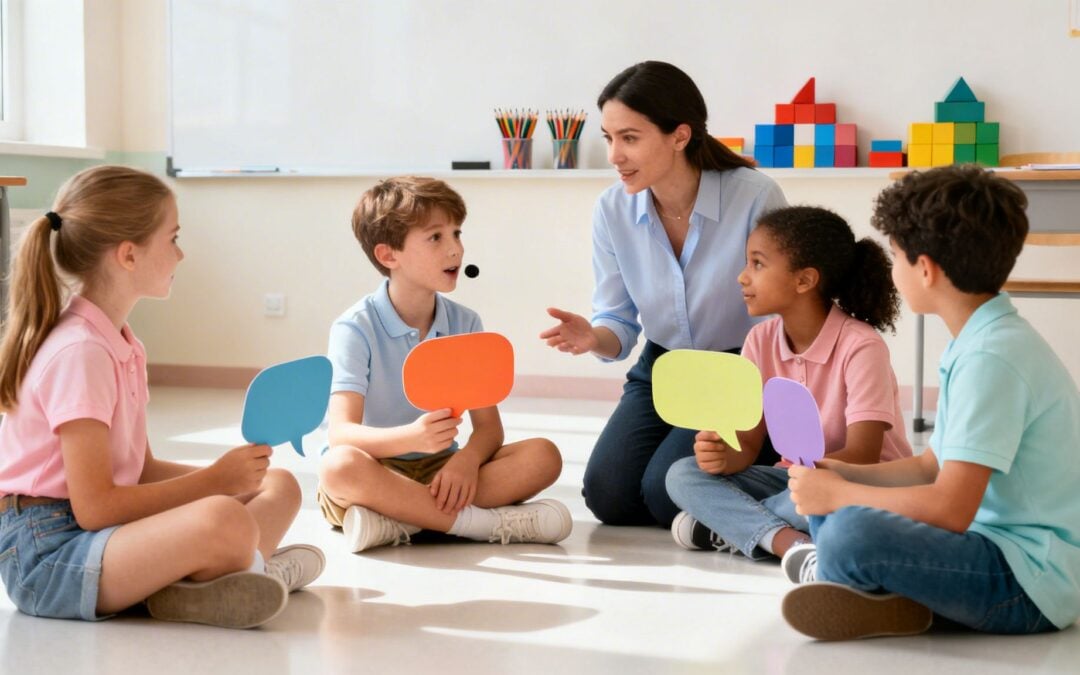
In any K-8 classroom, the ability to communicate effectively is more than just a 'nice-to-have'. It's the foundational skill that underpins academic success, emotional well-being, and a positive school climate. When students can listen with empathy, express their needs clearly, and navigate disagreements constructively, the entire learning community flourishes. These abilities are not innate; they must be intentionally taught, modeled, and practiced. At the heart of all effective communication, especially in building a thriving classroom, lies a deep understanding of emotional intelligence, which enables students to manage their feelings and understand others'.
For educators and parents seeking to cultivate these core competencies, finding the right communication skill activity can feel overwhelming. This guide cuts through the noise. It offers a curated collection of eight powerful, research-backed activities designed for the modern K-8 classroom and easily adaptable for home use. We will move beyond generic advice to provide concrete, actionable strategies that foster genuine connection.
This article provides a clear roadmap for each activity, including:
- Learning Objectives: What students will achieve.
- Step-by-Step Instructions: How to implement the activity.
- Grade-Level Differentiation: Tips for adapting to K-2, 3-5, and 6-8 students.
- SEL Connections: Aligning activities with key social-emotional learning goals.
- Assessment and Reflection: Simple ways to measure understanding.
Our goal is to equip you with the practical tools needed to build a culture of connection, safety, and mutual respect, one conversation at a time. Let's dive into the activities that will transform how your students communicate.
1. Active Listening Circles
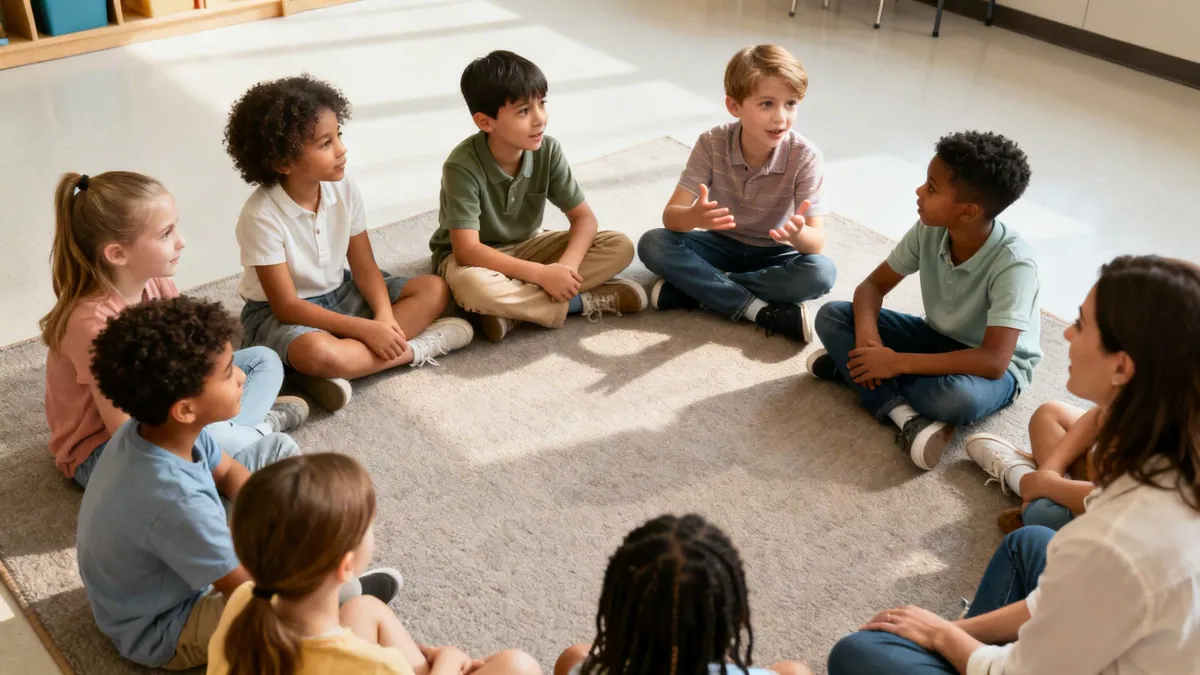
Active Listening Circles are a structured and powerful communication skill activity designed to cultivate focused listening and empathy. In this format, participants sit in a circle, and one person speaks at a time without interruption, often holding a "talking piece" to signify their turn. The core practice involves the other members giving their complete attention, not just to hear the words, but to understand the speaker's perspective and feelings.
This activity is foundational because it creates a space of psychological safety. When students know they will be heard fully and without judgment, they are more willing to share openly and honestly. The listener's role is not to immediately respond or problem-solve, but to first reflect back what they heard, validating the speaker's experience.

Why It Works
This method, rooted in restorative practices and indigenous traditions, slows down communication and prioritizes understanding over reacting. It directly counters the common habit of formulating a reply while someone is still speaking. For students, this builds crucial social-emotional skills like self-awareness, social awareness, and responsible decision-making. The circle format itself is symbolic, promoting equality and community by placing every participant on the same level.
Implementation Tips for Educators and Parents
To successfully implement this activity, start small and be consistent.
- Establish Clear Norms: Co-create ground rules with participants. Key rules include: speak from the heart, listen from the heart, no interruptions, and respect confidentiality.
- Use a Talking Piece: Introduce an object (like a ball, a decorated stone, or a stuffed animal) that grants the holder the exclusive right to speak. This physical cue helps manage turn-taking.
- Model and Scaffold: Begin by modeling the process. Use sentence stems to guide listeners, such as, "What I heard you say is…" or "It sounds like you feel…" before they share their own thoughts. For example, if a student says, "I was sad because no one played with me at recess," the next student could practice by saying, "What I heard you say is you felt lonely during recess because you wanted someone to play with."
- Start with Low-Stakes Topics: Begin with simple prompts like, "Share one good thing that happened this weekend," or "What is a challenge you are proud of overcoming?" before moving to more sensitive subjects.
- Adapt for Different Ages: For younger students (K-2), keep circle time short and use simple prompts like, "What is your favorite animal and why?" For older students (6-8), circles can address more complex issues like peer conflicts, social pressures, or community problem-solving. A parent could use this at home by asking, "What was the best part of your day?" at the dinner table, passing a "talking spoon" to each family member.
This deliberate practice of focused attention is a cornerstone of effective communication. For more ideas on building these foundational skills, explore these listening skills activities that can complement circle work.
2. Role-Playing and Perspective-Taking Scenarios
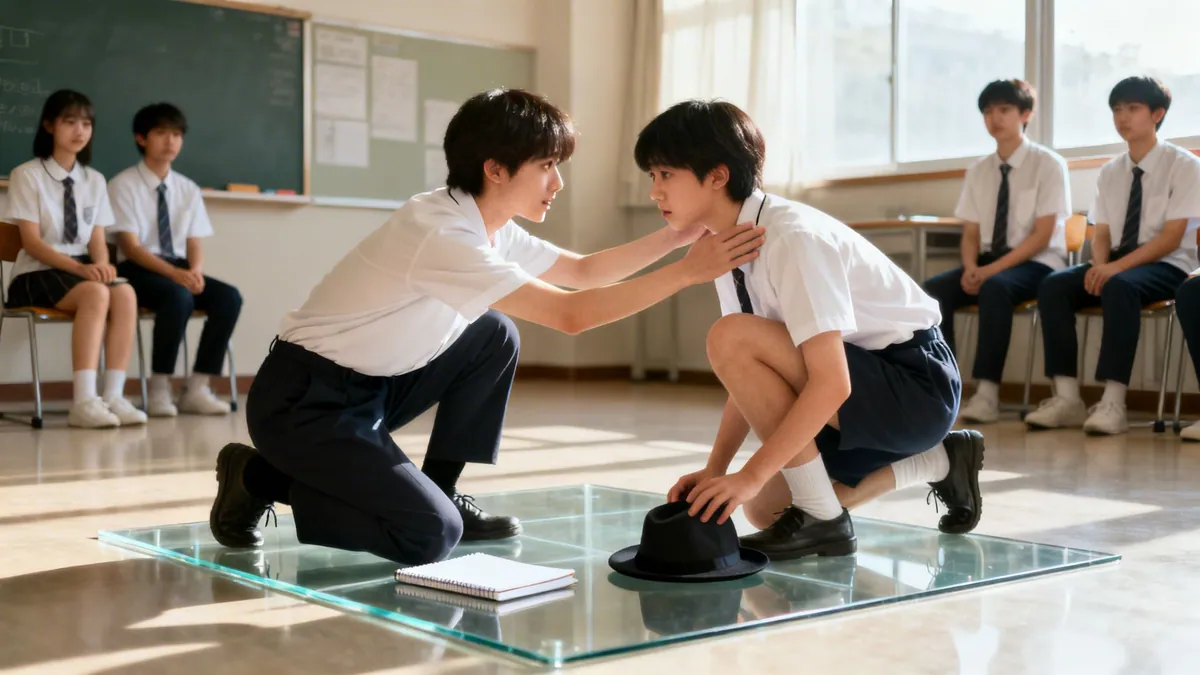
Role-Playing and Perspective-Taking Scenarios are an experiential communication skill activity where students act out realistic social situations to practice communication strategies and develop empathy. Participants take on various roles, such as a bystander, a peer, or an adult, to experience conflicts from multiple angles. This approach helps them navigate challenges like exclusion, peer pressure, or disagreements in a safe, controlled environment.
This activity is powerful because it moves communication skills from theory to practice. By stepping into someone else’s shoes, students internalize the emotional impact of words and actions. This experiential learning is crucial for developing emotional intelligence and building a toolkit of effective responses for real-life situations, such as those addressed in anti-bullying programs that feature bystander intervention scenarios.
Why It Works
Grounded in drama-based learning and methodologies like Augusto Boal's Theater of the Oppressed, this activity makes abstract concepts like empathy tangible. It allows students to experiment with different communication styles, like assertive versus aggressive language, and see the immediate outcomes without real-world consequences. For educators, it provides a dynamic way to assess a student's social understanding and guide them toward more constructive behaviors. The process of acting and reflecting helps cement learning in a way that lectures or worksheets cannot.
Implementation Tips for Educators and Parents
To use role-playing effectively, focus on creating a supportive atmosphere and structured reflection.
- Start with Low-Stakes Scenarios: Begin with simple situations, like asking to join a game or disagreeing politely about what to play. For example, a scenario could be: "Two friends both want to use the same swing. How can they solve this problem?" This builds confidence before tackling more sensitive topics like peer pressure or exclusion.
- Establish a Safe Space: Clearly state that this is a practice space and there are no "wrong" answers, only learning opportunities. Avoid casting students in roles that mirror their real-life conflicts.
- Rotate Roles: Ensure every participant has the chance to play different roles within a scenario. For example, in a scenario about teasing, a student might first play the person being teased, then the teaser, and finally a bystander who steps in. This deepens their understanding by allowing them to experience the situation from multiple viewpoints.
- Structure the Debrief: After each role-play, lead a structured discussion. Use reflection questions like, "How did it feel to be in that role?" or "What is one thing you might do differently next time?" to guide the conversation.
- Use Observation Guides: Give students who are not actively participating a task, such as watching for specific body language or listening for "I-statements." This keeps the entire group engaged and focused on the learning objective.
This hands-on practice is vital for building social competence. To explore this topic further, discover these perspective-taking activities that can enhance students' ability to understand others.
3. Non-Violent Communication (NVC) Training
Non-Violent Communication (NVC) is a powerful framework that transforms how students express themselves and understand others. Developed by Marshall Rosenberg, this communication skill activity teaches participants to move beyond blame and judgment, focusing instead on a four-step process: Observation, Feelings, Needs, and Requests (OFNR). Students learn to state what they see without evaluation, identify their emotions, connect those feelings to universal human needs, and make clear, positive requests.
This approach is transformative because it shifts the focus from winning an argument to fostering connection and mutual understanding. By giving students a concrete structure to navigate difficult conversations, NVC de-escalates conflict and builds empathy. Instead of reacting with anger or defensiveness, students learn to express their authentic experience and listen to the needs of others, creating a foundation for restorative solutions and stronger relationships.
Why It Works
NVC provides a shared, compassionate language that reframes conflict as an opportunity for growth. It directly addresses the root causes of misunderstandings-unmet needs-rather than just the surface-level behaviors. For students, this builds sophisticated emotional intelligence, self-advocacy, and conflict resolution skills. The OFNR framework helps them untangle complex emotions and articulate them constructively, which is a cornerstone of social-emotional wellness and a key element in effective anti-bullying strategies.
Implementation Tips for Educators and Parents
Successfully integrating NVC requires modeling and consistent practice.
- Introduce Components Sequentially: Don't teach all four steps at once. Spend a week on each component: first, practice making pure observations ("I see…") versus judgments ("You always…"). For example, instead of "You are being messy," practice saying, "I see your coat and backpack are on the floor." Then, build an emotional vocabulary using a feelings wheel before connecting feelings to needs.
- Use Sentence Stems: Provide clear scaffolds to guide students. Post a visual chart with the stems: "When I see/hear… I feel… because I need… Would you be willing to…?"
- Practice with Low-Stakes Scenarios: Start with simple, non-conflict situations. For example, a student could practice: "When I see a new art project is announced (Observation), I feel excited (Feeling) because I need creativity (Need). Would you be willing to tell me what supplies we'll use (Request)?" A parent might use this at home: "When I see your wet towel on the bed (Observation), I feel frustrated (Feeling) because I need our space to be tidy (Need). Would you be willing to hang it up in the bathroom (Request)?"
- Model NVC Language: Adults should explicitly use the OFNR framework in their interactions. A teacher might say, "When I hear talking while I'm giving instructions, I feel frustrated because I need respect and for everyone to be safe. Would you be willing to listen quietly until I'm finished?"
- Create Visual Aids: Design posters that break down the four steps with examples and list common feelings and needs. This gives students a reference point during challenging moments.
4. I-Messages and Assertive Communication Workshops
I-Messages and Assertive Communication Workshops are a foundational communication skill activity that teaches students to express their feelings and needs clearly without blaming or accusing others. The core of this practice is shifting from accusatory "You" statements (e.g., "You never listen to me!") to ownership-based "I" statements (e.g., "I feel frustrated when I'm interrupted because I lose my train of thought"). This simple linguistic change is transformative, reducing defensiveness and opening the door for constructive dialogue.
This activity is crucial for conflict resolution and self-advocacy. By learning to articulate their own experience, students develop assertiveness, the healthy middle ground between passivity and aggression. They learn to set boundaries and make requests respectfully, empowering them to navigate social challenges in the classroom, on the playground, and at home.
Why It Works
This method, popularized by psychologist Thomas Gordon, directly addresses the root of many conflicts: perceived attacks. A "You" statement often feels like a criticism, prompting the listener to shut down or fight back. An "I" message, however, is an undeniable expression of personal feeling, making it much easier for the other person to hear and empathize. For students, this builds emotional intelligence by connecting feelings to specific events and encouraging them to take responsibility for their emotional responses.
Implementation Tips for Educators and Parents
To successfully implement this communication skill activity, focus on scaffolding, practice, and real-world application.
- Introduce the Formula: Teach a simple structure for I-Messages, such as "I feel [emotion] when you [specific behavior] because [reason/impact]." Post sentence stems on a classroom wall for easy reference.
- Differentiate Communication Styles: Explicitly teach the difference between passive (avoiding conflict), aggressive (blaming or threatening), and assertive (clear, respectful, honest) communication. Use role-playing to demonstrate each style. For example: "Someone cuts in front of you in line." A passive response is saying nothing. An aggressive response is yelling, "Hey, get out of my spot!" An assertive response is saying, "I feel frustrated when you cut in line because I was waiting my turn."
- Start with Low-Stakes Scenarios: Begin practice with non-threatening situations. For example, have a student practice saying, "I feel left out when a game starts without me because I wanted to play too," before tackling more intense peer conflicts.
- Focus on Non-Verbal Cues: Remind students that assertive communication involves more than words. Practice maintaining a calm tone of voice, making eye contact, and using confident but relaxed posture.
- Connect to Home: Encourage parents to practice I-Messages with their children. A simple family activity could be sharing one "I feel…" statement about their day at the dinner table, normalizing the practice. For instance, a child might say, "I felt proud when I finished my math homework because it was really hard."
Building this skill helps students advocate for themselves effectively and respectfully. For a deeper look into this powerful tool, explore the magic of I feel statements for kids and how they can transform disagreements.
5. Fishbowl Discussion and Observation Technique
The Fishbowl Discussion and Observation Technique is a dynamic group communication skill activity where a small group of students sits in an inner circle (the "fishbowl") to discuss a topic. The rest of the class sits in an outer circle as observers, paying close attention to the communication patterns, dialogue quality, and non-verbal cues within the inner group. This method sharpens both speaking and observation skills simultaneously.
This activity is powerful because it encourages meta-cognition about social interactions. Observers are not passive; they are active listeners tasked with analyzing the conversation's flow. This provides a structured way for students to learn from their peers, identify effective communication strategies in real-time, and understand group dynamics from an outside perspective before rotating into the discussion themselves.
Why It Works
This technique, popular in cooperative learning, separates the acts of speaking and analyzing, allowing students to focus on one skill at a time. The inner circle practices articulating ideas and building on others' points, while the outer circle develops critical observation and listening skills. It makes the invisible elements of a conversation, like interruptions, active listening, and turn-taking, visible and discussable. The structure naturally builds accountability for both respectful dialogue and thoughtful observation.
Implementation Tips for Educators and Parents
To ensure a fishbowl discussion is productive and insightful, clear structure and focused observation are key.
- Assign Specific Observation Roles: Give the outer circle a clear task. For example, have them use a worksheet to track: "Who asks clarifying questions?" or "Tally the number of times someone is interrupted versus the number of times someone builds on another's idea." Another example is having one observer track body language, noting when students lean in to listen or cross their arms.
- Rotate Roles Regularly: Allow students in the outer circle to rotate into the "fishbowl" every 5-10 minutes. This can be done by having a few empty chairs in the inner circle that observers can move into when they have a point to add.
- Model and Debrief the Process: Before starting, model what respectful observation looks like. Afterward, dedicate time to debriefing both the content of the discussion and the process of communication. Use prompts like, "What communication habits did you notice that helped the conversation move forward?"
- Start with Engaging, Low-Stakes Topics: Begin with prompts like, "Should students have more say in school rules?" or discussing a scene from a class novel. This allows students to practice the format before tackling more complex or sensitive subjects.
- Adapt for Different Ages: For younger students (2-4), keep the inner circle small (3-4 students) and the observation task simple, like "Give a thumbs-up when you hear a kind word." For older students (5-8), observers can analyze more complex dynamics, such as identifying evidence-based arguments versus opinion-based statements.
This structured activity transforms a standard classroom discussion into a rich learning experience about how we communicate.
6. Peer Mediation and Conflict Resolution Training
Peer Mediation and Conflict Resolution Training is a structured communication skill activity that empowers students to act as a neutral third parties, helping their peers resolve disagreements peacefully. This comprehensive program equips student mediators with tools like active listening, I-statements, empathy, and a step-by-step problem-solving process. Instead of adults intervening, students guide their classmates toward mutually acceptable solutions.
This activity is transformative because it shifts the school culture from punitive to restorative. It gives students ownership over their social environment and builds leadership capacity. When peers facilitate conflict resolution, it can feel less intimidating and more relatable for those involved, fostering genuine understanding and sustainable agreements.
Why It Works
Rooted in the principles of restorative justice and conflict resolution education (CRE), this approach teaches that conflict is a normal part of life and can be a catalyst for growth. It moves beyond simply stopping a negative behavior and focuses on repairing harm and relationships. Training students as mediators develops high-level emotional intelligence, critical thinking, and a profound sense of responsibility within the school community. This student-led model creates a ripple effect of positive communication.
Implementation Tips for Educators and Parents
A successful peer mediation program requires a strong framework and consistent support.
- Recruit Diverse Mediators: Select a group of students who represent the diverse demographics of your school to ensure all students feel seen and understood.
- Provide Robust Training: Initial training should be comprehensive (at least 8-16 hours) and followed by ongoing monthly coaching sessions to refine skills and debrief challenging cases. For example, training should include role-playing common conflicts, like a dispute over a game at recess or a misunderstanding in a group project.
- Establish a Clear Process: Develop a clear referral system so teachers, staff, and students know how to request a mediation. Train the disputants on the process so they understand the ground rules and expectations. For instance, a teacher might fill out a simple form to refer two students who are arguing over a shared resource.
- Create a Visible Presence: Designate a specific, quiet space for mediations and use bulletin boards or announcements to keep the program visible. This normalizes seeking help to resolve conflicts.
- Define Escalation Protocols: Train mediators to recognize when a conflict is too serious for them to handle (e.g., involving bullying, safety concerns) and establish a clear protocol for escalating these issues to a trusted adult. A practical example is teaching mediators the phrase: "This sounds really important, and I think we need an adult's help to solve this one."
By teaching students how to navigate disagreements constructively, you provide them with invaluable life skills. To explore more foundational techniques, discover these conflict resolution strategies for kids that complement peer mediation training.
7. Mindfulness-Based Communication and Reflective Listening Practices
Mindfulness-Based Communication is an activity that integrates simple mindfulness techniques with reflective listening to help students communicate with greater presence and emotional regulation. This approach teaches students to pause and notice their internal state before speaking or reacting, especially in high-emotion situations. The core practice involves brief mindfulness exercises like focused breathing or body scans to create the calm and mental clarity needed for empathetic, effective communication.
This communication skill activity is transformative because it addresses the root of many communication breakdowns: emotional reactivity. By learning to ground themselves, students can move from a reactive, defensive state to a responsive, thoughtful one. This creates a foundation of self-awareness that allows them to listen more deeply and express themselves more clearly, turning potential conflicts into opportunities for understanding.

Why It Works
Popularized by thought leaders like Jon Kabat-Zinn and Thich Nhat Hanh, this method connects emotional regulation directly to communication quality. When a student is dysregulated, their capacity for empathy and problem-solving diminishes. Mindfulness provides the practical tools to manage that internal state. By practicing these techniques, students build the neural pathways for self-control and presence, which are essential for navigating complex social interactions at school and at home.
Implementation Tips for Educators and Parents
To successfully integrate mindfulness into communication practices, be consistent and start with simple, accessible exercises.
- Anchor to Routines: Start class or family meetings with a one-minute breathing exercise. For example, have students place a hand on their belly and feel it rise and fall. This anchors the day in calm. A parent could do this before homework time by saying, "Let's take three slow 'balloon breaths' together to get our minds ready."
- Create a Calm-Down Corner: Designate a space with mindfulness tools like breathing posters, grounding objects (a smooth stone, a soft blanket), and visual timers. Encourage its use before tackling a tough conversation.
- Model the Practice: Genuinely practice mindfulness yourself. When you feel frustrated, say, "I'm feeling upset, so I am going to take three deep breaths before I respond." This models the skill in a real-world context.
- Use Simple Language: Use accessible prompts like, "Let's find our 'anchor spot' where we feel our breath the most," or "Notice your feet on the floor when you feel wobbly."
- Integrate into Conflict Resolution: Before peer mediations, guide students through a brief grounding exercise. Ask them to notice their body in the chair and take a slow breath. This prepares them to listen rather than just react.
This approach builds a powerful internal toolkit for communication. Soul Shoppe’s programs often weave these practices in to help students develop the self-awareness needed for building safer, more connected school communities.
8. Empathy Mapping and Perspective-Building Exercises
Empathy Mapping is a structured, visual communication skill activity that guides students to step into another person's experience. Using a simple framework, participants consider what someone else might be seeing, hearing, thinking, and feeling in a particular situation. This powerful exercise moves beyond simple sympathy and cultivates genuine empathy by encouraging a deeper, more holistic understanding of different viewpoints.
This activity is essential for building inclusive and supportive communities. When students practice considering the perspectives of others, especially those with different backgrounds or abilities, they develop the cognitive and emotional skills needed to prevent misunderstandings, resolve conflicts, and counter bullying. It makes the abstract concept of empathy tangible and actionable.
Why It Works
Originating in design thinking and adapted for social-emotional learning, empathy mapping makes perspective-taking a concrete process. It requires students to look for clues and make informed inferences rather than simply guessing or projecting their own feelings. This structured approach helps decenter their own experience and build a more nuanced understanding of their peers, literary characters, or community members. The visual nature of the map helps students organize complex social information, making it accessible for diverse learners.
Implementation Tips for Educators and Parents
To use empathy maps effectively, focus on creating a clear structure and safe environment for exploration.
- Use Visual Templates: Provide a simple worksheet divided into sections like Says, Thinks, Does, and Feels. This visual organizer guides students through the process and helps them capture their ideas.
- Start with Fictional Characters: Begin by having students create an empathy map for a character in a book or a movie. This low-stakes starting point allows them to practice the skill without the social pressure of analyzing a real-life peer conflict. For example, map the perspective of a new student in a story before discussing a new student in your own class.
- Ask Deepening Questions: Guide students beyond surface-level observations. Ask follow-up questions like, "Why might they feel that way?" or "What experiences might lead them to think that?" to encourage critical thinking.
- Connect Maps to Action: After completing a map, ask students to consider what the person might need. Brainstorm supportive actions, turning empathy into a catalyst for kindness. For instance, after mapping the feelings of a student who was left out, the class could discuss, "What could we do to make sure everyone feels included at recess?"
- Model the Process: Complete an empathy map together as a class or family. Choose a relatable scenario, such as a younger sibling's frustration or a parent's busy day, and model how to consider their perspective without judgment. For example: "Let's make an empathy map for Grandma after she cooked a big holiday dinner. What was she feeling? (Tired, happy). What was she doing? (Washing dishes). What might she have been thinking? (I hope everyone enjoyed the meal)."
8-Activity Communication Skills Comparison
| Method | Implementation complexity | Resource requirements | Expected outcomes | Ideal use cases | Key advantages |
|---|---|---|---|---|---|
| Active Listening Circles | Low–Medium: simple structure but needs facilitation skills | Minimal: circle space, timer, trained facilitator | Greater trust, improved listening, increased psychological safety | K–8 morning meetings, advisory, small-group SEL | Ensures every voice, builds empathy, reduces interruptions |
| Role‑Playing & Perspective‑Taking | Medium–High: scenario design and skilled debriefing required | Moderate: prep time, facilitators, props/space for performances | Increased empathy, confidence in difficult conversations, behavior change | Assemblies, workshops, anti‑bullying programs, mediation practice | Experiential, memorable, reveals biases and assumptions |
| Non‑Violent Communication (NVC) Training | Medium–High: progressive training for fidelity | Moderate: curriculum, trained coaches, sustained practice time | Shared language for conflict resolution, reduced blame, clearer needs expression | Long‑term SEL integration, restorative practices, peer mediation | Concrete four‑step framework, promotes accountability and empathy |
| I‑Messages & Assertive Communication Workshops | Low–Medium: workshop format with practice opportunities | Low: lesson plans, role‑plays, visual prompts | Clear self‑expression, reduced defensiveness, boundary setting | Classroom management, anti‑bullying, leadership training | Simple, teachable structure; easy to generalize across contexts |
| Fishbowl Discussion & Observation | Medium: logistic setup and observer roles needed | Low–Moderate: space arrangement, observation guides, rotating groups | Improved meta‑awareness of communication patterns, modeled dialogue | Book discussions, teacher PD, student leadership, classroom deliberations | Models effective dialogue, focuses observers, lowers pressure for some |
| Peer Mediation & Conflict Resolution Training | High: comprehensive program, selection, and oversight | High: extensive training hours, ongoing coaching, coordination | Reduced adult caseload, leadership development, fewer discipline referrals | School‑wide conflict systems, middle/upper elementary peer programs | Scalable peer‑led resolution, builds responsibility and belonging |
| Mindfulness‑Based Communication | Medium: requires facilitator authenticity and consistent practice | Low–Moderate: brief practice time, training for staff, calm spaces | Better emotional regulation, reduced reactivity, increased presence | Before mediations, morning routines, transitions, high‑emotion moments | Builds regulation foundation for communication, evidence‑backed |
| Empathy Mapping & Perspective‑Building | Low–Medium: templates plus skilled questioning for depth | Low: templates, markers, facilitator prompts, time for reflection | Enhanced perspective‑taking, reduced bias, deeper understanding | Literature study, DEI lessons, bullying prevention, mediation prep | Visual, concrete tool accessible to diverse learners; links empathy to action |
From Practice to Progress: Weaving Communication Skills into Your School's DNA
The journey from a noisy classroom to a connected community is paved with intentional practice. The eight powerful strategies detailed in this article, from Active Listening Circles to Empathy Mapping, are far more than isolated exercises. They are foundational tools designed to build a culture of understanding, respect, and emotional intelligence. Each communication skill activity serves as a vital thread in weaving a stronger, more resilient social fabric within your school or home.
Moving beyond the individual activity is where the real transformation begins. The ultimate goal is not to simply complete a worksheet or a role-play scenario but to integrate these practices into the very DNA of your daily interactions. Consistent application is the key to turning learned concepts into lived habits.
Synthesizing the Core Lessons: From Activities to Habits
Let's distill the most critical takeaways from the activities we've explored. These are the principles that bridge the gap between a single lesson and a lasting cultural shift.
- Listening is an Action: As demonstrated in Active Listening Circles and Mindfulness-Based Communication, true listening is not passive. It is an active, engaged process that requires full presence, empathy, and the suspension of judgment. The simple act of reflecting back what one hears can de-escalate conflict and validate feelings instantly.
- Perspective is a Superpower: Activities like Role-Playing, Fishbowl Discussions, and Empathy Mapping all share a common, powerful goal: to help students step outside of their own experiences. When a child can genuinely consider, "How would I feel if that happened to me?" or "What might they be thinking?", the foundation for compassion is built.
- Language Shapes Reality: The shift from blaming "you-statements" to accountable "I-messages" is monumental. This principle, central to Non-Violent Communication and Assertive Communication workshops, empowers students to express their needs and feelings without attacking others, transforming potential conflicts into opportunities for mutual understanding.
Your Actionable Roadmap for Lasting Change
Transforming your school's culture requires a strategic, tiered approach. It’s not about doing everything at once, but about starting with consistent, manageable steps. Here’s a practical plan for implementation:
- Start with a Single Routine: Don't try to introduce all eight activities in one week. Choose one to embed into a daily or weekly routine. For example, begin every Monday with a brief Active Listening Circle during your morning meeting. Consistency will build familiarity and skill far more effectively than sporadic, varied lessons.
- Model, Model, Model: The most effective way to teach these skills is to live them. Use "I-messages" when addressing classroom challenges ("I feel concerned when the noise level gets too high because it's hard for everyone to focus"). Acknowledge student perspectives, even in moments of correction ("I understand you're feeling frustrated with the assignment. Let's talk about the part that's tricky.").
- Celebrate the Small Wins: Progress, not perfection, is the goal. When you overhear a student use an "I-message" on the playground or see a pair resolve a disagreement using peer mediation steps, acknowledge it. Public or private praise reinforces the value of these skills and encourages others. A simple, "I was so impressed with how you both listened to each other to solve that problem," can be incredibly powerful.
By championing every communication skill activity as a stepping stone toward a larger vision, you are not just teaching lessons for a test. You are equipping your students with the essential tools for a lifetime of healthier, more meaningful, and more successful relationships, both inside the classroom and far beyond its walls.
Ready to take the next step in building a compassionate and connected school culture? Soul Shoppe provides dynamic programs, from engaging student assemblies to in-depth staff training, designed to embed these vital communication and empathy skills into your school's core. Explore how our evidence-based approach can help you turn practice into profound and lasting progress at Soul Shoppe.