

Conflict resolution activities for kids: 10 practical conflict helpers
Conflict is a natural and inevitable part of growing up. From playground disagreements over a turn on the swings to classroom collaboration challenges, kids constantly navigate social hurdles. How we equip them to handle these moments defines their ability to build healthy relationships, develop resilience, and contribute to a positive learning environment. Instead of viewing conflict as something to be avoided, we can reframe it as a powerful teaching opportunity. The ability to manage disagreements constructively is one of the most important life skills a child can develop, laying the groundwork for future academic and social success.
This guide provides a comprehensive roundup of ten research-informed conflict resolution activities for kids in grades K-8. Each activity is designed to be practical and actionable, offering educators, counselors, and parents the specific tools needed to teach essential social-emotional learning (SEL) skills. You’ll find step-by-step instructions for implementing strategies that foster:
- Empathy and perspective-taking
- Self-regulation and emotional management
- Effective communication and active listening
These strategies move beyond temporary fixes, aiming to build a foundational skill set that will serve children throughout their lives. By integrating these practices, we can help students transform disputes into moments of connection and growth. This list will provide you with a structured, easy-to-follow toolkit for building a classroom or home culture rooted in understanding, respect, and collaborative problem-solving.
1. Restorative Circles
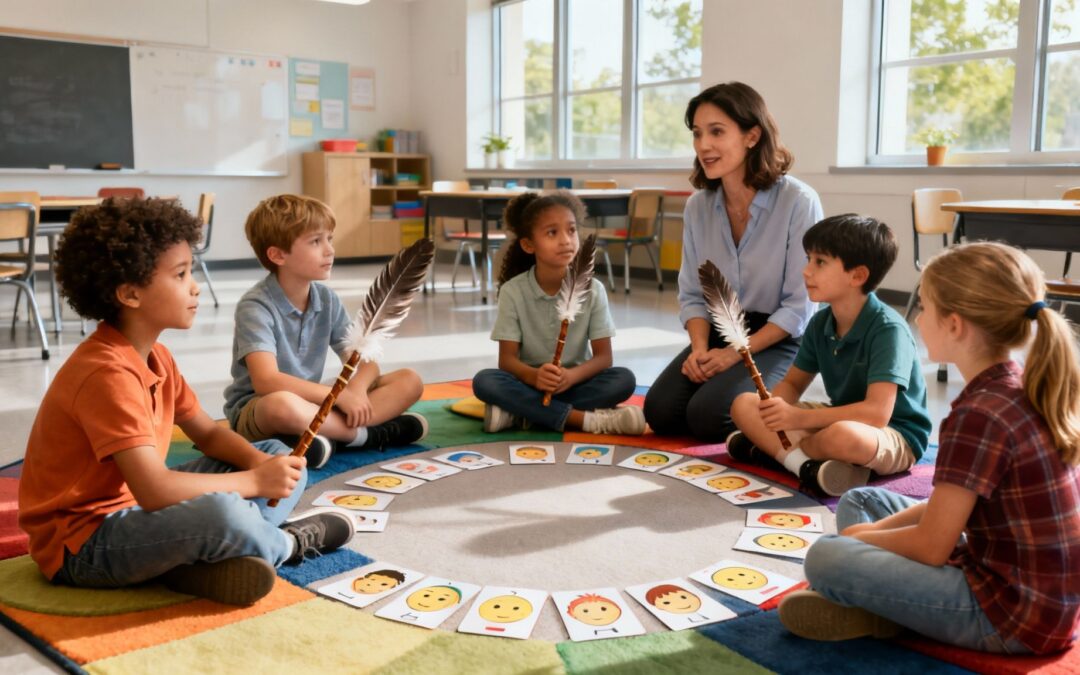
Restorative Circles are a powerful, structured approach to dialogue where students sit in a circle to discuss conflicts, share perspectives, and collaboratively find solutions. This method shifts the focus from punishment to repairing harm, making it one of the most effective conflict resolution activities for kids to build a strong, empathetic community. The core practice involves using a “talking piece” (like a small stone or ball) which is passed around the circle; only the person holding the piece may speak.
This simple rule ensures everyone is heard and encourages active listening rather than reactive responses. By creating a space for honest sharing, Restorative Circles help students understand the real impact of their actions, fostering accountability and genuine remorse. This practice is foundational for building a classroom culture where every voice matters and relationships are prioritized.
How It Works
- Objective: To repair harm, build community, and develop empathy by giving every participant a voice in resolving a conflict.
- Materials Needed: A designated “talking piece” that is easy to hold and pass.
- Best For: Addressing classroom-wide issues (like gossip or exclusion), repairing harm after a specific conflict between students, and proactively building a positive community.
Step-by-Step Directions:
- Arrange Seating: Have all participants sit in a circle where everyone can see one another. The facilitator sits in the circle as an equal member.
- Introduce the Process: The facilitator explains the purpose of the circle, establishes group agreements (e.g., “respect the talking piece,” “listen with compassion”), and introduces the talking piece.
- Opening Ritual: Start with a simple opening, like a brief moment of quiet reflection or a check-in question (e.g., “Share one word describing how you feel today”).
- Guided Dialogue: The facilitator poses questions to guide the conversation, starting with those who were harmed. The talking piece is passed sequentially around the circle.
- Develop Solutions: After all perspectives are shared, the facilitator asks, “What needs to happen to make things right?” The group works together to create a mutually agreeable plan.
- Closing Ritual: End the circle with a closing round, such as sharing one thing each person will commit to doing.
Practical Example: After several students were excluded from a game at recess, a teacher holds a circle. The first question is, “What happened?” Each student shares their view. The next question is, “How did that make you feel?” A student who was excluded might say, “I felt lonely and invisible.” A student who did the excluding might say, “I felt pressured to only play with my close friends.” The final question, “What can we do to make sure everyone feels included next time?” leads to a group-created plan for inviting others to join games.
Restorative practices have a proven track record. For instance, Oakland Unified School District integrated restorative circles and saw significant improvements in peer relationships and school climate. The foundational principles are part of a broader framework known as restorative justice. For a deeper understanding of this approach, you can learn more about what restorative practices in education look like and how they transform school communities.
2. Peer Mediation and Collaborative Problem-Solving
Peer Mediation empowers students to resolve their own conflicts by training them as neutral facilitators. This approach shifts responsibility from adults to students, teaching them to guide their peers through a structured, collaborative problem-solving process. Instead of focusing on blame, mediators help students identify their underlying needs and co-create “win-win” solutions, making it a powerful tool among conflict resolution activities for kids.
This process not only de-escalates immediate disputes but also equips the entire student body with essential life skills. By learning to distinguish between a “position” (what they want) and an “interest” (why they want it), children develop empathy, communication, and negotiation abilities. This fosters a school culture where students feel capable of handling disagreements constructively, reducing reliance on adult intervention.
How It Works
- Objective: To empower students to resolve their own disputes by training student mediators to facilitate a structured, interest-based negotiation process.
- Materials Needed: A quiet, private space for mediations; mediation script or guide sheet for mediators; agreement forms to document solutions.
- Best For: Resolving recurring interpersonal conflicts between students, such as arguments over games, rumors, or property. It is also excellent for building student leadership and school-wide problem-solving capacity.
Step-by-Step Directions:
- Recruit and Train Mediators: Select and train a diverse group of students in a structured mediation process. Training should cover active listening, impartiality, confidentiality, and guiding peers to find their own solutions.
- Establish Ground Rules: At the start of a mediation, the student mediator asks both parties to agree to rules like “take turns talking,” “no name-calling,” and “work to solve the problem.”
- Each Person Tells Their Story: Each student explains their perspective without interruption. The mediator listens, summarizes, and reflects back what they heard to ensure each party feels understood.
- Identify Interests: The mediator helps students move beyond their demands by asking questions like, “What is most important to you about this?” or “What do you need to happen to feel okay?”
- Brainstorm Solutions: The mediator encourages students to brainstorm as many possible solutions as they can. All ideas are initially accepted without judgment.
- Agree on a Solution: The students evaluate the brainstormed options and choose a mutually acceptable solution. The mediator writes it down on an agreement form, which both students sign.
Practical Example: Two students, Alex and Ben, both want to use the same basketball during recess. A peer mediator facilitates. Alex’s story: “Ben grabbed the ball from me!” Ben’s story: “I had it first!” The mediator asks, “Alex, why is it important for you to use the ball?” Alex explains he wants to practice for his team. The mediator asks Ben the same question, who says he just wants to have fun with friends. After brainstorming, they agree Alex can use the ball for the first 10 minutes to practice drills, and then Ben and his friends can use it for a game for the rest of recess.
Peer mediation has a strong evidence base. For example, schools implementing peer mediation programs, like those in San Francisco, have reported significant reductions in office referrals and playground conflicts. The principles are rooted in the work of negotiation experts like William Ury and the Harvard Negotiation Project. For families seeking engaging ways to practice collaborative skills at home, activities like a Family Real World Adventure Game can help build the teamwork and problem-solving mindset necessary for these skills to flourish.
3. Emotion Coaching and Check-In Conversations
Emotion Coaching is a responsive communication strategy where adults guide children to recognize, label, and manage their feelings. Instead of dismissing or punishing emotions, this approach treats them as opportunities for connection and teaching. Paired with brief, intentional check-in conversations, it becomes one of the most proactive conflict resolution activities for kids, as it builds the emotional literacy needed to prevent conflicts from escalating.
By validating a child’s feelings first, adults create a sense of psychological safety that makes problem-solving possible. A child who feels understood is more open to discussing their behavior and finding a better way forward. This method, popularized by Dr. John Gottman, shifts the adult role from a disciplinarian to an emotional guide, empowering kids with essential self-regulation skills they can use in any situation.
How It Works
- Objective: To help children identify and understand their emotions, build emotional vocabulary, and develop healthy coping strategies to manage feelings constructively.
- Materials Needed: None. Visual aids like an emotions chart or “feelings wheel” can be helpful for younger children.
- Best For: De-escalating conflicts in the moment, preventing future conflicts by building emotional awareness, and strengthening adult-child relationships through trust and empathy.
Step-by-Step Directions:
- Notice and Acknowledge: Tune in to the child’s emotions, paying attention to body language and tone. Acknowledge their feelings without judgment, e.g., “I can see you are very upset.”
- Listen and Validate: Give the child your full attention and listen to their perspective. Validate their feelings by saying something like, “It’s understandable that you feel angry because your turn was skipped.”
- Help Label the Emotion: Provide the child with the vocabulary to name their feeling. For instance, “It sounds like you’re feeling frustrated and left out.”
- Set Limits and Boundaries (If Needed): After validating, clarify that while the feeling is okay, the behavior is not. For example, “You are allowed to be mad, but you are not allowed to push.”
- Problem-Solve Together: Guide the child to brainstorm solutions. Ask questions like, “What could you do next time you feel this way?” or “How can we solve this problem together?”
Practical Example: A child, Maria, slams her book on the table after a group project discussion. A teacher approaches calmly and says, “That was a loud noise. It looks like you’re feeling really frustrated right now.” Maria nods, still upset. The teacher validates: “It’s hard when you have a different idea than your group. I get why you feel that way.” After a moment, she sets a boundary: “It’s okay to be frustrated, but it’s not okay to slam books. What’s another way you could show your group how you’re feeling or ask for a turn to share your idea?”
Research from Dr. John Gottman’s work shows that children who are emotion-coached have better friendships and are more resilient. For example, schools incorporating this model into their SEL curricula have seen significant improvements in classroom climate and overall student wellbeing. To further explore routine-based check-ins, you can discover more about using daily mood meters and reflection tools to boost student confidence.
4. Social-Emotional Learning (SEL) Curricular Programs
Social-Emotional Learning (SEL) Curricular Programs are comprehensive, evidence-based frameworks that systematically teach core social and emotional skills. Instead of being a one-off activity, these curricula integrate conflict resolution, empathy, and responsible decision-making directly into classroom instruction through structured lessons and activities. By adopting a program, schools create a shared language and consistent approach to behavior and relationship management.
These programs equip students with the tools to understand their emotions, build healthy relationships, and navigate disagreements constructively. For example, a lesson might teach students to identify their “trigger points” before a conflict escalates. This makes SEL curricula one of the most proactive and impactful conflict resolution activities for kids, as it builds foundational skills that prevent many conflicts from ever starting.
How It Works
- Objective: To embed social-emotional competencies like self-awareness, self-management, and relationship skills into the school day, providing students with a consistent framework for resolving conflicts.
- Materials Needed: Varies by program, but typically includes a teacher’s guide, student workbooks or digital resources, posters, and activity materials.
- Best For: Schools or districts seeking a structured, school-wide approach to improving student behavior, building a positive school climate, and reducing conflicts systemically.
Step-by-Step Directions:
- Select a Curriculum: Research and choose a program aligned with your school’s values and student needs (e.g., Second Step, RULER, Zones of Regulation).
- Provide Teacher Training: Ensure all staff receive comprehensive professional development on the curriculum’s philosophy, language, and lesson delivery.
- Schedule SEL Time: Dedicate consistent time in the weekly schedule for SEL lessons, just as you would for core academic subjects.
- Teach the Core Concepts: Deliver the lessons sequentially. For example, a unit might start with identifying emotions, then move to managing those emotions, and finally apply those skills to social problems.
- Integrate and Reinforce: Use the curriculum’s language and concepts throughout the day. If a conflict occurs on the playground, a teacher can reference a specific strategy taught in a lesson, like “using an I-message.”
- Involve Families: Share information and take-home activities with families so they can reinforce the concepts at home, creating consistency for the child.
Practical Example: A school using the “Zones of Regulation” curriculum teaches students to identify if they are in the Green Zone (calm), Blue Zone (sad/tired), Yellow Zone (frustrated/anxious), or Red Zone (angry/out of control). During a disagreement over game rules, one student recognizes he’s entering the “Yellow Zone.” Because of the SEL lesson, he knows to use a strategy. He tells his friend, “I’m in the Yellow Zone. I need to take a break,” and walks to the classroom’s designated calm-down corner before the conflict escalates into a Red Zone problem.
The impact of these programs is well-documented. Schools using the Second Step curriculum, for instance, often see a measurable improvement in students’ social competency and a reduction in aggression. Similarly, the RULER approach from the Yale Center for Emotional Intelligence has been shown to improve classroom emotional climates. By providing a common framework, these programs empower entire communities to handle conflict with skill and compassion.
5. Role-Playing and Scenario-Based Practice
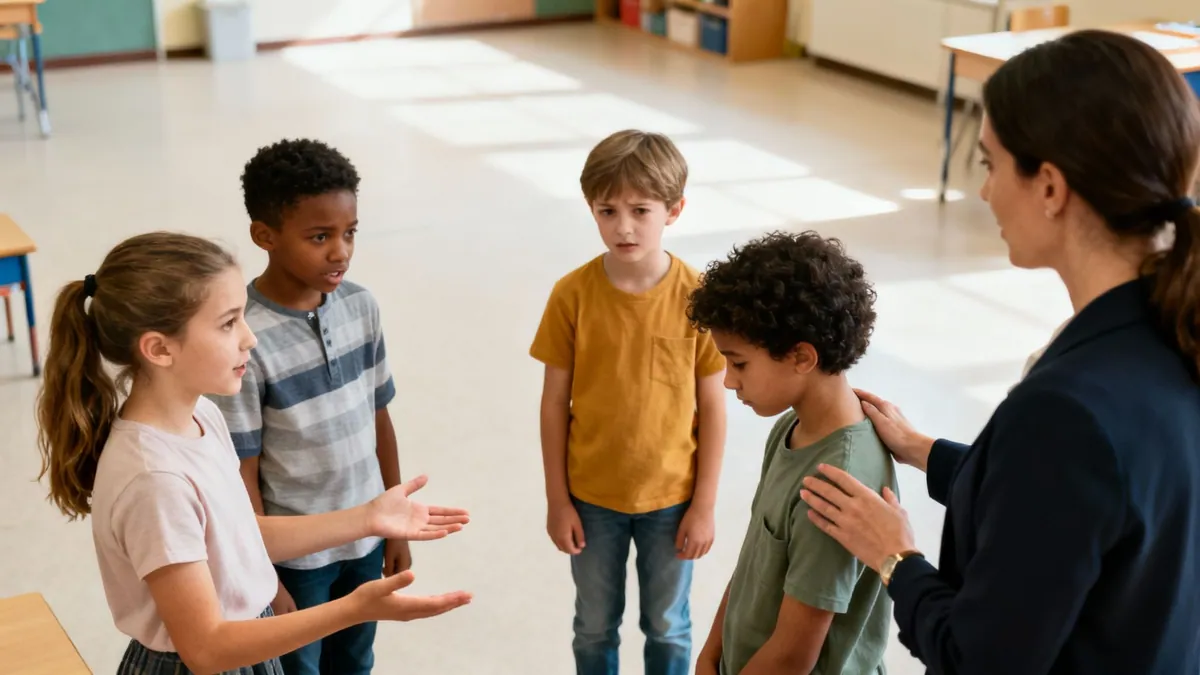
Role-Playing and Scenario-Based Practice allows students to safely act out conflict scenarios in a structured environment. By taking on different roles such as the aggressor, the person harmed, a bystander, or a mediator, children can practice various responses and witness potential outcomes without real-world consequences. This active, kinesthetic approach helps solidify learning and makes it one of the most practical conflict resolution activities for kids.
This method is powerful because it moves conflict resolution from an abstract concept to a tangible skill. Students not only learn what to say but how to say it, practicing tone, body language, and active listening. It builds empathy by literally putting students in someone else’s shoes, helping them understand different perspectives in a visceral way. This practice is a cornerstone of many successful Social-Emotional Learning (SEL) programs.
How It Works
- Objective: To practice communication and problem-solving skills, build empathy through perspective-taking, and test different conflict resolution strategies in a controlled setting.
- Materials Needed: Pre-written scenario cards (optional), open space for acting.
- Best For: Practicing specific skills like using “I-statements,” learning to de-escalate disagreements, and exploring the impact of bystander intervention.
Step-by-Step Directions:
- Introduce the Scenario: The facilitator presents a common conflict scenario relevant to the students’ age. For example: “Two friends both want to use the same swing at recess.”
- Assign Roles: Assign (or ask for volunteers for) roles: the two friends, and perhaps a bystander who sees the argument.
- Act It Out: The students act out the scenario. The first run-through can show the conflict escalating naturally.
- Pause and Discuss: The facilitator pauses the scene and asks processing questions: “How is each person feeling right now?” or “What could the bystander do to help?”
- Re-enact with a Strategy: The group brainstorms a better approach (e.g., taking turns, finding another activity). The students then re-enact the scene using the new strategy.
- Debrief and Reflect: After the role-play, the entire group discusses what they learned, focusing on the feelings and outcomes of each approach.
Practical Example: The scenario is: “Your friend told a secret you shared with them.” One student plays the person whose secret was told, and another plays the friend who told it. First, they act out a yelling match. The teacher pauses them and asks, “What else could you do?” The class suggests using an “I-statement.” They re-enact the scene. The student now says, “I felt really hurt and betrayed when I heard you told my secret because I trusted you. I need to know I can trust my friends.” This leads to a more productive conversation about the impact of the action.
Role-playing is a core component of proven SEL curricula, such as the Second Step program. Studies show that drama-based interventions and consistent scenario practice significantly improve students’ empathy and social perspective-taking, leading to more positive peer interactions.
6. Mindfulness and Breathing Techniques
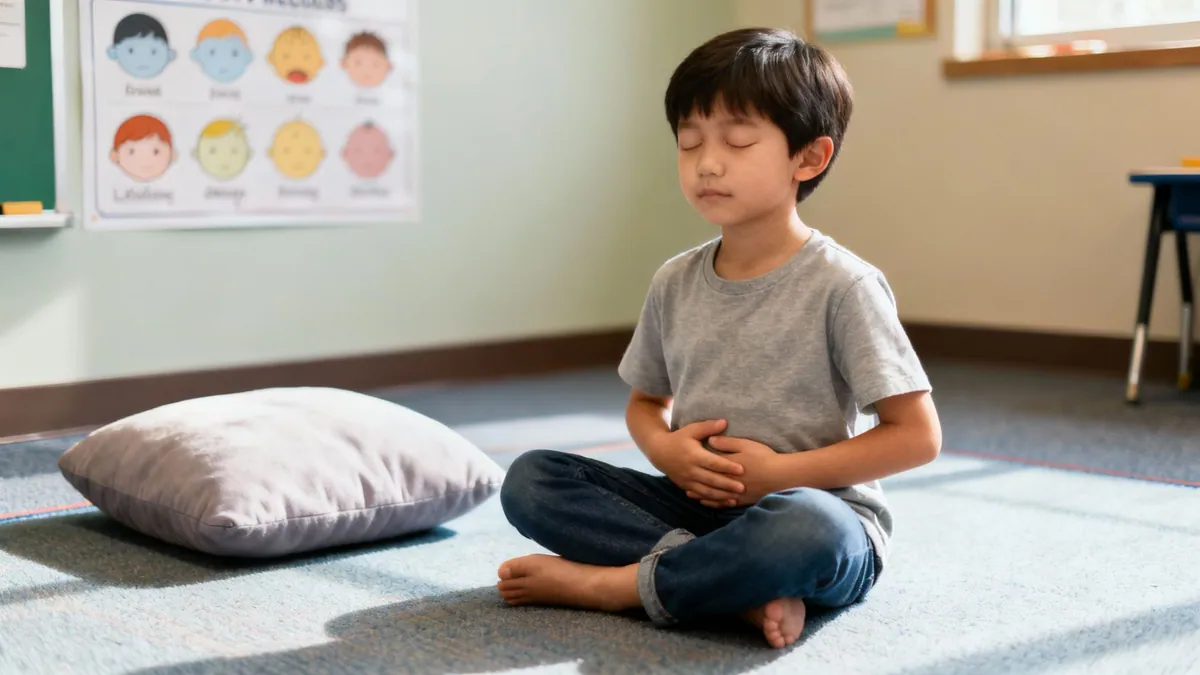
Mindfulness and breathing techniques are fundamental tools that teach children to manage their internal state before, during, and after a conflict. These practices focus on developing self-awareness and self-regulation, allowing students to pause and notice their emotions instead of acting impulsively. By learning simple exercises like belly breathing or box breathing, children gain the ability to calm their nervous systems, which is a critical first step in engaging in productive dialogue and one of the most proactive conflict resolution activities for kids.
This approach empowers students by giving them control over their own emotional responses. When a child feels anger or frustration rising, having a go-to breathing technique provides an immediate, constructive action to take. Research shows that schools implementing mindfulness programs see a significant reduction in behavioral incidents, as children are better equipped to handle stress and approach peer disputes with a clearer, more thoughtful mindset.
How It Works
- Objective: To teach children how to self-regulate their emotions, reduce stress responses, and approach conflicts from a place of calm and clarity.
- Materials Needed: A quiet space, optional visuals like a pinwheel or a breathing ball.
- Best For: Proactively building emotional regulation skills, de-escalating conflicts in the moment, and helping students manage anxiety and stress.
Step-by-Step Directions:
- Introduce the Concept: Explain in simple terms that our breath can help our brains and bodies calm down when we feel big emotions like anger or sadness. Use an analogy, like letting the air out of a balloon slowly.
- Model a Technique: Demonstrate a simple breathing exercise. For “Belly Breathing,” place a hand on your stomach and take a deep breath in through your nose, feeling your belly expand. Then, breathe out slowly through your mouth, feeling your belly go down.
- Practice Together: Guide students through several rounds of the breathing exercise. Use visual cues, like pretending to smell a flower (breathing in) and blow out a candle (breathing out).
- Connect to Emotions: Help students identify when to use this tool. Ask, “When might be a good time to use our calm breathing?” (e.g., “When I feel mad at a friend,” or “Before I take a test”).
- Create a Calm-Down Corner: Designate a quiet area in the classroom with pillows and visual aids for breathing techniques that students can use independently when they feel overwhelmed.
- Integrate into Daily Routines: Practice for 1-3 minutes daily, such as after recess or before a challenging subject, to build the skill as a habit.
Practical Example: Liam gets a math problem wrong and crumples his paper in frustration, ready to yell. His teacher, noticing his clenched fists, quietly says, “Liam, let’s do our box breathing.” She guides him to breathe in for a count of four, hold for four, breathe out for four, and hold for four, tracing a square in the air with her finger. After two rounds, Liam’s shoulders relax. He is now calm enough to look at his mistake without a major outburst, and the teacher can help him with the problem.
Mindfulness is not just about sitting still; it’s about building awareness. Programs like Mindful Schools have shown incredible success in K-8 settings by giving students practical tools for emotional management. To explore more ways to integrate these practices, you can find a variety of age-appropriate mindfulness activities for kids that support social-emotional learning and conflict resolution.
7. Nonviolent Communication (NVC) and Compassionate Listening
Nonviolent Communication (NVC), often called Compassionate Communication, is a framework that helps children express themselves honestly without blame or criticism. It focuses on four core components: observations, feelings, needs, and requests. This approach guides students to listen for the underlying needs in others’ words, making it a transformative tool among conflict resolution activities for kids that builds deep empathy and connection.
Instead of reacting with judgment, children learn to say, “When I see/hear [observation], I feel [feeling] because I need [need]. Would you be willing to [request]?” This structure moves conversations away from right-and-wrong thinking and toward mutual understanding. By teaching kids to identify their own feelings and needs, NVC empowers them to solve problems collaboratively, reducing defensiveness and fostering a culture of care.
How It Works
- Objective: To teach children to communicate their feelings and needs without blame and to listen with empathy to the feelings and needs of others.
- Materials Needed: Visual aids like posters or flashcards showing the four NVC steps, a list of “feelings” and “needs” words.
- Best For: De-escalating interpersonal conflicts, teaching self-advocacy skills, building emotional vocabulary, and fostering a collaborative classroom environment.
Step-by-Step Directions:
- Introduce the Four Steps: Explain the NVC model: Observations (what you saw/heard), Feelings (the emotion it triggered), Needs (the universal need behind the feeling), and Requests (a specific, positive action).
- Build Vocabulary: Create and display lists of “Feelings Words” (e.g., sad, frustrated, joyful) and “Needs Words” (e.g., respect, safety, to be included).
- Practice with Scenarios: Use role-playing or puppets to practice the NVC formula. For example, a student might practice saying, “When you took the ball without asking, I felt frustrated because I need to be respected. Would you be willing to ask me next time?”
- Practice “Guessing” Needs: When a child is upset, model compassionate listening by guessing their feelings and needs. “Are you feeling angry because you need more playtime?”
- Model the Language: Consistently use NVC language in your own interactions with students and other adults to make it a natural part of the environment.
- Celebrate Efforts: Acknowledge and praise students when you see them attempting to use NVC to express themselves or understand a peer.
Practical Example: Instead of yelling, “You always leave me out!” a child learns to use NVC. She approaches her friend and says, “When I saw you and the others playing a new game at recess and I wasn’t invited [observation], I felt sad [feeling] because I need to feel included by my friends [need]. Would you be willing to ask me to play next time you start a new game [request]?” This gives the friend concrete information to work with, rather than just an accusation.
The NVC framework, developed by Marshall B. Rosenberg, has been successfully integrated into schools and restorative justice programs worldwide. Schools using NVC report significant improvements in peer relationships and a more collaborative classroom culture. For more resources and training materials, you can explore the Center for Nonviolent Communication.
8. Empathy-Building Activities and Perspective-Taking Exercises
Empathy-Building Activities are designed to help children understand and share the feelings of others by actively engaging in perspective-taking. Through exercises like analyzing stories, role-playing scenarios, or creating “empathy maps,” students learn to look beyond their own viewpoint. This approach is fundamental to conflict resolution, as it shifts a child’s focus from “who is right” to “how does the other person feel,” making it an essential set of conflict resolution activities for kids.
By practicing empathy, children build the cognitive and emotional skills needed to recognize emotions, appreciate diverse experiences, and connect with their peers. This proactive approach doesn’t just resolve conflicts; it prevents them from escalating by fostering a culture of compassion and mutual respect. Research consistently shows that anti-bullying programs incorporating empathy activities can reduce bullying incidents by 25-35%, demonstrating its powerful impact on school climate.
How It Works
- Objective: To develop the ability to understand and share the feelings of another person, fostering compassion and improving social interactions.
- Materials Needed: Storybooks with diverse characters, pictures or videos depicting emotions, chart paper, and markers for empathy maps.
- Best For: Proactively building a positive classroom culture, resolving interpersonal disagreements rooted in misunderstanding, and helping students understand the impact of their words and actions.
Step-by-Step Directions:
- Select a Scenario: Choose a relatable story, a short video clip, or a real (but anonymized) classroom situation. For example, a story about a new student feeling left out.
- Introduce Perspective-Taking: Ask students to imagine they are a specific character in the scenario. Prompt them with questions like, “What is this person thinking?” or “How might their body feel right now?”
- Create an Empathy Map: Draw a large head on chart paper divided into four quadrants: Says, Thinks, Feels, and Does. As a group, fill in each quadrant from the character’s perspective.
- Connect to Personal Experience: Ask students if they have ever felt a similar way. This helps bridge the gap between a fictional character and their own lives.
- Brainstorm Empathetic Responses: Guide the group to think about what the character might need from others. Ask, “What could someone say or do to help this person feel better?”
- Practice through Role-Play: Have students act out the scenario, first as it happened, and then again using the empathetic responses they just brainstormed.
Practical Example: A teacher reads the book Wonder to the class. After a chapter where the main character, Auggie, is bullied, the teacher creates an empathy map. Students brainstorm what Auggie might be thinking (“Why are they so mean?”), feeling (“Lonely, ashamed, scared”), saying (nothing, or something quiet), and doing (looking at the ground, hiding his face). This exercise helps students who might have laughed at someone different understand the deep emotional impact of their actions.
Empathy is a skill that can be taught and strengthened with intentional practice. Programs like Michele Borba’s The Kindness Curriculum have shown that structured empathy education leads to significant improvements in peer relationships and classroom behavior. To explore more strategies, you can learn how to teach empathy effectively and integrate it into daily interactions.
9. Bully Bystander Intervention Training
Bully Bystander Intervention Training empowers students who witness bullying to become “upstanders” instead of passive onlookers. Research shows that peer intervention can stop over half of bullying incidents within seconds, making this one of the most impactful conflict resolution activities for kids. This approach shifts the culture from one of silent complicity to one of active peer support and collective responsibility for safety.
Instead of just focusing on the bully and the target, this training recognizes that bystanders hold immense power to change the outcome of a conflict. It teaches students safe and effective strategies to de-escelate situations, support a classmate, or get adult help. By equipping the silent majority with concrete tools, schools can build a proactive, prosocial community where bullying is less likely to occur.
How It Works
- Objective: To teach students how to safely and effectively intervene in bullying situations, reducing peer-on-peer aggression and fostering a culture of mutual support.
- Materials Needed: Scenarios or role-playing scripts, chart paper or a whiteboard for brainstorming strategies.
- Best For: Whole-class or school-wide initiatives to proactively address bullying, building peer leadership skills, and creating a safer school climate.
Step-by-Step Directions:
- Define Roles: Start by explaining the three roles in a bullying situation: the person doing the bullying, the person being targeted, and the bystander. Emphasize that bystanders have a choice: to do nothing or to become an “upstander.”
- Introduce the ‘4 D’s’ of Intervention: Teach students four clear, safe strategies:
- Direct: Directly tell the bully to stop (e.g., “Hey, leave them alone. That’s not cool.”).
- Distract: Create a diversion to interrupt the situation (e.g., “Come on, the bell’s about to ring,” or “Did you see that game last night?”).
- Delegate: Get help from an adult like a teacher, counselor, or principal.
- Delay: Check in with the person who was targeted after the incident to offer support.
- Role-Play Scenarios: Have students practice using these strategies in guided role-playing scenarios. Provide realistic situations and encourage them to try different approaches.
- Discuss Safety: Reinforce that their safety is the top priority. If a situation feels dangerous, the best choice is always to Delegate (get an adult).
- Distinguish ‘Tattling’ from ‘Telling’: Clarify the difference: tattling is meant to get someone in trouble, while telling (or reporting) is meant to get someone out of trouble.
- Celebrate Upstanders: Create a system to acknowledge and celebrate students who act as upstanders, reinforcing this positive behavior school-wide.
Practical Example: A student, Chloe, sees two popular kids making fun of a classmate’s new haircut. Instead of confronting them directly, which feels scary (Direct), she uses a different strategy. She chooses Distract. She walks over to the targeted student and says loudly, “Hey, Mrs. Davis is looking for you! We need to go practice for the play.” She pulls the student away from the situation. Later, she uses Delay by checking in and saying, “I’m sorry they were mean. I really like your haircut.” She also decides to Delegate by letting her teacher know what happened in private.
10. Positive Behavioral Interventions and Supports (PBIS) with SEL Integration
Positive Behavioral Interventions and Supports (PBIS) is a proactive, school-wide framework designed to teach and promote positive behavior, creating a more supportive learning environment. Instead of just reacting to misbehavior, PBIS focuses on explicitly teaching students the social and emotional skills they need to succeed. When integrated with Social-Emotional Learning (SEL), it becomes one of the most comprehensive systems for improving how students navigate their social world, making it a powerful foundation for conflict resolution activities for kids.
By establishing clear, consistent expectations across the entire school-from the classroom to the playground-PBIS reduces the ambiguity that often leads to conflict. This systematic approach ensures that students understand what is expected of them and are positively reinforced for meeting those expectations. This creates a predictable and safe climate where students are better equipped to handle disagreements constructively, as they have a shared language and set of skills to draw upon.
How It Works
- Objective: To create a positive school climate by systematically teaching, modeling, and reinforcing behavioral expectations, thereby preventing conflict before it starts.
- Materials Needed: School-wide commitment, visual aids (posters with expectations), a system for positive reinforcement (e.g., tokens, verbal praise), and data tracking tools.
- Best For: Establishing a consistent, school-wide culture of respect and responsibility, reducing overall disciplinary incidents, and integrating SEL competencies into daily school life.
Step-by-Step Directions:
- Establish Expectations: A leadership team, including students and families, defines 3-5 broad, positively stated behavioral expectations (e.g., “Be Respectful,” “Be Responsible,” “Be Safe”).
- Teach Explicitly: Create lesson plans to teach what these expectations look like in different settings (e.g., “Respect in the hallway means using quiet voices”). Use role-playing and direct instruction.
- Create a Reinforcement System: Develop a system to acknowledge students when they meet the expectations. This could be verbal praise, a school-wide token economy, or other forms of recognition.
- Implement Tiered Interventions: Use school data (like office referrals) to identify students who need more targeted support (Tier 2) or intensive, individualized support (Tier 3).
- Integrate SEL and Conflict Resolution: Embed specific conflict resolution skills into the PBIS framework. For example, teach “I-statements” as part of what it means to “Be Respectful.”
- Review Data and Adapt: Regularly analyze behavioral data to identify trends and adjust strategies. Celebrate successes to maintain momentum and buy-in from staff and students.
Practical Example: A school’s PBIS theme is “Be a STAR: Safe, Thoughtful, and Respectful.” In the cafeteria, “Respectful” is defined on a poster as “Wait your turn, use kind words, and include others.” A teacher sees a student letting another student cut in line and says, “Thank you for being respectful by including your friend.” Later, when two students argue over a seat, a lunch monitor can point to the poster and ask, “How can we solve this problem in a way that is thoughtful and respectful, like a STAR?”
PBIS is a data-driven framework with extensive evidence of success. The Center on PBIS provides a wealth of resources, research, and implementation guides for schools. For example, districts that combine PBIS with restorative practices have shown some of the strongest improvements in school climate and reductions in disciplinary disparities.
Comparison of 10 Kids Conflict-Resolution Activities
| Item | Implementation complexity | Resource requirements | Expected outcomes | Ideal use cases | Key advantages |
|---|---|---|---|---|---|
| Restorative Circles | Medium–High (skilled facilitation, time) | Trained facilitators, scheduled circle time, consistent practice | Improved relationships; fewer disciplinary referrals; stronger community | Repairing harm, relationship-building, recurring conflicts | Builds empathy, accountability, shared responsibility |
| Peer Mediation & Collaborative Problem-Solving | High (selection, training, supervision) | 15–20 hrs training + ongoing supervision, referral systems | Reduced office referrals; sustainable peer agreements; leadership growth | Minor peer disputes, reducing adult caseload, peer-led interventions | Empowers student leadership; cost-effective; increases student agency |
| Emotion Coaching & Check-Ins | Low–Medium (consistent adult presence) | Brief adult training, regular 2–5 min check-ins, time commitment | Better self-regulation, improved behavior and engagement | One-on-one support, transition times, prevention of escalation | Strengthens adult–child trust; builds emotional vocabulary |
| SEL Curricular Programs | High (curriculum adoption, PD) | Curriculum materials, comprehensive PD, assessments, leadership team | Universal SEL skill gains; academic and attendance improvements | Whole-school or district-wide implementation | Evidence-based, consistent framework across grades |
| Role-Playing & Scenario Practice | Medium (facilitation skill, class time) | Prepared scenarios, facilitator guidance, reflection time | Better skill retention; increased perspective-taking; practice transfer | Skill rehearsal, kinesthetic learners, classroom practice | Active practice; safe rehearsal; immediate feedback |
| Mindfulness & Breathing Techniques | Low (simple to teach, needs routine) | Minimal materials, short daily practice, basic teacher training | Reduced stress responses; improved attention and regulation | In-the-moment de-escalation, universal prevention, classroom routines | Portable, immediate self-regulation tool; low cost |
| Nonviolent Communication (NVC) & Compassionate Listening | High (conceptual depth, practice) | Significant practice time, visual supports, adult modeling | Deeper empathy; reduced blame and defensiveness; improved dialogue | Older students, restorative settings, deeper conflict work | Addresses underlying needs; fosters authentic empathy |
| Empathy-Building & Perspective-Taking | Low–Medium (depends on facilitator) | Diverse texts/media, discussion prompts, facilitator skill | Increased prosocial behavior; reduced bullying; better peer support | Literature integration, SEL lessons, small-group work | Directly develops empathy; adaptable to academics |
| Bully Bystander Intervention Training | Medium (safety protocols, practice) | Concrete scripts/strategies, practice sessions, adult follow-up | Reduced bullying incidents; more peer interventions | Anti-bullying campaigns, playground/lunchroom contexts | Empowers witnesses; reaches large student population |
| PBIS with SEL Integration | High (system-wide change, fidelity monitoring) | Schoolwide training, data systems, leadership, ongoing PD | Significant reductions in referrals/suspensions; improved climate | Schoolwide behavioral framework, tiered supports, systemic change | Coherent, data-driven framework; tiered supports and consistency |
From Conflict to Connection: Your Next Steps
Teaching conflict resolution is not about creating a world devoid of disagreements; it’s about empowering children with a durable toolkit to navigate them with confidence, empathy, and integrity. Throughout this guide, we’ve explored ten powerful conflict resolution activities for kids, moving from the structured dialogue of Restorative Circles to the internal focus of Mindfulness and Breathing Techniques. Each strategy, whether it’s the peer-led approach of Mediation or the compassionate framework of Nonviolent Communication, offers a unique pathway toward building more peaceful and connected communities.
The common thread weaving through these diverse activities is a fundamental shift in perspective. Instead of viewing conflict as a disruptive problem to be punished or avoided, we can reframe it as a critical opportunity for growth, learning, and deeper understanding. A disagreement over a shared toy is no longer just a moment of friction; it becomes a practical lesson in empathy, negotiation, and self-regulation.
Key Takeaways: Weaving Skills into Daily Life
The true power of these strategies is unlocked through consistent and intentional integration. A one-time role-playing session is helpful, but embedding these skills into the very fabric of the classroom or home environment creates lasting change.
- Conflict is a Teachable Moment: Every argument, from a playground dispute to a sibling squabble, is a chance to practice the skills you’re teaching. Use these moments to guide children through identifying their feelings, using “I” statements, and actively listening to another’s perspective.
- Consistency is Crucial: A school that combines a PBIS framework with daily Emotion Coaching and weekly Restorative Circles builds a multi-layered support system. At home, pairing mindfulness exercises with regular check-in conversations reinforces the message that emotional health is a family priority.
- Modeling is Everything: Adults are the primary role models. When a teacher or parent demonstrates calm, active listening, and a willingness to see another’s point of view during their own conflicts, they provide the most powerful lesson of all. Children learn more from what we do than from what we say.
Your Actionable Next Steps
Transforming theory into practice can feel daunting, but progress begins with small, deliberate steps. Choose one or two activities from this list that resonate most with your specific needs and start there.
- Start Small with a “Skill of the Week”: Dedicate one week to practicing a specific skill. For instance, focus on “Active Listening.” Model it in conversations, praise students when they demonstrate it, and use a simple debrief question at the end of the day: “When did you feel truly heard today?”
- Create a “Peace Corner” or “Calm-Down Spot”: Designate a physical space in the classroom or home where a child can go to self-regulate. Stock it with tools discussed in this article, like breathing exercise cards, feeling wheels, or a journal for reflection. This normalizes the act of taking space to manage big emotions.
- Integrate Language into Daily Routines: Make the vocabulary of conflict resolution part of your everyday language. Instead of saying, “Stop fighting,” try, “It looks like you two have a problem. How can you solve it together?” or “Let’s use our ‘I feel’ statements to explain what’s happening.”
By intentionally implementing these conflict resolution activities for kids, you are not just managing behavior; you are cultivating essential life skills. You are building a foundation for healthier relationships, stronger communities, and more resilient, empathetic, and emotionally intelligent individuals who can turn moments of conflict into opportunities for profound connection.
Ready to bring these powerful strategies to your entire school community with expert guidance? Soul Shoppe specializes in creating safe, empathetic, and connected school environments through interactive programs and professional development that make social-emotional learning and conflict resolution come alive. Explore Soul Shoppe to see how our proven, hands-on approach can help you build a more peaceful and supportive culture for every student.