

How to handle disruptive students: SEL strategies for a calmer classroom

Handling disruptive behavior is less about reacting in the moment and more about building a classroom that prevents misbehavior from happening in the first place. The real secret is shifting your mindset from demanding compliance to cultivating a community. When you lead with Social-Emotional Learning (SEL) principles, you create a space where students genuinely feel seen, heard, and supported—and that foundation of trust changes everything.
Building a Proactive and Peaceful Classroom
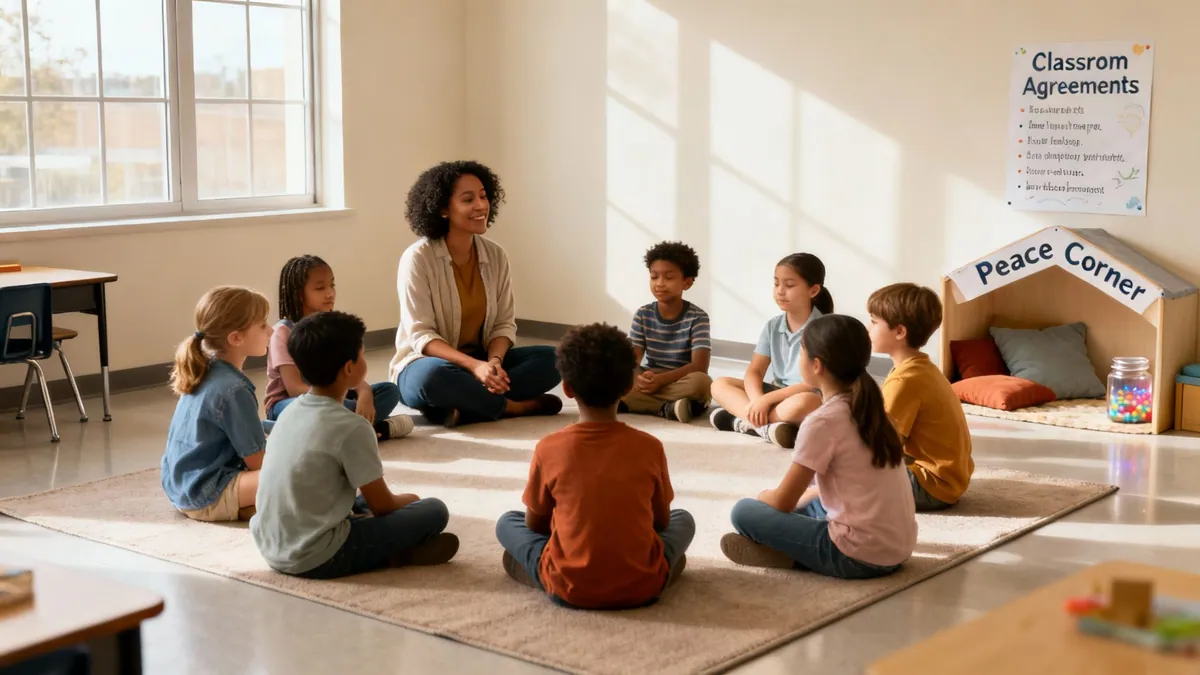
Honestly, the best way to handle disruptive students is to create a classroom where disruptions rarely get the chance to take root. This goes way beyond just posting a list of rules and consequences. It’s about actively building a culture of respect, safety, and belonging. When students feel truly connected to their teacher and peers, they become invested in the community’s success.
This work is more critical now than ever. Post-pandemic, a staggering 48% of U.S. educators have reported that student behavior is significantly worse than it was before 2019. On top of that, a lack of focus is impacting learning in 75% of schools, highlighting a massive need for foundational socio-emotional support.
Fostering Community and Connection
A strong sense of community is your first and best line of defense against disruptive behavior. It’s the simple, consistent routines that really make a difference, helping students feel grounded and ready to learn.
One of the most powerful routines you can start is a Morning Check-In Circle. This isn’t just a fancy way to take attendance; it’s dedicated time for real connection. Students sit together and share one small thing. Maybe they rate their emotional “weather” for the day (sunny, cloudy, stormy) or answer a simple prompt like, “What’s one thing you’re looking forward to today?”
Practical Example: A teacher notices a student, Liam, shares that his emotional weather is “stormy” because his dog is sick. The teacher makes a mental note to check in with Liam privately after the circle, offering a moment of quiet support or a quick note home. This small act of empathy helps Liam feel seen and can prevent his anxiety from bubbling over into disruptive behavior later in the day.
This little ritual gives you a priceless snapshot of each student’s emotional state before the day even gets rolling. If a child shares they’re feeling “stormy,” you immediately know to offer a bit more support, which can head off a potential outburst later.
Co-Creating Classroom Agreements
Instead of handing down a list of top-down rules, try involving your students in creating “Classroom Agreements.” This collaborative process is a game-changer because it gives them ownership over their environment and behavior.
Just ask your class: “What do we all need from each other to do our best learning?” and “How do we want our classroom to feel?”
Practical Example:
A third-grade class might come up with agreements like, “We listen when someone is talking,” “We use kind hands and words,” and “It’s okay to make mistakes.” These get written on a big poster, signed by every student, and hung up where everyone can see it. When a disruption happens, you can gently refer back to it: “Hey, remember how we all agreed to listen when someone is speaking?”
Establishing these shared expectations is a cornerstone of a proactive classroom. You can deepen this practice by exploring effective discipline strategies that build on this collaborative spirit.
Designing a Space for Self-Regulation
Every single student, no matter their age, feels overwhelmed sometimes. A designated “Peace Corner” or “Calm-Down Spot” gives them a safe space to self-regulate before their emotions boil over into a disruption.
It’s crucial to frame this as a supportive tool, not a punishment or a time-out spot. It’s a resource center equipped to help students navigate big feelings.
What to include in a Peace Corner:
- Comfortable seating: Think a beanbag chair or a few soft cushions.
- Sensory tools: Stress balls, fidgets, or a weighted lap pad can work wonders.
- Visual aids: Posters showing simple breathing exercises or a chart of feelings.
- Quiet activities: A simple puzzle, some coloring pages, or a glittery calm-down jar.
Practical Example: A student named Maya feels frustrated during a difficult math problem. Instead of crumpling her paper, she remembers the process her teacher taught her. She puts up the non-verbal “break” signal, walks quietly to the Peace Corner, sets a three-minute sand timer, and squeezes a stress ball. After a few minutes, she feels regulated and ready to try the problem again with a clearer mind.
By explicitly teaching students how and when to use this space, you’re not just managing behavior—you’re empowering them with self-management skills they’ll use for the rest of their lives. This foundational work is key to creating the positive atmosphere we all want, and you can learn more in our guide to building a peaceful and welcoming classroom culture.
Getting to the Root Cause of Disruptive Behavior
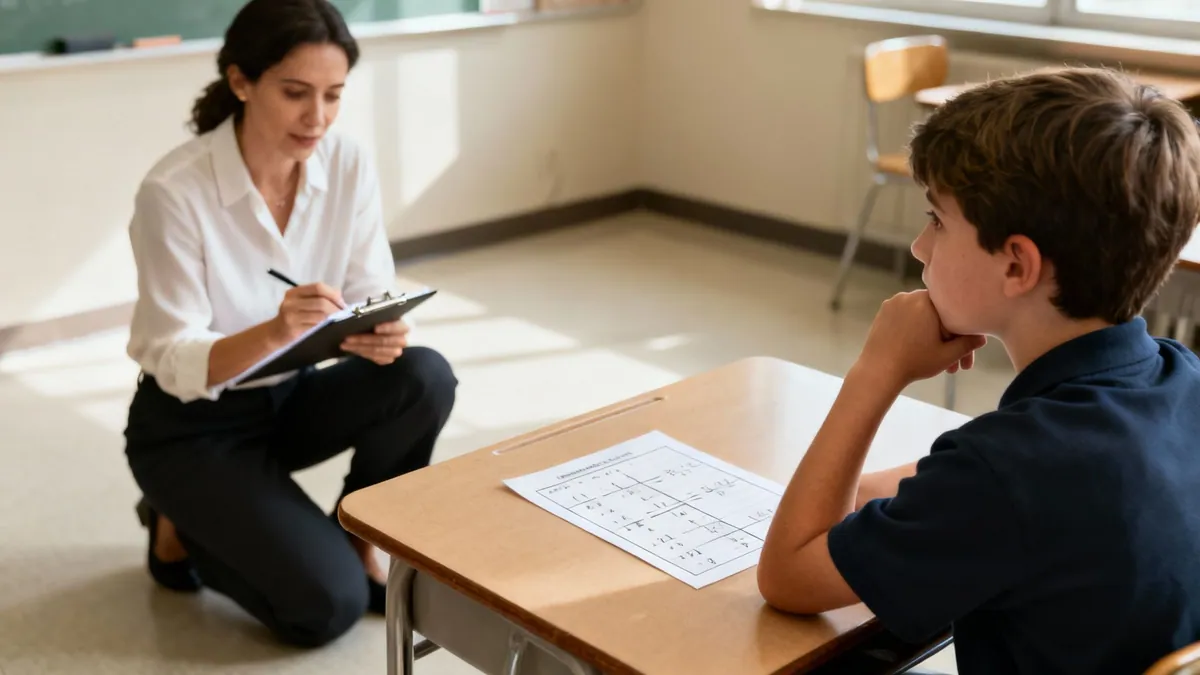
Before you can respond effectively to a student’s actions, you have to get curious about the need driving them. Nearly all disruptive behavior is just communication in disguise—an outward signal of an internal struggle.
The single most important shift you can make is moving from “behavior manager” to “needs detective.” This one change in perspective is the key to handling disruptions with empathy and real, lasting success.
When we only react to what we see on the surface—the calling out, the refusal to work, the constant fidgeting—we miss the real story. This path usually leads to a frustrating cycle of consequences that never actually solves the problem because it ignores the cause. The goal isn’t just to stop the disruption; it’s to figure out its function. What is this student trying to gain or avoid?
Research shows just how critical it is to get this right, and early. Without the right kind of intervention, disruptive behavior can escalate. For example, boys in aggressive first-grade classrooms are 2.5 times more likely to be aggressive by the time they reach middle school. With 32% of U.S. teachers saying misbehavior gets in the way of their teaching, it’s clear this is a widespread challenge. The good news? Strong, early management can slash the odds of future aggression from 59:1 down to a fraction of that, as detailed by research from PMC.
Identifying Patterns and Triggers
To decode what a student is communicating, you have to become an observer. Start looking for patterns. Think of yourself as a data collector, gathering clues that point you toward the root cause. This doesn’t need to be a complicated system; a simple notepad or a digital doc is all you need to start tracking what you see.
When a disruption happens, ask yourself a few key questions:
- When does it happen? Is it always during math, hinting at a learning gap or anxiety? Does it ramp up right before lunch, suggesting hunger?
- Where does it happen? Does the behavior pop up during unstructured times like recess or transitions? That could point to a need for social skills support or connection.
- What happens right before? Did you just assign independent work? Was there a sudden loud noise? Did another student say something?
Practical Example: A teacher notices that a student, Leo, starts tapping his pencil loudly and trying to talk to neighbors every time they begin independent writing. After jotting down this observation for three days, the teacher realizes the behavior only happens during writing, never math or reading. This pattern suggests Leo isn’t being willfully defiant; he’s likely feeling anxious or stuck about the writing task itself.
These observations help you move past assumptions and start pinpointing specific triggers. That’s the first real step toward finding a solution that works.
Common Unmet Needs Behind the Behavior
Once you’ve spotted a few patterns, you can start connecting them to the most common unmet needs. While every child is different, disruptive behaviors often stem from a handful of core areas.
A student who constantly blurts out might not be trying to be defiant. They could be desperate for positive attention and connection—so much so that even a reprimand feels better than being ignored. The student who puts their head down and refuses to start an assignment isn’t necessarily lazy; they might be completely overwhelmed and are using avoidance to escape the feeling of failure.
Practical Example: A student who rips up their paper isn’t trying to challenge your authority—they’re likely expressing extreme frustration with a task they feel they cannot do. Instead of a punishment, the teacher could offer a different tool, like a mini whiteboard for practice, saying, “Writing can be tough. Let’s try brainstorming on this board first, where mistakes are easy to erase.”
It’s also crucial to remember that what happens outside of school has a huge impact inside the classroom. Understanding challenges like how family homelessness fuels child hunger can completely reframe how you see a child’s inability to focus or self-regulate. When you know a student is carrying heavy burdens, their behavior starts to make a lot more sense.
You can learn more about these challenging behaviors in the classroom in our related guide. By digging deeper to find the “why,” you can respond with compassion and provide support that actually helps, rather than just punishing the symptom.
In-the-Moment Strategies and De-escalation Scripts

When a disruption kicks off, your immediate response is everything. It sets the tone for what comes next. The real goal isn’t to win a battle of wills; it’s to guide a student back to a place where they’re calm and ready to learn again.
The most effective in-the-moment strategies are quiet, quick, and focused on de-escalation, not punishment. These moments are about preserving a student’s dignity while maintaining your authority. When done right, you can turn a potential power struggle into a genuine teaching opportunity.
First, you have to stay regulated yourself. A calm voice and neutral body language are your best tools for lowering the temperature in the room.
Using Non-Verbal Cues and Proximity
Sometimes, the best interventions are the ones nobody else in the class even notices. Before you ever have to say a word, subtle, non-verbal cues can redirect a student without disrupting the flow of your lesson. It’s the least invasive way to handle off-task behavior, and it works surprisingly well.
One of the most powerful tools in your toolkit is strategic proximity. Just walking over and standing near a student’s desk while you continue teaching is often enough to get them back on track. No confrontation, no public call-out—just your quiet presence signaling that you see what’s going on.
Practical Example:
Two fourth-graders are whispering during silent reading. Instead of calling their names from across the room, their teacher calmly walks over and stands between their desks while scanning the rest of the class. The whispering stops instantly, and both students pick up their books. Not a single word was exchanged.
The Power of a Quiet Voice and Private Redirection
When you do need to use words, how you say them matters just as much as what you say. A loud, public correction often makes a student feel defensive and cornered, which can make them double down on the behavior.
Instead, try getting down to the student’s eye level and speaking in a quiet, firm, but respectful tone. This private redirection shows the student you’re addressing the behavior, not attacking them as a person. It communicates care.
Here are a few ways to redirect quietly:
- The “Two-Sentence Intervention”: State the problem in one sentence and offer a solution in the second. For example, “I see you’re having trouble focusing on your worksheet. Why don’t we try the first two problems together?”
- Offer a Controlled Choice: This gives the student a sense of agency, which can de-escalate things fast. “You can choose to finish this at your desk or in the peace corner. What works best for you right now?”
- Postpone the Conversation: If a student is too agitated for a productive chat, acknowledge their feelings and schedule a time to talk later. “I can see you’re upset. Let’s talk about this in five minutes at my desk once you’ve had a chance to cool down.”
These small shifts are critical for managing the big feelings that can bubble up in a classroom. For more on this, check out our guide on what to do when big emotions take over.
Ready-to-Use De-escalation Scripts
When you’re put on the spot, it can be a lifesaver to have a few go-to phrases ready. The point of these scripts is to be supportive and proactive, not reactive and punitive. They work by validating the student’s feelings while still holding a clear boundary for their behavior.
Thinking about your responses ahead of time helps you stay calm and handle disruptions in a way that builds students up.
Reactive vs Proactive Responses to Common Disruptions
Let’s look at how small changes in our language can make a huge difference. Below is a table that contrasts common reactive phrases with more effective, SEL-informed alternatives.
| Disruptive Behavior Scenario | Common Reactive Response to Avoid | Proactive SEL Response to Use |
|---|---|---|
| A student refuses to start their work. | “Do your work now or you’ll lose recess.” | “I see getting started feels tough today. Let’s look at the first question together.” |
| A student is talking out of turn repeatedly. | “Stop talking! I’ve already told you three times.” | “I love your enthusiasm. Please raise your hand so everyone gets a chance to share.” |
| A student makes a frustrated noise and crumples their paper. | “That’s a waste of paper. Pick it up and start over.” | “I can see you’re feeling frustrated. It’s okay. Let’s take a deep breath and find a new starting point.” |
| Two students are arguing over supplies. | “Both of you stop it! Give me the crayons.” | “It looks like you both want the same color. How can we solve this problem fairly?” |
Using proactive language like this does more than just stop a behavior—it models problem-solving and emotional regulation. You’re teaching a skill that will last a lifetime. This approach reinforces that your classroom is a supportive community where challenges are met with help, not just consequences.
Building a Strong Home and School Partnership
When you’re trying to figure out how to handle disruptive students, it’s easy to feel like you’re on an island. But the truth is, you can’t—and shouldn’t—do it alone. Lasting change really takes hold when a student feels consistently supported by all the adults in their life. Building a collaborative partnership with families is one of the most powerful moves you can make.
This team effort isn’t just about reporting problems. It’s about creating a unified front that wraps support around the student. The goal is to move from a “you versus me” or “school versus home” dynamic to a “we’re in this together for your child” approach. This ensures the student receives the same messages and support, whether they’re in your classroom or at their kitchen table.
Framing the Conversation with Parents
Bringing up a child’s challenging behavior can feel daunting. It’s natural for parents to become defensive if they feel their child—or their parenting—is being criticized. The key is to frame every interaction from a place of partnership and shared goals, starting with a positive connection.
Never, ever lead with a list of problems. Instead, begin by sharing a genuine positive observation or a small moment of success. This simple step shows that you see their child’s strengths and value them as a whole person, not just as a behavior issue.
Practical Example Script for a Phone Call or Email:
“Hi [Parent’s Name], this is [Your Name] from [School]. I was thinking about [Student’s Name] today and wanted to share something that made me smile—they were so helpful to a classmate during our science activity. I also wanted to partner with you on something I’ve noticed. [Student] seems to be struggling during transitions between subjects, and I’d love to brainstorm with you to find a strategy that might work both here and at home.”
This approach immediately establishes you as an ally. It shifts the focus from blame to collaborative problem-solving, making parents much more likely to engage as active partners.
Practical Tools for Parent-Teacher Conferences
Parent-teacher conferences are a prime opportunity to strengthen this partnership, but they can quickly turn negative if you’re not careful. It helps to prepare talking points that emphasize teamwork and focus squarely on solutions.
Here are a few actionable tips for these meetings:
- Share data, not drama. Instead of saying, “He’s always disruptive,” try something more objective: “I’ve tracked it, and the outbursts happen most frequently right before lunch, which makes me wonder if hunger is a trigger.”
- Ask for their expertise. Parents are the ultimate experts on their own children. Ask questions like, “What strategies do you use at home when he gets frustrated?” or “Have you seen this behavior in other settings?”
- Create a shared goal. Work together to define one specific, achievable goal. For instance, “Let’s both work on helping him use his words to ask for a break when he feels overwhelmed.”
Practical Example: In a conference, a teacher says, “I’ve noticed Ava has a hard time settling down after recess. At home, what helps her transition from high-energy playtime to a quiet activity?” The parent shares that a five-minute warning and a simple breathing exercise work wonders. Together, they decide the teacher will try the same five-minute warning before the bell rings to come inside.
This collaborative spirit reinforces that you’re on the same team. Parents who feel heard and respected are far more likely to implement suggested strategies at home. You can learn more about these approaches through these positive parenting tips.
Involving School Support Staff
Remember, your partnership circle extends beyond just parents. School counselors, psychologists, social workers, and special education staff are invaluable resources. They bring specialized expertise and can offer different kinds of support for both you and the student.
Don’t wait until a situation becomes a full-blown crisis to reach out. The moment you notice a persistent pattern of disruptive behavior that isn’t responding to your classroom strategies, it’s time to consult with your school’s support team.
Bring your objective observations and documentation to them. They can help you analyze the behavior from a fresh perspective, suggest new interventions, or begin the process for more formal support if needed. Taking this proactive step ensures the student gets the right help sooner and shows families that the entire school community is invested in their child’s success.