

Social Emotional Learning Activities Elementary: 10 Practical Ideas for 2026
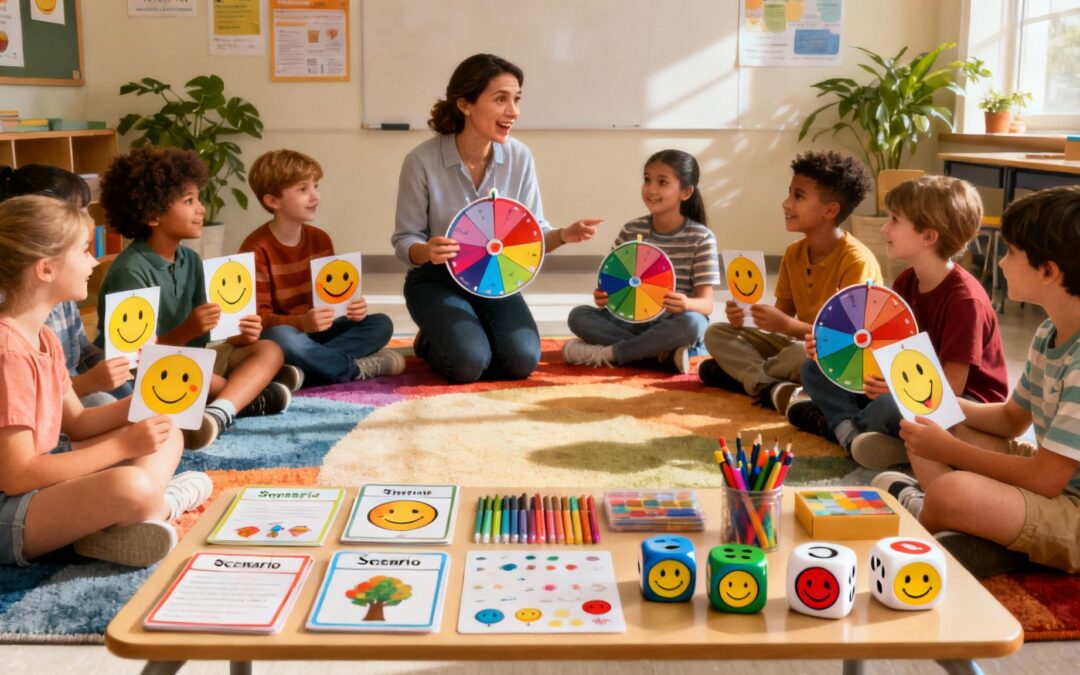
In today’s dynamic elementary classrooms, academic skills are only half the story. The ability to understand emotions, build relationships, and make responsible decisions forms the bedrock of a successful learner and a compassionate human being. This is the core of social-emotional learning (SEL), a framework that equips students with the essential tools to navigate their inner worlds and the world around them. For educators seeking a child-centered philosophy that deeply aligns with holistic child development and SEL, exploring foundational approaches like the Reggio Emilia approach to education can provide a powerful, inquiry-based framework for these practices.
For teachers, counselors, and parents, the primary challenge isn’t just knowing that SEL is important-it’s finding practical, engaging ways to integrate it into daily routines. This guide moves beyond abstract theory to offer a comprehensive roundup of field-tested social emotional learning activities elementary students can immediately benefit from. We provide step-by-step instructions, grade-specific adaptations from Kindergarten through 5th grade, and real-world examples to help you cultivate a thriving, emotionally intelligent community.
Inside this resource, you will discover a curated list of activities designed to build key competencies, including:
- Self-Awareness: Identifying and understanding emotions.
- Self-Management: Developing coping strategies and resilience.
- Social Awareness: Cultivating empathy and perspective-taking.
- Relationship Skills: Fostering collaboration and effective communication.
- Responsible Decision-Making: Encouraging thoughtful and ethical choices.
Whether you’re looking to start an emotion check-in circle, introduce mindfulness exercises, or implement peer conflict resolution, this article serves as your practical playbook. These activities will help you foster connection, safety, and resilience in the children you support, building a foundation for lifelong well-being and academic success.
1. Emotion Check-In Circle
The Emotion Check-In Circle is a foundational routine where students gather to identify and share their current feelings in a safe, structured setting. This simple yet powerful practice serves as a daily emotional barometer for the classroom, helping students build self-awareness and empathy from the very start of their day. By creating a predictable space to name emotions, teachers normalize the full spectrum of feelings, from excitement to disappointment, fostering a culture of psychological safety.
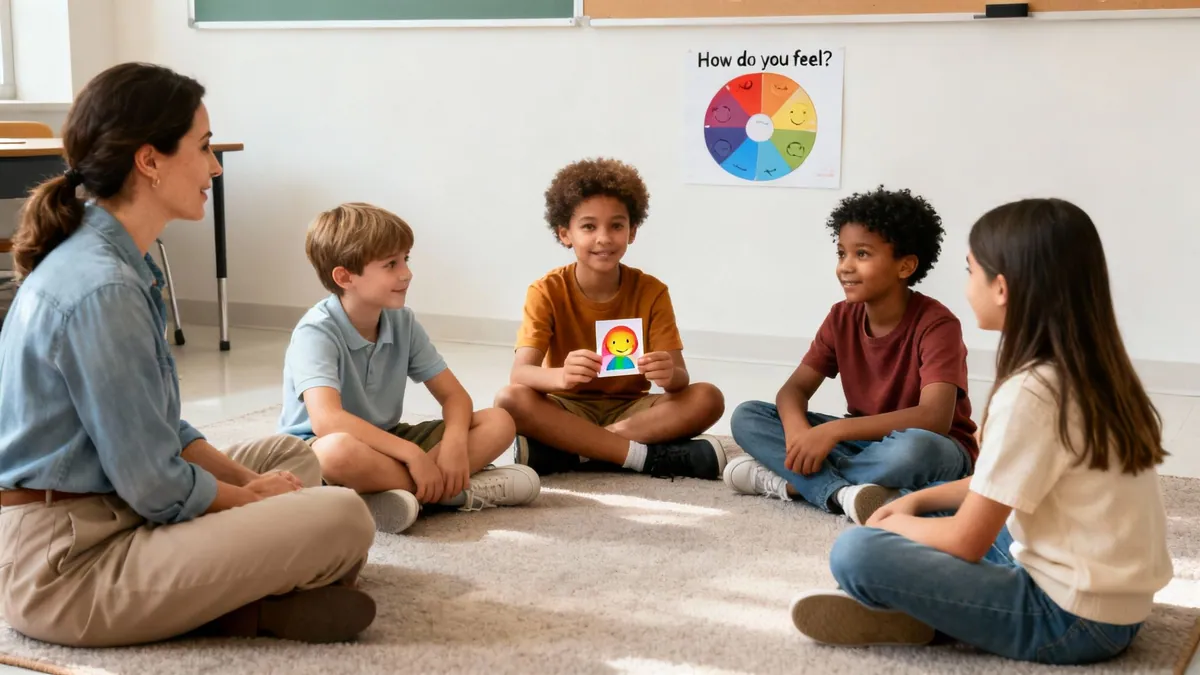
This activity is more than just a morning greeting; it is a core component of many effective social emotional learning activities for elementary students. It provides valuable insight into who might need extra support and helps children connect their internal state to their readiness to learn.
How to Implement an Emotion Check-In Circle
- Materials Needed: Emotion wheel, feeling cards, or a simple chart paper with different feeling words/faces. For a more structured approach, consider the Mood Meter framework popularized by Marc Brackett at the Yale Center for Emotional Intelligence.
- Time: 5-10 minutes daily.
- CASEL Competency: Self-Awareness, Social Awareness.
Step-by-Step Instructions:
- Gather Students: Arrange students in a circle on the rug or at their desks.
- Model First: The teacher starts by sharing their own feeling. For example, “Good morning, everyone. Today, I am feeling calm because I had a relaxing weekend and drank my favorite tea this morning.”
- Provide a Framework: Students share their feeling using a sentence stem, like “Today I feel ____ because ____.”
- Practical Example (Kindergarten): A student points to a happy face card and says, “Today I feel happy because it’s my turn to be the line leader.”
- Practical Example (3rd Grade): A student shares, “Today I feel a little nervous because we have a math test, but I also feel hopeful because I studied.”
- Listen and Acknowledge: The group listens without judgment. The goal is to acknowledge, not to fix. A simple “Thank you for sharing” is often enough.
- Offer Alternatives: Always include a “pass” option. Students who are not ready to share can say “pass” without penalty.
Key Insight: Consistency is crucial. When the Emotion Check-In Circle becomes a non-negotiable part of the daily routine, students learn to trust the process and become more willing to share honestly over time. It transforms the classroom into a community where every emotional state is valid and heard.
2. Mindfulness and Breathing Exercises
Mindfulness and Breathing Exercises are brief, guided practices that teach students to focus their attention on the present moment. Through simple breathing techniques, body scans, or visualizations, these evidence-based exercises help reduce stress, improve focus, and build crucial self-regulation skills. They provide students with concrete, accessible tools to use independently when feeling overwhelmed, anxious, or dysregulated, making them a cornerstone of effective social emotional learning activities for elementary students.
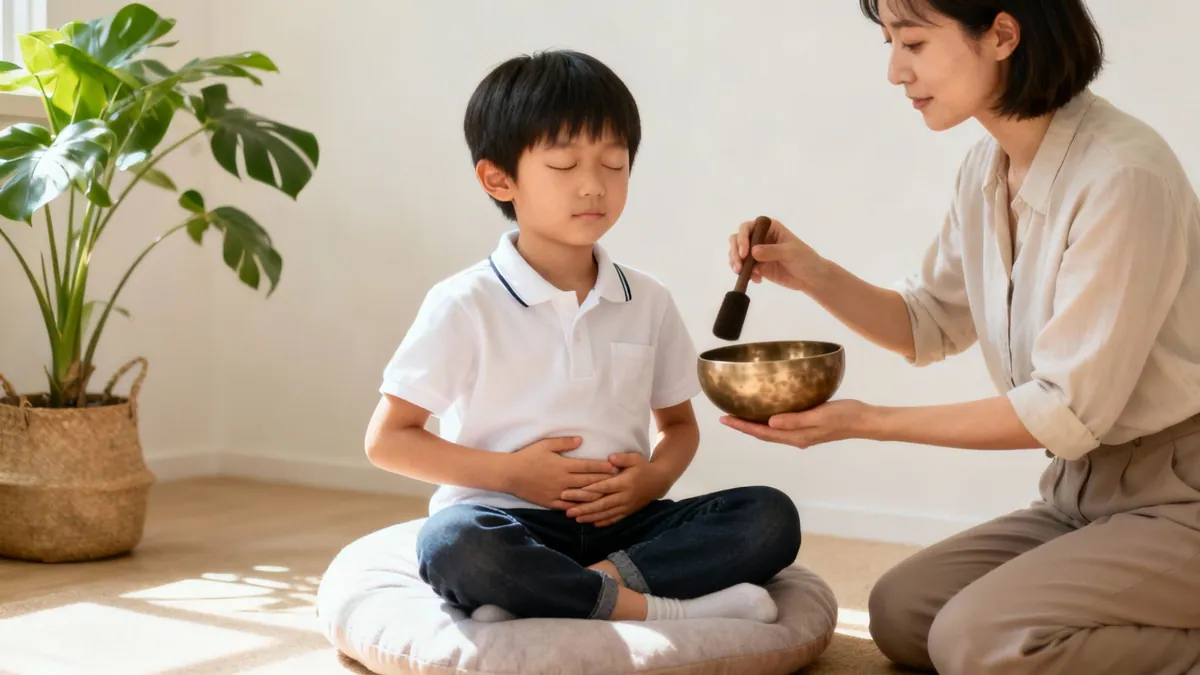
These practices are not about emptying the mind but about anchoring it. For young learners, this can be as simple as a two-minute “belly breathing” break between subjects or using an app like Calm or Headspace Kids for a guided meditation. This builds a foundation for managing big emotions and enhances their ability to engage in learning.
How to Implement Mindfulness and Breathing Exercises
- Materials Needed: A quiet space, optional items like a chime or bell, cushions, or guided meditation audio from an app or website.
- Time: 2-5 minutes, 1-3 times daily.
- CASEL Competency: Self-Management, Self-Awareness.
Step-by-Step Instructions:
- Create a Signal: Use a consistent sound, like a chime, a soft bell, or a specific song, to signal that it is time for a mindfulness break.
- Guide the Breathing: Start with a simple, tangible technique.
- Practical Example (“Take 5 Breathing”): “Hold up one hand like a star. Use the pointer finger of your other hand to trace it. Breathe in as you trace up your thumb, and breathe out as you trace down. Inhale up your pointer finger, exhale down. Continue for all five fingers.”
- Practical Example (“Belly Breathing”): “Place one hand on your tummy. Imagine a small balloon inside. As you breathe in through your nose, feel the balloon fill up with air. As you breathe out through your mouth, feel the balloon slowly deflate.”
- Offer Options: Provide choices to accommodate different needs. Students can sit at their desks, lie on the rug, or stand. Offer “eyes open” options for students who may find closing their eyes uncomfortable, suggesting they find a single spot to focus on.
- Keep it Brief: Begin with very short sessions (60-90 seconds) and gradually increase the duration as students build their focus “muscles.”
- Practice Proactively: Introduce and practice these skills when students are calm. This ensures they can access the tools when they are actually feeling stressed or upset.
Key Insight: The goal is not to achieve perfect stillness but to practice returning focus to the breath. Frame it as a “brain break” or “reset button.” When students learn that they have the power to calm their own bodies and minds with their breath, they gain a profound sense of agency over their emotional well-being.
3. Peer Collaboration and Cooperative Learning Projects
Peer Collaboration and Cooperative Learning Projects are structured small-group activities where students work together toward a shared goal, requiring communication, compromise, and interdependence. This approach transforms academic tasks into powerful opportunities for social and emotional growth. By intentionally designing projects that necessitate teamwork, teachers help students develop vital competencies like perspective-taking, conflict resolution, and leadership in an authentic context.
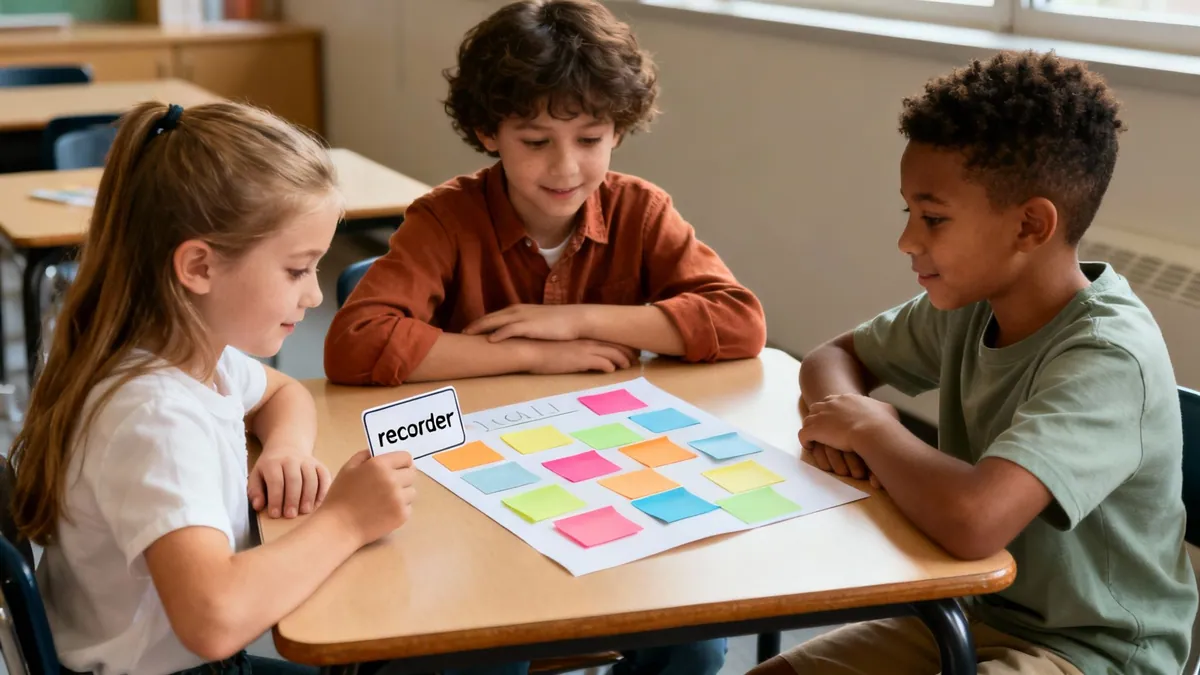
These projects are more than just group work; they are among the most effective social emotional learning activities for elementary students because they integrate SEL directly into academic content. This method builds a classroom culture where students learn to value diverse ideas, support their peers, and navigate the social complexities of achieving a common objective.
How to Implement Peer Collaboration and Cooperative Learning
- Materials Needed: Varies by project. Chart paper for group norms, role cards (e.g., Time Keeper, Encourager, Reporter), and project-specific supplies like research materials or STEM building items.
- Time: Can range from a single 20-minute session (e.g., Think-Pair-Share) to a multi-week project.
- CASEL Competency: Relationship Skills, Responsible Decision-Making.
Step-by-Step Instructions:
- Form Groups Intentionally: Create small, diverse groups that balance academic abilities, social skills, and personalities. Avoid letting students always pick their own groups.
- Define Clear Roles and Goals: Assign specific roles to each member and provide a clear, measurable group goal. Rotate roles regularly so every student gains experience.
- Practical Example (Science Project): In a group of four building a volcano, one student is the Materials Manager (gathers supplies), one is the Builder (constructs the model), one is the Recorder (writes down the steps), and one is the Presenter (explains the project to the class).
- Teach Collaboration Skills Explicitly: Before starting, model and practice skills like active listening and respectful disagreement. Use sentence stems like, “I hear you saying…, what if we tried…?”
- Structure the Task: Use a proven cooperative learning structure.
- Practical Example (Think-Pair-Share): The teacher poses a question (“What was the main character’s biggest challenge?”). Students think quietly for one minute, pair up with a partner to discuss their ideas, and then share their combined thoughts with the whole class.
- Monitor and Coach: Circulate the room to provide support, ask guiding questions, and help groups navigate challenges.
- Include Group Reflection: After the project, guide students to reflect on their process. Ask: “What went well in our teamwork?” and “What could we do differently next time?”
Key Insight: The most crucial element is teaching collaboration as a skill in itself. Celebrate the process, not just the final product. Acknowledge groups for excellent communication, problem-solving, and mutual respect, reinforcing that how they work together is just as important as what they create.
4. Social Stories and Perspective-Taking Activities
Social Stories and perspective-taking activities use narratives and role-playing to help students understand that others have different thoughts, feelings, and experiences. These exercises are fundamental for developing empathy and reducing bias by allowing children to step into someone else’s shoes in a guided, safe way. By exploring character motivations and diverse viewpoints, students build a stronger “Theory of Mind,” which is the ability to understand others’ mental states.
This method is one of the most effective social emotional learning activities for elementary students because it translates abstract concepts like empathy into concrete, relatable scenarios. Whether through a picture book or a specific social narrative, these tools give children the language and framework to navigate complex social situations.
How to Implement Social Stories and Perspective-Taking
- Materials Needed: Diverse picture books (like The Feelings Book by Todd Parr or In My Heart by Jo Witek), pre-written social stories for specific situations, chart paper, markers, or role-playing props.
- Time: 15-20 minutes, 1-2 times per week.
- CASEL Competency: Social Awareness, Relationship Skills.
Step-by-Step Instructions:
- Select a Relevant Story: Choose a picture book or social story that reflects a current classroom challenge (e.g., sharing, handling disappointment, joining a new group).
- Practical Example: After noticing students arguing over playground equipment, read The Recess Queen by Alexis O’Neill.
- Read and Pause: Read the story aloud, pausing at key moments to ask perspective-taking questions.
- Practical Example: While reading, pause and ask, “How do you think Mean Jean felt when no one wanted to play with her? Look at her face. What clues do you see? What about Katie Sue? How did she feel when she decided to ask Jean to play?”
- Facilitate Discussion: Encourage students to share their interpretations. Validate different ideas by explaining that people can feel differently about the same situation. Use sentence starters like, “I think they felt ____ because ____.”
- Extend with an Activity: Follow the story with a related activity.
- Practical Example: Students can draw two faces: one showing how a character felt at the beginning of the story and another showing how they felt at the end. They then explain the change to a partner.
- Connect to Real Life: Link the story’s lesson back to the classroom. For instance, “Remember how Katie Sue invited Mean Jean to play? Let’s be like Katie Sue today and look for someone who might need a friend at recess.”
Key Insight: The power of this activity lies in using diverse and authentic narratives. When students see characters from varied backgrounds, abilities, and family structures, they learn that empathy extends to everyone, not just those who are like them. It builds a foundation for an inclusive and understanding community.
5. Conflict Resolution and Peer Mediation Programs
Conflict Resolution and Peer Mediation Programs are structured systems that teach students the skills to identify, communicate about, and solve interpersonal problems collaboratively. These programs shift the classroom dynamic from adult-led discipline to student-led problem-solving, empowering children to become active agents in creating a positive school climate. By training students as mediators, schools build leadership skills and reduce teacher intervention in minor disputes.
This approach is one of the most impactful social emotional learning activities elementary students can engage in because it provides real-world application of complex skills. It reframes conflict not as a failure but as a valuable opportunity for growth, empathy, and understanding. Programs like Responsive Classroom and Soul Shoppe have popularized these practices in schools nationwide.
How to Implement Conflict Resolution and Peer Mediation
- Materials Needed: “I-statement” sentence frames, conflict resolution posters with clear steps, a designated “peace corner” or table for mediations, and training materials for student mediators.
- Time: 15-20 minutes for mediations as needed; ongoing training and reinforcement.
- CASEL Competency: Relationship Skills, Responsible Decision-Making.
Step-by-Step Instructions:
- Teach Core Concepts: Introduce a simple, school-wide conflict resolution process. A common model is: 1. Cool Down, 2. Talk and Listen (using I-statements), 3. Brainstorm Solutions, 4. Agree on a Plan.
- Model I-Statements: Explicitly teach and practice the “I feel ___ when you ___ because ___” framework.
- Practical Example: Instead of “You’re a mean cheater!”, teach a student to say, “I feel frustrated when you change the rules of the game because I thought we already agreed.”
- Train Peer Mediators: Select and train a diverse group of students (not just the “best behaved”) to act as neutral third-party facilitators. Train them to guide peers through the resolution steps without giving solutions.
- Establish Protocols: Define which conflicts are appropriate for peer mediation (e.g., disagreements over games, feeling left out) and which require adult help (e.g., bullying or safety concerns).
- Provide a Space: Set up a specific, quiet area where mediations can happen without an audience. This makes the process feel official and safe. A small table in the corner with a “peace rose” or talking stick can work well.
Key Insight: The goal of a student mediator is not to solve the problem for their peers but to ask powerful questions that help them solve it themselves. Train mediators with questions like, “What could you do differently next time?” and “What do you need to feel better?” This builds true problem-solving capacity and agency.
6. Gratitude and Kindness Practices
Gratitude and Kindness Practices are intentional activities designed to cultivate appreciation, generosity, and positive regard for others. These powerful routines shift a classroom’s focus toward optimism and interconnectedness, helping students recognize the good in their lives and in their peers. By embedding practices like gratitude journals and kindness challenges, teachers actively build a more prosocial and supportive learning environment.
This goes beyond simply saying “thank you.” These social emotional learning activities for elementary students teach them to look for and acknowledge kindness, which in turn boosts their own happiness, strengthens relationships, and improves their overall mental well-being. This practice helps rewire the brain to notice positive experiences.
How to Implement Gratitude and Kindness Practices
- Materials Needed: Journals or notebooks, chart paper, sticky notes, a “kindness jar” or box, art supplies.
- Time: 5-15 minutes daily or weekly.
- CASEL Competency: Relationship Skills, Social Awareness.
Step-by-Step Instructions:
- Introduce the Concept: Begin with a simple discussion about what gratitude and kindness mean. Use a story or personal example to illustrate the concepts.
- Establish a Routine: Choose a consistent practice.
- Practical Example (Gratitude Circle): During morning meeting, pass a “gratitude stone” around the circle. The person holding the stone shares one specific thing they are thankful for, like “I’m grateful for my dad because he made me pancakes this morning.”
- Launch a Kindness Challenge: Dedicate a week to kindness. Provide daily prompts.
- Practical Example: A “Kindness Bingo” card could have squares like “Give a genuine compliment,” “Invite someone new to play,” “Hold the door for someone,” and “Help a classmate clean up.”
- Create a Visual Tracker: Use a “Caught Being Kind” bulletin board where students can post sticky notes acknowledging kind acts they witness. This makes kindness visible and celebrated.
- Connect Gratitude to Action: After a special event or field trip, have students write thank-you notes or create a short thank-you video for the people who made it possible.
Key Insight: Specificity is the cornerstone of effective gratitude practice. Guide students beyond generic statements like “I’m grateful for my family.” Encourage them to elaborate: “I’m grateful my big sister read me a story last night because it made me feel safe and loved.” This deeper reflection anchors the feeling and makes the practice more meaningful.
7. Self-Advocacy and Assertiveness Skills Training
Self-Advocacy and Assertiveness Skills Training explicitly teaches students how to recognize and respectfully communicate their needs, boundaries, and preferences. This practice empowers children by giving them the tools to develop their own voice, agency, and confidence. By learning the crucial difference between passive, aggressive, and assertive communication, students build a foundation for academic success and lifelong healthy relationships.
This training is one of the most vital social emotional learning activities for elementary students, as it moves beyond simply identifying feelings to acting on them constructively. It is especially impactful for students who are marginalized, have learning differences, or tend to be more withdrawn, ensuring they have the skills to be seen and heard.
How to Implement Self-Advocacy and Assertiveness Skills Training
- Materials Needed: Scenario cards, “I-statement” sentence frames, anchor charts defining passive, assertive, and aggressive communication styles.
- Time: 15-20 minutes, 1-2 times per week.
- CASEL Competency: Self-Management, Responsible Decision-Making, Relationship Skills.
Step-by-Step Instructions:
- Define and Differentiate: Use an anchor chart to explicitly teach the differences between passive (quiet, avoiding conflict), aggressive (blaming, demanding), and assertive (calm, clear, respectful) communication. Use simple examples for each.
- Introduce “I-Statements”: Provide students with a clear and simple script for assertive communication, such as: “I feel ____ when you ____. I need ____.”
- Role-Play Scenarios: Practice with low-stakes scenarios.
- Practical Example (Academic Need): A student role-plays telling a teacher, “I feel confused by the directions for the project. I need you to explain step two again, please.”
- Practical Example (Social Boundary): One student practices saying to another, “I feel uncomfortable when you stand so close to me. I need a little more space, please.”
- Practice Saying “No”: Teach students respectful ways to set boundaries, such as “No, thank you,” or “I’d rather not do that.” Role-play situations where a friend asks them to do something they don’t want to do.
- Debrief and Reinforce: After role-playing, discuss how it felt to be assertive. Acknowledge that it can feel uncomfortable at first but gets easier with practice.
Key Insight: Modeling is everything. When teachers and parents consistently use assertive “I-statements” and respect students’ boundaries, they demonstrate that self-advocacy is a valued and effective skill. Celebrate students’ attempts, even if imperfect, to create a culture where every child knows their voice matters and will be heard.
8. Growth Mindset and Resilience-Building Lessons
Growth Mindset and Resilience-Building Lessons teach students that intelligence and abilities are not fixed traits but can be developed through effort, strategic practice, and feedback. Based on the research of Carol Dweck, these lessons help children reframe challenges as opportunities, view mistakes as crucial parts of learning, and persist through setbacks. This approach shifts the focus from innate talent to the power of process, building a foundation for both academic achievement and emotional well-being.
These lessons are a cornerstone of effective social emotional learning activities for elementary students because they directly target self-management and responsible decision-making. By cultivating resilience, students are better equipped to handle academic frustrations and social conflicts with confidence and determination. To further cultivate this mindset, students can benefit from learning effective strategies to improve problem-solving skills, empowering them to tackle challenges constructively.
How to Implement Growth Mindset and Resilience-Building Lessons
- Materials Needed: “The Magical Yet” by Angela DiTerlizzi or other growth mindset books, chart paper, markers, stories of famous failures (e.g., Michael Jordan, Oprah), goal-setting worksheets.
- Time: 15-20 minutes, 1-2 times per week.
- CASEL Competency: Self-Management, Self-Awareness.
Step-by-Step Instructions:
- Introduce the Concept: Use a simple analogy like comparing the brain to a muscle. Explain that when we work hard and try new things, our brain grows stronger by creating new connections.
- Read and Discuss: Read a story that models a growth mindset. Ask discussion questions like, “What challenge did the character face?” and “What did they do when they made a mistake?”
- Teach “The Power of Yet”: Introduce the phrase “I can’t do it… yet.”
- Practical Example: Create a class chart with two columns: “Fixed Mindset Thoughts” and “Growth Mindset Thoughts.” Fill it with examples like changing “This is too hard” to “This may take some time and effort.” Or “I can’t read this word” to “I can’t read this word… yet.”
- Create a “Famous Failures” Gallery: Display pictures and stories of successful people who overcame significant setbacks. Discuss how failure was a necessary step in their journey to success.
- Use Effort-Based Praise: In daily interactions, praise the process, not just the outcome.
- Practical Example: Instead of saying “You’re so smart!” when a child solves a puzzle, say, “I love how you turned the pieces different ways to see what would fit. Your strategy worked!”
Key Insight: A growth mindset is cultivated through consistent language and classroom culture, not just isolated lessons. Creating a “mistake-friendly” environment where errors are celebrated as “brain builders” is essential. When teachers model their own learning struggles and resilience, students learn that productive struggle is a normal and valuable part of growth.
9. Diversity, Inclusion, and Anti-Bias Classroom Activities
Diversity, Inclusion, and Anti-Bias Activities are intentional lessons that celebrate human differences while actively addressing bias and discrimination. These practices move beyond surface-level multicultural celebrations to build genuine cultural competence, challenge stereotypes, and foster a deep sense of belonging for all students. By integrating these social emotional learning activities, elementary teachers equip children to understand their own identities and appreciate the diverse world around them.
This approach, championed by educators like Louise Derman-Sparks, is not just about being kind; it’s about creating justice. It gives students the language and tools to recognize and confront unfairness, making them active participants in building a more equitable classroom and community.
How to Implement Diversity, Inclusion, and Anti-Bias Activities
- Materials Needed: Diverse books featuring “windows and mirrors” (characters both different from and similar to your students), identity charts, chart paper, markers, and curated read-alouds that tackle topics of fairness and bias.
- Time: Varies; can be a 15-minute read-aloud or an ongoing, year-long unit.
- CASEL Competency: Self-Awareness, Social Awareness, Relationship Skills.
Step-by-Step Instructions:
- Introduce “Windows and Mirrors”: Using the framework from Rudine Sims Bishop, explain that books can be mirrors (reflecting our own lives) or windows (offering a view into someone else’s).
- Practical Example: After reading Amazing Grace by Mary Hoffman, ask, “Who in our class saw a mirror in this story? Who saw a window into a new experience?”
- Create Identity Charts: Give each student a large piece of paper with their name in the center. Have them draw or write words that describe the multiple facets of their identity (e.g., sister, artist, soccer player, Spanish speaker).
- Share and Connect: Students share one part of their identity chart with a partner or small group, finding connections and celebrating differences.
- Discuss Fairness: Use a picture book to introduce a scenario involving bias or unfairness.
- Practical Example: Read The Sneetches by Dr. Seuss and ask, “Was it fair that only the Star-Belly Sneetches could go to the parties? Why or why not? What could the Plain-Belly Sneetches have done?”
- Practice Being an Upstander: Role-play scenarios where students can practice being an “upstander” by safely and respectfully speaking up when they see something unfair.
Key Insight: Authentic representation is paramount. Anti-bias work must be woven into the curriculum year-round, not isolated to specific heritage months. This consistency ensures students see diversity as a fundamental and valued aspect of the human experience, not a special topic.
10. Emotion Regulation and Coping Strategy Toolbox
The Emotion Regulation and Coping Strategy Toolbox is a personalized collection of techniques students can use to manage overwhelming feelings and calm their nervous systems. This approach shifts the focus from adult-led intervention to student-led self-regulation, empowering children with a sense of agency and control over their emotional responses. By creating a tangible or mental “toolbox,” students learn to identify what they need in a moment of stress, building independence and emotional resilience.
This concept is a cornerstone of effective social emotional learning activities for elementary students because it acknowledges that there is no one-size-fits-all solution for managing emotions. It teaches children to become experts on their own needs, equipping them with practical skills to navigate challenges like frustration, anxiety, and excitement both inside and outside the classroom.
How to Implement a Coping Strategy Toolbox
- Materials Needed: Poster board, index cards, art supplies, a physical box or container, sensory items (stress balls, scented dough, soft fabric), and visual aids for different strategies.
- Time: 15-20 minutes for initial teaching of a new strategy; ongoing practice daily.
- CASEL Competency: Self-Management, Self-Awareness.
Step-by-Step Instructions:
- Introduce the Concept: Explain that a toolbox holds tools to fix things, and an emotional toolbox holds tools to help us manage our feelings. Use a physical box as a visual anchor.
- Teach Strategies Explicitly: During calm moments, teach one or two strategies at a time.
- Practical Example: For a “Grounding” technique, teach the 5-4-3-2-1 method: “When you feel worried, pause and silently name 5 things you can see, 4 things you can touch, 3 things you can hear, 2 things you can smell, and 1 thing you can taste. This helps bring your brain back to the present moment.”
- Categorize for Clarity: Group strategies into categories like Movement (jumping jacks, stretching), Sensory (squeezing a stress ball, listening to music), Cognitive (counting to 10, positive self-talk), and Creative (drawing, journaling).
- Create Visual Tools: Have students create their own strategy cards with drawings or words. These can be put on a ring, in a personal box, or displayed on a “Calm Down Corner” poster.
- Model and Narrate: As the teacher, visibly use the strategies yourself. Say, “I’m feeling a little frustrated with this technology, so I’m going to take three deep breaths before I try again.”
- Practice and Reflect: After a student uses a strategy, follow up later. Ask, “I saw you went to the calm corner to squeeze the dough. How did that feel for your body? Did it help?”